Junte-se a nós em uma viagem ao mundo dos livros!
Adicionar este livro à prateleira
Grey
Deixe um novo comentário Default profile 50px
Grey
Assine para ler o livro completo ou leia as primeiras páginas de graça!
All characters reduced
Faith Travel Conflicts - cover
LER

Faith Travel Conflicts

Sarah Davis

Tradutor A AI

Editora: Publifye

  • 0
  • 0
  • 0

Sinopse

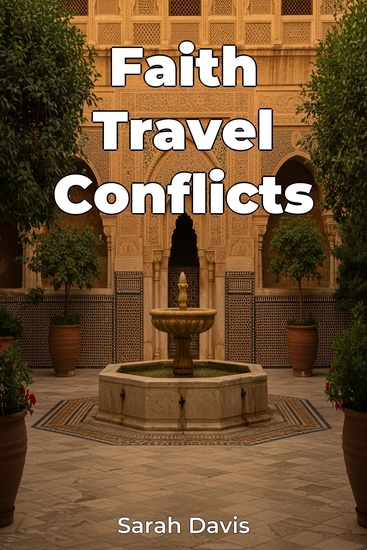
Faith Travel Conflicts navigates the intricate world where LGBTQ+ travel intersects with religious traditions, exploring the challenges and strategies involved. It sheds light on how travelers balance self-expression with cultural norms at religious sites, a crucial consideration given varying levels of acceptance worldwide. Did you know that some LGBTQ+ travelers meticulously research destinations beforehand, seeking out inclusive communities to ensure their safety and well-being? The book highlights the necessity for cultural sensitivity and ethical travel, especially when visiting religiously significant locations. The book uniquely addresses the often-overlooked aspects of both travel studies and LGBTQ+ rights advocacy.

 
It progresses by first laying the groundwork with core concepts, then examining historical and social contexts that shape interactions. Case studies of LGBTQ+ travelers' experiences at various religious sites are analyzed, followed by exploration of safe and responsible travel strategies. Ultimately, it advocates for greater understanding and acceptance within religious institutions, tourism operations, and policymaking, promoting inclusive tourism practices.
Disponível desde: 07/04/2025.
Comprimento de impressão: 77 páginas.

Outros livros que poderiam interessá-lo

  • Mughal Empire - The Early Modern Islamic Empire in South Asia - cover

    Mughal Empire - The Early Modern...

    Kelly Mass

    • 0
    • 0
    • 0
    The Mughal Empire, also referred to as the Mogul or Moghul Empire, was one of the most powerful and influential early modern Islamic empires in South Asia. Established in the 16th century, it controlled vast regions for over two centuries, encompassing territories from the peripheries of the Indus basin in the west, extending to northern Afghanistan, Kashmir in the north, present-day Bangladesh in the east, and stretching as far south as the Deccan Plateau's uplands.The origins of the Mughal Empire trace back to 1526 when Babur, a warrior chieftain from what is now Uzbekistan, founded the empire. Babur's military strategy combined traditional cavalry tactics with the latest artillery techniques, using matchlock guns and cast cannons acquired with Ottoman assistance. These advancements, alongside his strategic acumen, led him to a decisive victory against the Sultan of Delhi, Ibrahim Lodhi, at the First Battle of Panipat. This battle marked a turning point, allowing Babur to establish his dominance over northern India and subdue rival Rajput and Afghan forces.While Babur laid the foundation of the empire, the true structure of the Mughal state is often attributed to his grandson, Akbar the Great. By the late 16th century, under Akbar's rule, the empire expanded its reach and established a well-organized imperial administration that laid the groundwork for political stability, cultural integration, and economic prosperity. Akbar's reign is particularly noted for promoting a policy of religious tolerance, encouraging a synthesis of Hindu and Muslim cultures, and setting up an efficient centralized bureaucracy.
    Ver livro
  • Smoky God The - A Voyage to the Inner World - cover

    Smoky God The - A Voyage to the...

    Willis George Emerson

    • 0
    • 0
    • 0
    It may be that the true home of Apollo was not at Delphi, but in that older earth-center of which Plato speaks, where he says: "Apollo's real home is among the Hyperboreans, in a land of perpetual life, where mythology tells us two doves flying from the two opposite ends of the world met in this fair region, the home of Apollo. Indeed, according to Hecataeus, Leto, the mother of Apollo, was born on an island in the Arctic Ocean far beyond the North Wind."
    Ver livro
  • Brazil's Economic Evolution - Past Present and Future - cover

    Brazil's Economic Evolution -...

    Anya Solace

    • 0
    • 0
    • 0
    Brazil's economic history is a dynamic and complex tale shaped by diverse influences, from colonial exploitation to modern-day challenges and opportunities. As the largest country in South America, Brazil’s economic evolution has mirrored its political, social, and cultural transformations. This journey began with its colonial era under Portuguese rule, which laid the foundation for Brazil’s agricultural-based economy. Over the centuries, Brazil shifted from a colony dependent on sugar and gold to a rapidly industrializing nation, emerging as an economic powerhouse in Latin America. 
    The early economic landscape of Brazil was heavily reliant on natural resources, particularly agriculture. The Portuguese established vast sugar plantations along Brazil’s northeastern coast, utilizing enslaved labor from Africa. This system of exploitation became the backbone of the Brazilian economy for centuries. Later, the discovery of gold in the 18th century led to a gold rush that contributed significantly to Brazil's wealth, though it also exacerbated regional disparities and social inequalities. 
    As the 19th century unfolded, Brazil transitioned into an empire, and its economic structure shifted once again. Coffee became the dominant export, driving the expansion of the country’s agricultural economy. The development of railways and the establishment of coffee plantations in the southeastern regions played a critical role in consolidating Brazil’s position as a major global supplier. However, this period of growth was also marked by profound social and economic inequalities, particularly in the form of slavery, which continued until its abolition in 1888.
    Ver livro
  • Southern Song Dynasty - Art Culture and Survival in a Fragmented China - cover

    Southern Song Dynasty - Art...

    Rolf Hedger

    • 0
    • 0
    • 0
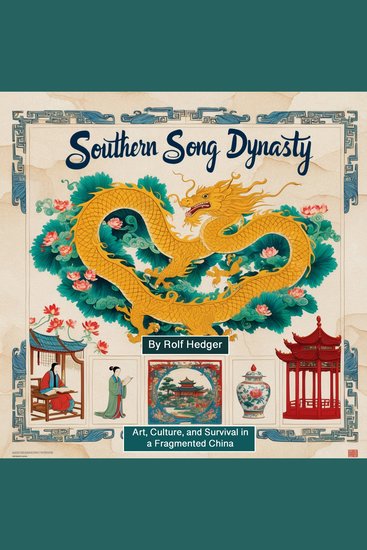
    The Southern Song Dynasty emerged in 1127 after the fall of the Northern Song to the Jurchen-led Jin Dynasty. This period marked a time of resilience, adaptation, and cultural flourishing, despite ongoing threats from external forces. The dynasty’s establishment in the southern region of China reshaped political, economic, and artistic developments that would leave a lasting impact on Chinese history. 
    Following the invasion of the Jin forces, the Song court was forced to abandon its northern capital, Kaifeng. The remnants of the ruling family, led by Emperor Gaozong, retreated southward, eventually establishing a new capital in Lin’an (modern-day Hangzhou). This move signified not only a geographical shift but also a fundamental transformation in governance and strategy. Without control over the traditional heartland of Chinese civilization, the Southern Song had to develop new approaches to survival and stability. The dynasty focused on strengthening its bureaucracy, relying on a sophisticated civil service system that emphasized merit and Confucian ideals. Unlike the Northern Song, which had struggled with military weaknesses, the Southern Song sought to bolster its defenses by investing in naval power and fortifications along the Yangtze River. 
    The loss of northern territories meant that the Southern Song had to rely heavily on its southern provinces, which were rich in agricultural resources and well-positioned for trade. The economy shifted toward maritime commerce, with ports such as Quanzhou and Guangzhou becoming vital centers for international trade. Merchants expanded connections with Southeast Asia, India, and the Middle East, ensuring a steady flow of goods, wealth, and cultural exchanges. This economic shift allowed the Southern Song to sustain itself despite territorial losses and military pressures from the Jin and, later, the Mongols.
    Ver livro
  • Dragonfly - Choosing To Be Nomads in Retirement - cover

    Dragonfly - Choosing To Be...

    Margaret Herle

    • 0
    • 0
    • 0
    Through her engaging memoir, author Margaret Herle shares a pioneering tale of life on the road. After deciding to retire in a home on wheels, Herle and her husband satisfied their cravings for travels (and being warm in winters!) on their own terms, exploring every province in Canada, most of the US, and the entire length of the Baja Peninsula in Mexico. From tourist destinations to unexpected offbeat spots, they found more adventure than they imagined in their converted bus, the Dragonfly.  
    Readers can come along for the ride with one of the original “vanlifers” who dared to give up a fixed address for an undetermined time and fulfill a love of travel in retirement—meeting locals, discovering different cultures, finding and immersing in new communities, and overcoming some epic challenges. For anyone interested in the #vanlife trend, Herle’s journey throughout North America in the 1990s—told through her reflections and personal letters to family—is an inspiration to choose the unordinary lifestyle and live your dream.
    Ver livro
  • Angkor Wat - Historical Facts about the Largest Religious Structure in the World - cover

    Angkor Wat - Historical Facts...

    Kelly Mass

    • 0
    • 0
    • 0
    Angkor Wat, in northwest Cambodia, is the world's largest spiritual structure in the shape of a temple complex, with an acreage of 401 +344 acres. A quincunx of 4 towers surrounds a center spire that rises up to a height of 65 meters (213 feet) in the air in the temple's heart. The temple is separated into 3 rectangle-shaped galleries, each of which rises over the one before it. It's surrounded by a 3.6-kilometer-long (24-mile-long) external wall and a five-kilometer-long (three-mile-long) moat. 
    The temple was built as the state temple for the Khmer Empire at the demand of Suryavarman II in the early 12th century in Yaodharapura (, contemporary Angkor), the Khmer Empire's capital. It was constructed in the early 12th century to honor the Hindu god Vishnu, but by the end of the century, it had been changed to a Buddhist temple. 
    Angkor Wat is a fascinating structure, dating back hundreds of years, and it’s impressive how much of it has remained intact.
    Ver livro