¡Acompáñanos a viajar por el mundo de los libros!
Añadir este libro a la estantería
Grey
Escribe un nuevo comentario Default profile 50px
Grey
Suscríbete para leer el libro completo o lee las primeras páginas gratis.
All characters reduced
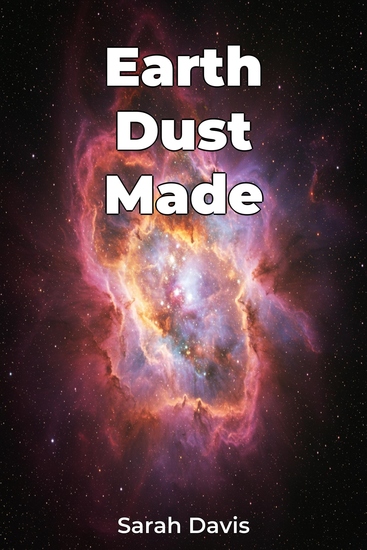
Earth Dust Made - cover

Earth Dust Made

Sarah Davis

Traductor A AI

Editorial: Publifye

  • 0
  • 0
  • 0

Sinopsis

"Earth Dust Made" explores the fascinating connection between the elemental composition of the human body and the Genesis creation narrative, bridging Science and Religion. It proposes that the biblical assertion of humans being formed from "dust" or "earth" isn't merely symbolic but reflects the scientific truth that our elemental building blocks originate from the Earth itself. The book highlights intriguing facts, such as the undeniable presence and proportion of Earth's elements within us, mirroring the periodic table and stellar nucleosynthesis processes. The book uniquely approaches a religious text through scientific inquiry, avoiding blind faith and skepticism. It examines the elemental makeup of the human body, traces the origins of these elements to stars and planetary systems, and analyzes the Genesis narrative in light of these scientific findings. It progresses logically, starting with elemental composition, moving to stellar origins, and concluding with an interpretation of Genesis, offering a fresh perspective on human origin and our place in the universe.
Disponible desde: 27/02/2025.
Longitud de impresión: 62 páginas.

Otros libros que te pueden interesar

  • Bad Nature - How Rat Control Shapes Human and Nonhuman Worlds - cover

    Bad Nature - How Rat Control...

    Andrew McCumber

    • 0
    • 0
    • 0
    Offers insights into the social and cultural implications of humans’ relationships with rats and the natural world. Apart from the occasional pet owner who has rats, most people regard rats as disease-carrying nocturnal pests, scurrying around dumpsters and dragging slices of pizza through New York City subways. Since rats are seemingly omnipresent in human life, why do we harbor such negative feelings about them, and why are they among the creatures most frequently targeted for systematic extermination?In Bad Nature, sociologist Andrew McCumber draws out the cultural underpinnings of rat extermination across three countries and two continents. Drawing from ethnographic, interview, and textual data from the frigid prairie of Alberta, Canada; the heart of downtown Los Angeles, California; and the iconic Galápagos Islands of Ecuador, McCumber studies how humans have sought to suppress and exterminate rat populations in a variety of environmental, social, and political situations. He shows how, in these disparate locations, rat control is a social practice that draws and clarifies the spatial and symbolic boundaries between “good” and “bad” forms of nature. Rats are near the bottom of a symbolic hierarchy of species that places human life at the top, companion animals and majestic wildlife just below them, and the “invasive species” that call for systematic extermination at the very bottom. This hierarchy of living things that places rats at the bottom, McCumber argues, mirrors human systems of social inequalities and power dynamics.  Both original and engaging, Bad Nature urges readers to consider, when charting a just and sustainable future, where will the rats be placed in the worlds we envision?
    Ver libro
  • The Hidden Paths - Ancient Gateways to Other Worlds - cover

    The Hidden Paths - Ancient...

    Martin K. Ettington

    • 0
    • 0
    • 0
    Several years ago I became interested in the ideas of real time travel and dimensional travel. I’ve been trained in science and modern physics as well as engineering so I knew that modern theories of our physical world did not include the possibilities that time or dimensional travel existed. 
    As I did my research on stories of people who had travelled through time or additional dimensions there were many very credible stories. These stories eventually led me to conclude that time or dimensional travel through portals or veils does exist and some persons have experienced it. 
    On a book I wrote about the Tuatha Da Dannon who were the forerunners of elves, the Druids, and more there were stories that they originated in a different dimension called the Otherworld. And there were some interesting stories of humans who had traveled to the Otherworld and back. 
    It also turns out that the more one studies these subjects the more historical stories there are of portal, dimensional, and time travel experiences people have had. 
    This book then is a detailed review and exploration of portals around the world. Some of which are very plausible and others just might exist. Also could these portals be used today? 
    There are also lots of stories of individuals travelling through time and dimensional portals. 
    There are lots of interesting questions on this subject and we are just starting to learn the answers.
    Ver libro
  • Spectroscopy - Science Spectronomy and Astronomy Explained - cover

    Spectroscopy - Science...

    Arnoud Varens

    • 0
    • 0
    • 0
    In the vast expanse of the cosmos, where stars twinkle in the night sky and galaxies swirl in the abyss, a remarkable dance of light and matter unfolds—a dance that has captivated the human imagination for centuries. This dance, illuminated by the science of spectroscopy, is what this book seeks to explore and explain. 
    Spectroscopy, the study of the interaction between matter and electromagnetic radiation, may sound complex and esoteric, but at its heart lies a simple and profound idea: the colors of light can reveal the secrets of the universe. From the examination of distant stars to the analysis of molecules in a laboratory, spectroscopy is the key that unlocks the hidden stories encoded in light. 
    This book is your guide to the fascinating world of spectroscopy, spanning from the fundamental principles that underpin this science to its myriad applications across various disciplines. We will journey together through the realms of chemistry and biology, where spectroscopy plays a vital role in unraveling the mysteries of molecules and cells. We will then venture into the realm of astronomy, where spectroscopy serves as a cosmic tool, allowing us to explore the composition, motion, and evolution of celestial objects. 
    This book is designed for curious minds seeking to understand the inner workings of the universe. Whether you are a student just beginning your scientific journey, a seasoned researcher, or simply an inquisitive reader, this book aims to provide you with a comprehensive and accessible overview of spectroscopy and its applications.
    Ver libro
  • Carried Through Cancer - 70 Days of Spiritual Strength from Cancer Fighters Survivors and Caregivers - cover

    Carried Through Cancer - 70 Days...

    Kim Harms

    • 0
    • 0
    • 0
    Whether it’s yours or a loved one’s, a cancer diagnosis changes everything. It stops you in your tracks as you put everything you have into fighting for life. It can feel isolating being thrown into the unknown chaos of treatment.But you are not alone.With uplifting stories from dozens of women who have been where you are, Carried Through Cancer provides emotional and spiritual support, encouragement, and community in its true stories of God-filled moments within the hard and heartbreaking road of cancer.God meets some people in their fear in the exam room and others in the shower where the flowing water drowns out tears, but regardless of the location, this 70-day devotional demonstrates that God shows up when people reach out to Him, and He is there to carry you through your story.
    Ver libro
  • Future Wild - Nature Restoration in Ireland - cover

    Future Wild - Nature Restoration...

    Richard Nairn

    • 0
    • 0
    • 0
    Ireland has little left of its original natural habitats. Many species, like the curlew, are under pressure due to intensive practices such as farming, forestry and fisheries and some are threatened with extinction. But given a little help from us, nature has the innate capacity to restore itself.
    
    
    Nature restoration is the positive management of the environment for the benefit of wildlife and people. It looks to the future, by steering natural habitats and wildlife in a better and more sustainable direction.
    
    
    In Future Wild: Nature Restoration in Ireland, Richard Nairn explores numerous active restoration projects around Ireland which show how natural habitats and native species can be restored sustainably for the benefit of everyone. From individual landowners and voluntary organisations to state bodies such as Bord na Móna, he meets the people who are dedicated to nature restoration.
    
    
    By turns shocking, hopeful and finally positive, Future Wild shows that the damage we have done to nature can also be undone by us, and that, with nature restoration, we can create a richer and more diverse environment for generations to come.
    Ver libro
  • How To Think About AI - A Guide For The Perplexed - cover

    How To Think About AI - A Guide...

    Richard Susskind

    • 0
    • 0
    • 0
    In recent years, there has been massive public and professional interest in Artificial Intelligence. But people are confused about what AI is, what it can and cannot do, what is yet to come, and whether AI is good or bad for humanity and civilization—whether it will provide solutions to mankind's major challenges or become our gravest existential threat. There is also confusion about how we should regulate AI and where we should draw moral boundaries on its use. 


    In How To Think About AI, Richard Susskind draws on his experience of working on AI since the early 1980s. For Susskind, balancing the benefits and threats of artificial intelligence is the defining challenge of our age. He explores the history of AI and possible scenarios for its future. His views on AI are not always conventional. He positions ChatGPT and generative AI as no more than the latest chapter in the ongoing story of AI and claims we are still at the foothills of developments. He argues that to think responsibly about the impact of AI requires us to look well beyond today's technologies, suggesting that not-yet-invented technologies will have far greater impact on us in the 2030s than the tools we have today. This leads Susskind to discuss the possibility of conscious machines, magnificent new AI-enabled virtual worlds, and the impact of AI on the evolution of biological humans.
    Ver libro