Junte-se a nós em uma viagem ao mundo dos livros!
Adicionar este livro à prateleira
Grey
Deixe um novo comentário Default profile 50px
Grey
Assine para ler o livro completo ou leia as primeiras páginas de graça!
All characters reduced
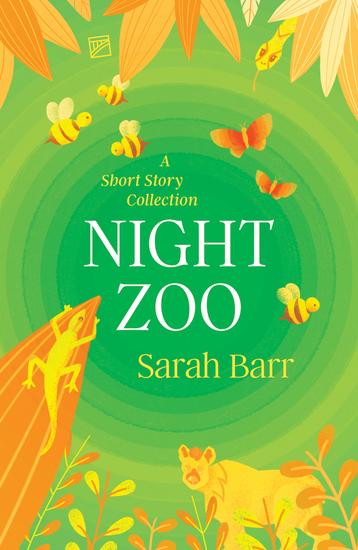
Night Zoo - cover
LER

Night Zoo

Sarah Barr

Editora: Valley Press

  • 0
  • 0
  • 0

Sinopse

Longing for excitement in a heatwave, Liza inadvertently stumbles across the complexity of being a child in a grown-up world. Brendan is haunted by the ghosts of the past in the present, and Franny contemplates the meaning of home in a world made uncertain by global warming.

With its dark twists and intense themes, Night Zoo subverts the reader's expectations at every turn. Throughout, Sarah Barr weaves an intricate, cyclical thread of regret and hope, offering captivating glimpses into the lives of her distinctive cast of characters. A compelling collection, it forms a powerful portrait of life, painting the extraordinary in the everyday.

An expert blend of feminism and motherhood – set against a backdrop of climate change and with a breadth of settings explored – these stunning stories celebrate the variety and vitality that encompass the human experience.
Disponível desde: 29/08/2022.
Comprimento de impressão: 100 páginas.

Outros livros que poderiam interessá-lo

  • The Alteration in Mr Kershaw - From their pens to your ears genius in every story - cover

    The Alteration in Mr Kershaw -...

    William Pett Ridge

    • 0
    • 0
    • 0
    William Pett Ridge was born at Chartham, near Canterbury, Kent, on 22nd April 1859. 
    His family’s resources were certainly limited. His father was a railway porter, and the young Pett Ridge, after schooling in Marden, Kent became a clerk in a railway clearing-house. The hours were long and arduous, but self-improvement was Pett Ridge’s goal.  After working from nine until seven o’clock he would attend evening classes at Birkbeck Literary and Scientific Institute and then to follow his passion; the ambition to write.  He was heavily influenced by Dickens and several critics thought he had the capability to be his successor. 
    From 1891 many of his humourous sketches were published in the St James's Gazette, the Idler, Windsor Magazine and other literary periodicals of the day. 
    Pett Ridge published his first novel in 1895, A Clever Wife. By the advent of his fifth novel, Mord Em'ly, a mere three years later in 1898, his success was obvious.  His writing was written from the perspective of those born with no privilege and relied on his great talent to find humour and sympathy in his portrayal of working class life. 
    Today Pett Ridge and other East End novelists including Arthur Nevinson, Arthur Morrison and Edwin Pugh are being grouped together as the Cockney Novelists.   
    In 1924, Pugh set out his recollections of Pett Ridge from the 1890s: “I see him most clearly, as he was in those days, through a blue haze of tobacco smoke. We used sometimes to travel together from Waterloo to Worcester Park on our way to spend a Saturday afternoon and evening with H. G. Wells. Pett Ridge does not know it, but it was through watching him fill his pipe, as he sat opposite me in a stuffy little railway compartment, that I completed my own education as a smoker... Pett Ridge had a small, dark, rather spiky moustache in those days, and thick, dark, sleek hair which is perhaps not quite so thick or dark, though hardly less sleek nowadays than it was then”. 
    With his success, on the back of his prolific output and commercial success, Pett Ridge gave generously of both time and money to charity. In 1907 he founded the Babies Home at Hoxton.  This was one of several organisations that he supported that had the welfare of children as their mission.  
    His circle considered Pett Ridge to be one of life's natural bachelors. In 1909 they were rather surprised therefore when he married Olga Hentschel.  
    As the 1920’s arrived Pett Ridge added to his popularity with the movies. Four of his books were adapted into films.  
    Pett Ridge now found the peak of his fame had passed. Although he still managed to produce a book a year he was falling out of fashion and favour with the reading public and his popularity declined rapidly.  His canon runs to over sixty novels and short-story collections as well as many pieces for magazines and periodicals. 
    William Pett Ridge died, on 29th September 1930, at his home, Ampthill, Willow Grove, Chislehurst, at the age of 71. 
    He was cremated at West Norwood on 2nd October 1930.
    Ver livro

  • Edna Ferber: THE HOMELY HEROINE - 4 Special stories by Edna Ferber - cover

    Edna Ferber: THE HOMELY HEROINE...

    Edna Ferber

    • 0
    • 0
    • 0
    Who ever heard of a plain and downright homely heroine? Isn't a heroine by definition beautiful? Well, Edna Ferber, in her well known style that later produced Show Boat and Giant, tells us about just such a heroine in the first of these four special short stories. They are special to me because of their insight into the deep courage and faith of 'ordinary' people, people like most of us. And of course our failings and frailties and sometimes, the prince does not marry the right person. The other stories are A Bush League Hero, What she Wore and The Man Who Came Back.
    Ver livro
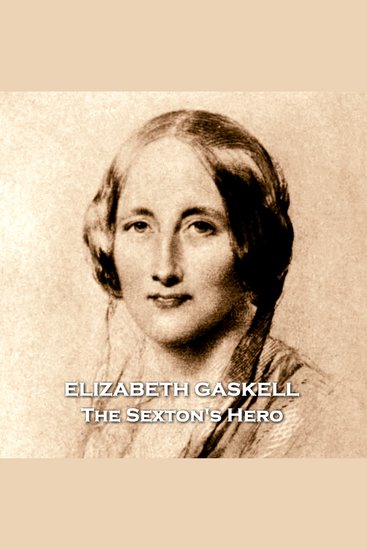
  • The Sexton's Hero - From their pens to your ears genius in every story - cover

    The Sexton's Hero - From their...

    Elizabeth Gaskell

    • 0
    • 0
    • 0
    Elizabeth Stevenson was born in Chelsea in London on 29th September 1810.  
    Both parents embedded their strong Unitarian beliefs into Elizabeth who rebelliously was often reluctant to display these religious convictions.  
    The early death of Elizabeth’s mother saw her sent away to be brought up by her maternal aunt in Knutsford, Cheshire.  
    Her father now remarried but Elizabeth spent most of her childhood in Cheshire away from her father and his new family but was supportive towards her half-siblings.  
    Elizabeth’s aunt encouraged her education and particularly to read and express herself through writing.   
    In 1828, her brother John, who worked in the merchant navy, disappeared on a journey to India. This disastrous loss depressed her father, and she went to his household to nurse him for the next year before he died.  
    In 1832, she fell in love with William Gaskell, a Unitarian minister like her father, and married him.  They settled in Manchester. This booming industrial city had a great impact on Elizabeth who felt the need to speak up for poor workers and their exploitation by large industrial companies. A collection of poems and short stories, ‘Sketches among the Poor’ appeared in 1837, co-authored by her husband.  Her first major work, under a pseudonym, was ‘Mary Barton: A Tale of Manchester Life’ published in 1848. 
    During her career she worked continually with Charles Dickens and published much in his various magazines. With him she published ‘Lizzie Leigh’ in 1850 which dealt with the taboo subject of prostitution.  She was an excellent writer and impressed her many Victorian literary peers. Much of her writing reflects her work as a social critic highlighting the exploitation of the working class and the situation of women in society.  
    On 12th November 1865, Elizabeth Gaskell died in Holybourne, Hampshire, after suffering from a heart attack a month earlier.
    Ver livro
  • Trio of Stories A - Gustav Meyrink - A great introduction to a great author - cover

    Trio of Stories A - Gustav...

    Gustav Meyrink

    • 0
    • 0
    • 0
    There is something about the number 3.    
    The Ancient Greeks believed 3 was the perfect number, and in China 3 has always been a lucky number, and they know a thing or two.   
    Most religions also have 3 this and 3 that and, of course, in these more modern times, three’s a crowd may be too many, except when it’s a ménage à trois.  It seems good things usually come in threes. 
    Whatever history and culture says WE think 3, a hat-trick of stories, is a great number to explore themes and literary avenues that classic authors were so adept at creating.
    Ver livro
  • Beneath The Zoo - A Short Story - cover

    Beneath The Zoo - A Short Story

    J.F. J.F.Penn

    • 0
    • 0
    • 0
    Some secrets should stay buried. 
    When renowned architect Arania Webb returns to Bristol Zoo — once her childhood sanctuary but now a derelict ruin — she discovers her late father’s hidden underground lab, which harbours a dark obsession. 
    Inside, she uncovers his journals documenting twisted experiments to fuse arachnid DNA with humans, creating unnatural creatures that blur the line between species. As Arania descends into the shadowy depths and explores further, she realises the terrifying extent of her beloved father’s attempts to play god. 
    With demolition charges set to raze the derelict zoo in minutes, Arania has little time to process the ethical transgression and madness that drove her father down an unholy path before the truth is buried forever. 
    But when the site manager stumbles upon her macabre discovery, Arania knows she must act swiftly to protect her family’s legacy — and her own future. 
    Will she find a way to escape the ruins with her father’s monstrous secrets? Or will the horrors hidden beneath the zoo ultimately consume them both? 
    In this short story, J.F. Penn weaves a tale of dark secrets, genetic aberration, and a legacy that blurs the lines between ethical transgression and scientific ambition, a narrative that is as much about the inner darkness of human nature as it is about the monsters we create.
    Ver livro
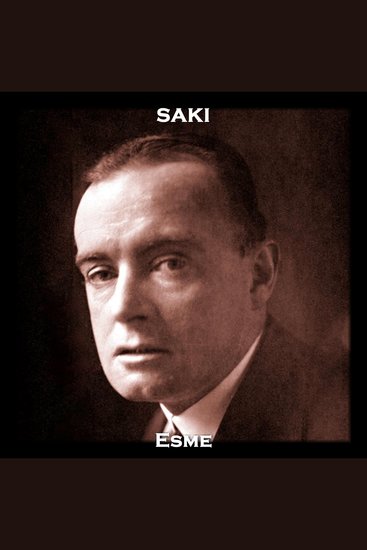
  • Esme - From their pens to your ears genius in every story - cover

    Esme - From their pens to your...

    Saki Saki

    • 0
    • 0
    • 0
    Hector Hugh Munro, more familiarly known by his pen-name ‘Saki’ was born in what was then Akyab in British Burma on 18th December 1870. His father was an Inspector General for the Indian Imperial Police, and his mother the daughter of a Rear Admiral. 
    When he was 2 his mother died and he and his siblings were sent back to England to be raised by their grandmother and paternal maiden aunts in a strict, puritanical household near Barnstaple, Devon. Educated by governesses Saki used many of these women as character models for his later writing. 
    At 17 his father retried and returned to England and then embarked on a series of European travels with Saki and his siblings. 
    After a short stint working in Burma with the Indian Imperial Police Saki decided to move to London to make a living as a writer. Initially he wrote as a journalist for a number of newspapers and magazines before attempting an historical study, ‘The Rise of the Russian Empire’, whose real value lay in directing him to writing short stories instead, the first of which, ‘Dogged’, he published in 1899. 
    From here it was a short stab of the pen to writing political satire before in 1902 he became the foreign correspondent for The Morning Post, first in the Balkans, then Russia, Paris and back to London in 1908, where 'the agreeable life of a man of letters with a brilliant reputation awaited him.'  
    Collections of his short stories full of witty, mischievous and often macabre stories that satirized Edwardian society and two novels now appeared in the years up to the Great War.  At its’ outbreak he was 43 but managed to join as an ordinary trooper. More than once he returned to the battlefield when officially too sick or injured.  
    On 14th November 1916 Hector Hugh Munro was sheltering in crater during the Battle of the Ancre, when he was shot and killed by a German sniper. According to several sources, his last words were "Put that bloody cigarette out!"
    Ver livro