Junte-se a nós em uma viagem ao mundo dos livros!
Adicionar este livro à prateleira
Grey
Deixe um novo comentário Default profile 50px
Grey
Assine para ler o livro completo ou leia as primeiras páginas de graça!
All characters reduced
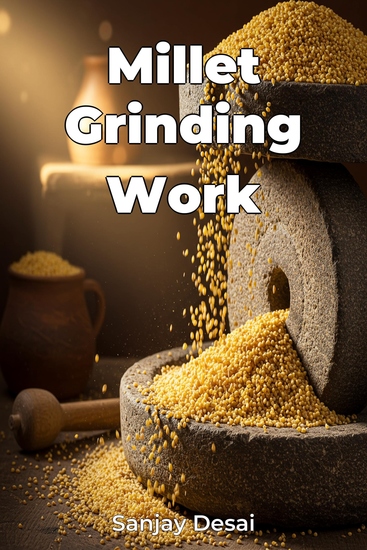
Millet Grinding Work - cover
LER

Millet Grinding Work

Sanjay Desai

Tradutor A AI

Editora: Publifye

  • 0
  • 0
  • 0

Sinopse

Millet Grinding Work explores the rich history and cultural significance of hand-processed millet, revealing how this seemingly simple task has shaped family meals and communities across the globe. The book delves into the practical techniques of grinding, highlighting the resilience of millet as a nutritional staple in arid regions and its role in promoting food security. It's fascinating to discover how millet grinding, often women's work, intersects with gender roles and community dynamics. This book uniquely examines millet grinding as a lens through which to understand broader social, economic, and cultural dynamics. By drawing upon ethnographic studies, historical accounts, and oral histories, it uncovers the knowledge systems associated with traditional tools and methods. The book progresses from introducing various types of millet and their nutritional properties to detailing hand-processing techniques and exploring the socio-cultural context of millet grinding. The book's approach offers a comprehensive exploration of millet grinding, making it valuable for food enthusiasts, historians, and anyone interested in sustainable agriculture. It highlights the importance of preserving cultural heritage and promoting biodiversity in food systems, connecting readers to the labor, knowledge, and traditions underpinning our food.
Disponível desde: 27/02/2025.
Comprimento de impressão: 72 páginas.


Outros livros que poderiam interessá-lo

  • Permian Period The: The History and Legacy of the Era with the Largest Mass Extinction Event - cover

    Permian Period The: The History...

    Editors Charles River

    • 0
    • 0
    • 0
    Among the most interesting of the prehistoric eras is the Permian age, the most extreme period in the planet’s history. It spanned 47 million years, beginning with an ice age, warming, and ending with the most cataclysmic volcanic episode in the planet’s history. The great bulk of all life on the Earth was almost immediately snuffed out, barely crawling back over the following 10 to 30 million years, and it set the stage for the “Age of Dinosaurs.” 
    	What is termed by some as the “Pennsylvanian” or “Carboniferous” period prepared the emergence of the Permian age. Named for the abundance of rocks from the period found in the state of Pennsylvania, many prefer the term “Silesian” or “Carboniferous” era. In the preceding “Mississippian era,” warm, shallow seas disappeared causing serious upheaval to marine life in a tendency toward glaciation.  
    	“Significant glaciation” marks the beginning of the Carboniferous immediately preceding the Permian. Carboniferous glaciation began in the late Ordovician Period long before. The eventual Andean-Saharan glaciation, a minor ice age, occurred later in the Silurian Age. These were all remnants of the “Snowball Earth” period of the Cryogenian. 
    	The resultant sea level drop as the Carboniferous ice age set in produced conditions much like that of today, with ice on both poles, wet tropics near the equator and temperate regions in between. Despite similar conditions, the Carboniferous lacked the output of greenhouse gases produced by humans. 
    	Fragments of plates collided as continents were still fusing into the supercontinent Pangea. During glaciation, “latitudinal climactic belts were widespread.” Permian rocks have been found on all the continents and some have been displaced “considerable distances from their original latitudes” in the Mesozoic and Cenozoic eras that followed the Permian.
    Ver livro
  • GED Study Guide - Elevate your GED Study Guide prep with dynamic audio lessons crafted for peak test success! - cover

    GED Study Guide - Elevate your...

    Marius Brackenmere

    • 0
    • 0
    • 0
    GED Study Guide 
     ⭐⭐ Simplified Guide & Explanations Included  ⭐⭐ 
    Are you aspiring to advance in your career and reinforce your knowledge by successfully passing the GED Exam? 
    Looking for a thorough resource that covers all the necessary aspects to excel in the GED Exam? 
    Your search ends here! 
    This guide is your ultimate companion for enhancing your understanding, applying your skills, and participating in practical exercises. With this guide in hand, you're on the path to success. 
    Updated for the GED Exam Structure. 
    Key Highlights of this Comprehensive Guide: 
    - In-depth insights into the GED Exam Certification 
    - Clear and detailed breakdown of the GED 
    - Effective strategies for exam preparation and problem-solving 
    Our guide stands out due to its extensive coverage, which is critical for your exam success. Concepts are explored in depth rather than merely brushed over. 
    Please note, this guide is an independent resource and has no affiliation with any official GED entity. 
    Crafted with a logical structure and user-friendly language, our GED Exam Guide ensures smooth transitions between topics. Say farewell to complicated jargon and embrace clear, precise, and accurate content. 
    So, what are you waiting for? Click the BUY NOW button, secure your guide, and embark on your journey to GED Exam success! 
    This guide is designed to empower you with meaningful insights for genuine growth and connections.
    Ver livro
  • White Thinking - Behind the Mask of Racial Identity - cover

    White Thinking - Behind the Mask...

    Lilian Thuram

    • 0
    • 0
    • 0
    What does it mean to be white? Beyond just a skin colour, is it also a way of thinking? If so, how did it come about, and why? 
     
    In this book, drawing on history, personal experience and activist literature, the former footballer and World Champion Lilian Thuram looks at the origins and workings of white thinking, how it divides us and how it has become ubiquitous and accepted without challenge. He demonstrates how centuries of white bias and denial justified slavery and colonialism, and have reinforced norms and structures of oppression, limiting the roles and horizons of both non-whites and whites alike. 
    Crucially, while White Thinking is a critique of ingrained structural inequities, it calls for an inclusive approach to solving the problem, and aims to raise awareness and imagine a new world in which all of humanity is given equal weight. 
    “White Thinking patiently demonstrates… how European societies, through their creation of Black people, also invented White people.” LE MONDE 
    “Strikes another blow in his battle against racial stereotypes.” LA VIE 
    “This book is not interested in repentance or white guilt but in the ability to face up to historical reality and to the fact that others might have a very different understanding of that history.” REVUE DES DEUX MONDES 
    “He is almost unique amongst retired sportspeople, having left his old life behind him in the dressing room. Today, the activist has replaced the footballer.” LIBÉRATION
    Ver livro
  • Born Under a Lucky Star - A Red Army Soldier's Recollections of the Eastern Front of World War II - cover

    Born Under a Lucky Star - A Red...

    Ivan Philippovich Makarov,...

    • 0
    • 0
    • 0
    As a Russian recruit in World War II, Ivan Makarov witnessed General Chuikov pull out his pistol and shoot their regimental commander as a traitor. That was on his first day at the front. Thrown into an open field to face German tanks and artillery fire, with only rifles and machine guns to defend themselves with, almost 2,000 men of his regiment were wiped out in only six days at the Eastern Front. At this rate, Ivan struggled to comprehend how he would survive the hundreds of battles that lay before him, with death seeming to be the only certainty. 


    In his raw and trenchant memoir, Ivan recounts the terror and despair faced by a Red Army soldier on the Eastern Front. He has no sympathy for Stalin and his incompetent commanders, who sought awards and recognition at the expense of their soldiers' lives. He simply wanted to serve his country. 


    It is rare to find first-hand accounts of the Great Patriotic War from Red Army soldiers, as many did not survive to tell the tale. For the first time, Ivan reveals his gripping recollections of battles, times, places, and people encountered throughout World War II, from when he was drafted in 1941 until their victory in 1945. These recollections he dared not put on paper until 1992.
    Ver livro
  • Thrive Secrets of the Superior Soul - "Elevate your spirit! Dive into powerful audio lessons that ignite your personal growth and mastery!" - cover

    Thrive Secrets of the Superior...

    Merrick Drayton

    • 0
    • 0
    • 0
    Thrive: Secrets of the Superior Soul 
    ⭐⭐ Simplified Guide & Explanations Included ⭐⭐ 
    Are you eager to enhance your personal growth and gain deeper insights into your relationships? 
    Looking for a comprehensive guide that covers all essential aspects of understanding relationships for personal development and fulfillment? 
    Your search ends here! 
    This guide acts as your ultimate companion for enhancing your knowledge, applying effective strategies, and participating in engaging exercises. With this resource by your side, you're poised for success. 
    Updated for the 2025 Framework. 
    Key features of this enriched guide: 
    - In-depth insights into the journey towards personal growth and relationship understanding 
    - Detailed explanations of the principles of relationship dynamics 
    - Effective strategies for deepening your connections and achieving fulfillment 
    Our guide sets itself apart with its thorough coverage, which is vital for your success. We explore concepts in depth, ensuring clarity and precision. 
    Please note that this guide is an independent resource and is not affiliated with any official organization. 
    Crafted with a lucid structure and accessible language, our guide ensures smooth transitions between topics. Bid farewell to complicated jargon and embrace clear, concise, and technically accurate content. 
    So, why wait? Click the BUY NOW button, secure your guide, and embark on your journey to personal growth and relationship fulfillment! 
    Elevate your understanding and transform your relationships today!
    Ver livro
  • The Age of Enlightened Despots - Reform and Reaction - cover

    The Age of Enlightened Despots -...

    Nova Ashford

    • 0
    • 0
    • 0
    The Age of Enlightened Despotism was a period in European history during the 18th century when absolute monarchs, inspired by the ideas of the Enlightenment, sought to combine their centralized power with reforms aimed at improving the welfare of their subjects. These rulers, often referred to as "enlightened despots," were influenced by the rationalist philosophy that emphasized reason, science, and progress. However, they did not embrace the democratic principles of the Enlightenment, opting instead to preserve their absolute authority while implementing select reforms to improve governance, society, and the economy. 
    At the heart of enlightened despotism was the belief that monarchs could act as benevolent rulers who used their absolute power to guide their countries towards prosperity and progress. These monarchs saw themselves as enlightened figures, tasked with leading their nations in line with the principles of the Enlightenment but without relinquishing control over the state. In contrast to traditional autocratic rulers, enlightened despots were often receptive to new ideas about governance, education, legal systems, and the treatment of their subjects. They embraced reforms that were designed to modernize their societies, often implementing policies that reflected Enlightenment thinkers such as Voltaire, Montesquieu, and Rousseau. 
    Frederick the Great of Prussia, Catherine the Great of Russia, and Joseph II of Austria were the most prominent examples of enlightened despots. Each of these rulers used their power to implement a range of reforms. Frederick, for instance, was known for his military prowess and his efforts to modernize the Prussian state, introducing reforms that improved the legal system, promoted education, and supported religious tolerance.
    Ver livro