Junte-se a nós em uma viagem ao mundo dos livros!
Adicionar este livro à prateleira
Grey
Deixe um novo comentário Default profile 50px
Grey
Assine para ler o livro completo ou leia as primeiras páginas de graça!
All characters reduced
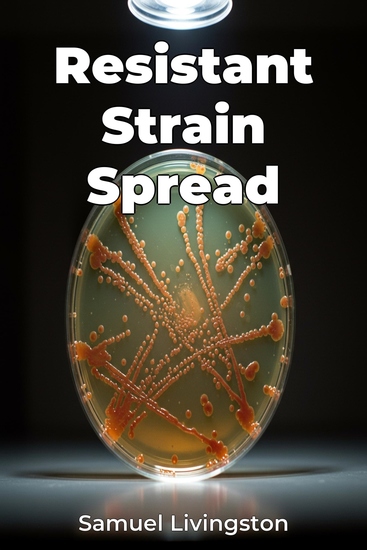
Resistant Strain Spread - cover
LER

Resistant Strain Spread

Samuel Livingston

Tradutor A AI

Editora: Publifye

  • 0
  • 0
  • 0

Sinopse

Resistant Strain Spread explores the urgent global threat of antibiotic resistance, detailing how bacteria evolve and share resistance genes. The book investigates both the biological mechanisms, like horizontal gene transfer via transposons, and the epidemiological factors driving the spread of resistant strains. A key insight is that antibiotic resistance isn't just a biological issue but a complex problem influenced by human behavior and environmental factors.

 
The book begins by establishing the molecular basis of resistance, moves to epidemiological dimensions, and culminates in integrated models for prediction and control. Did you know that agricultural practices significantly contribute to the transmission of resistant strains? Or that the overuse of antibiotics creates selective pressures, accelerating the evolution of resistance? By synthesizing diverse scientific literature and genomic data, the book provides a comprehensive, evidence-based understanding of this multifaceted challenge.

 
This book stands out by integrating insights from various disciplines, from microbiology to public health, to offer a holistic view. It emphasizes the mechanisms and drivers of resistance spread, rather than clinical management, making it a valuable resource for researchers, students, and policymakers seeking strategies for antibiotic stewardship and infection control.
Disponível desde: 27/02/2025.
Comprimento de impressão: 89 páginas.


Outros livros que poderiam interessá-lo

  • Obscurantism in power When Mainstream Thinking Hinders Knowledge - cover

    Obscurantism in power When...

    Brice Perrier

    • 0
    • 0
    • 0
    Over the last ten years or so, it has become commonplace to hear talk of an obscurantist threat linked to a rise in irrationality, manifested mainly by a mistrust of vaccination and conventional medicine. But obscurantism can also be found where we pride ourselves on fighting it. In this case, it is no longer the work of marginal or anti-establishment groups, but of a dominant way of thinking that presents itself as that of science and rationality. 
    The aim of this book is to lift the veil on this obscurantism in power. Through numerous examples, from impeded research into unexplained phenomena such as near-death experiences, to the vast field of medicine where the pharmaceutical industry has cornered the market on proving the usefulness of a treatment, Brice Perrier reveals how reason is transformed into dogmatism and hinders the advancement of knowledge. 
    The aim of the book is not to say what is true or false, nor to settle scientific controversies, but to understand why these debates, which have always been legitimate and even necessary in science, may simply no longer be allowed.
    Ver livro
  • Minnie - The remarkable story of a true trailblazer who found freedom and adventure in the outback - cover

    Minnie - The remarkable story of...

    Marianne van Velzen

    • 0
    • 0
    • 0
    The inspiring story of a feisty pioneering woman who sought freedom and adventure in the outback and became the first woman to work as an opal miner in Australia. 
     
    People always asked her if she was ever afraid, living out in the desert alone with all those rough and scruffy men. But Minnie Berrington was not the faint-hearted type, and never had been. Being tough came naturally to her, growing up with three brothers and a family that went from riches to ruins. 
     
    Only a slip of a girl, Minnie could match any man in stamina, perseverance and strength. She arrived in Coober Pedy when camels still brought in essential supplies, and water was so scarce that no-one washed. Together with the other miners, she braved the heat, the flies and the dust. Every day she waited for that special sound the pick made when it cracked opal. 
     
    The first woman to dig her own shafts in the Australian opal fields, Minnie began her working life as a typist in London. But she and her younger brother, Victor, sought freedom and adventure in the 1920s and found plenty of it in the outback. 
     
    'Destined to become an outback classic' LIZ HARFULL, bestselling author of Women of the Land 
     
    'Minnie brings to life a gutsy, independent woman living a remarkable but simple life in the harshest of conditions' JULIET WILLS, author of The Diamond Dakota Mystery
    Ver livro
  • The Environmental Unconscious - Ecological Poetics from Spenser to Milton - cover

    The Environmental Unconscious -...

    Steven Swarbrick

    • 0
    • 0
    • 0
    Why has psychoanalysis long been kept at the margins of environmental criticism despite the theories of eco-Marxism, queer ecology, and eco-deconstruction available today? What is unique, possibly even traumatic, about eco-psychoanalysis? The Environmental Unconscious addresses these questions as it provides an innovative and theoretical account of environmental loss focused on the counterintuitive forms of enjoyment that early modern poetry and psychoanalysis jointly theorize. 


    Steven Swarbrick urges literary critics and environmental scholars to rethink notions of entanglement, animacy, and consciousness raising. Through close readings of Edmund Spenser, Walter Ralegh, Andrew Marvell, and John Milton, he reveals a world of matter that is not merely hyperconnected, as in the new materialism, but porous and off-kilter. And yet the loss these poets reveal is central to the enjoyment their works offer—and that nature offers. 


    The Environmental Unconscious offers a provocative challenge to ecocriticism that a new theory of disconnection is desperately needed. Tracing the propulsive force of the environmental unconscious from the early modern period to Freudian and post-Freudian theories of desire, Swarbrick not only puts nature on the couch in this book but also renews the psychoanalytic toolkit in light of environmental collapse.
    Ver livro
  • Human Anatomy and Physiology Essentials - Practical Clinical Applications for Future Nurses Allied Health Students and Caregivers to Excel in Coursework and Patient Care Scenarios - cover

    Human Anatomy and Physiology...

    Herbert Hubbard

    • 0
    • 0
    • 0
    This audiobook is narrated by an AI Voice.  
    Human Anatomy and Physiology Essentials: The Bridge Between Textbook Theory and Real-World Care 
    Does the thought of your upcoming Anatomy and Physiology exam make your stomach churn? For many aspiring nurses and health professionals, this subject is the formidable wall standing between them and their dream career. The endless diagrams and Latin names often feel disconnected from the real reason you chose this path: to help people. 
    But what if you could move beyond dry textbooks and static diagrams? Imagine understanding the human body not just as a list of parts to memorize, but as a living, breathing machine that you can actually help heal. Human Anatomy and Physiology Essentials bridges the critical gap between complex theory and the real-world challenges you will face at the bedside. 
    Written specifically for future nurses, allied health students, and caregivers, this guide transforms abstract concepts into practical clinical applications. You will not just learn how a system works; you will understand how to apply that knowledge to save lives and improve patient comfort. 
    Forget the rote memorization that leads to burnout. This resource uses relatable analogies and human stories—like explaining fluid restrictions to a dialysis patient by comparing their kidneys to "war veterans" needing backup—to make the physiology stick in your mind forever. It is designed to help you excel in your coursework by finally giving you the "why" behind every medical fact. 
    By mastering these essentials, you will walk into your exams and clinical rotations with a new level of authority. You will possess the confidence to answer tough questions and the compassion to educate scared patients, turning their confusion into calm understanding. 
    Don't let the complexity of the human body intimidate you any longer. Dive into this essential guide, master the mechanics of life, and become the healthcare professional your future patients deserve.
    Ver livro
  • The Frontier Below - cover

    The Frontier Below

    Jeff Maynard

    • 0
    • 0
    • 0
    Triumphs and disasters in the deep sea 
    This is a journey through time and water, to the bottom of the ocean and the future of our planet. 
    We do not see the ocean when we look at the water that blankets more than two thirds of our planet. We only see the entrance to it. Beyond that entrance is a world hostile to humans, yet critical to our survival. The first divers to enter that world held their breath and splashed beneath the surface, often clutching rocks to pull them down. Over centuries, they invented wooden diving bells, clumsy diving suits, and unwieldy contraptions in attempts to go deeper and stay longer. But each advance was fraught with danger, as the intruders had to survive the crushing weight of water, or the deadly physiological effects of breathing compressed air. The vertical odyssey continued when explorers squeezed into heavy steel balls dangling on cables, or slung beneath floats filled with flammable gasoline. Plunging into the narrow trenches between the tectonic plates of the Earth’s crust, they eventually reached the bottom of the ocean in the same decade that men first walked on the moon. 
    Today, as nations scramble to exploit the resources of the ocean floor, The Frontier Below recalls a story of human endeavour that took 2,000 years to travel seven miles, then investigates how we will explore the ocean in the future. 
    Meticulously researched and drawing extensively on unpublished sources and personal interviews, The Frontier Below is the untold story of the pioneers who had the right stuff, but were forgotten because they went in the wrong direction. 
    The Frontier Below by Jeff Maynard is a captivating journey through the history of maritime expeditions, the science of physiology, and the economics of resource extraction. It is a testament to human endeavour and the indomitable spirit of exploration, offering a glimpse into the future of our oceans. 
    For fans of Buddy Levy (Realm of Ice and Sky), Julian Sancton (Madhouse at the End of the Earth), Rachel Lance (In the Waves), James Bradley (Ghost Species), and Helen Czerski (Blue Machine). 
    HarperCollins 2023
    Ver livro
  • Of Ice and Men - How We've Used Cold to Transform Humanity - cover

    Of Ice and Men - How We've Used...

    Fred Hogge

    • 0
    • 0
    • 0
    An exploration of humanity’s relationship with ice since the dawn of civilization, Of Ice and Men reminds us that only by understanding this unique substance can we save the ice on our planet—and perhaps ourselves. 
     
    Ice tells a story. It writes it in rock. It lays it down, snowfall by snowfall at the ends of the earth where we may read it like the rings on a tree. It tells our planet’s geological and climatological tale. 
     
    Ice tells another story too: a story about us. It is a tale packed with swash-buckling adventure and improbable invention, peopled with driven, eccentric, often brilliant characters. It tells how our species has used ice to reshape the world according to our needs and our desires: how we have survived it, harvested it, traded it, bent science to our will to make it—and how in doing so we have created globe-spanning infrastructures that are entirely dependent upon it. 
     
    And even after we have done all that, we take ice so much for granted that we barely notice it. 
     
    Ice has supercharged the modern world. It has allowed us to feed ourselves and cure ourselves in ways unimaginable two hundred years ago. It has enabled the global population to rise from less than 1 billion to nearly 7½ billion—which just happens to cover the same period of time as humanity has harvested, manufactured, and distributed ice on an industrial scale. 
     
    And yet the roots of our fascination with ice and its properties run much deeper than the recent past.
    Ver livro