¡Acompáñanos a viajar por el mundo de los libros!
Añadir este libro a la estantería
Grey
Escribe un nuevo comentario Default profile 50px
Grey
Suscríbete para leer el libro completo o lee las primeras páginas gratis.
All characters reduced
How Does Change Happen? - Scenes from the Frontlines of Activism - cover

How Does Change Happen? - Scenes from the Frontlines of Activism

Sam Gonçalves

Editorial: 404 Ink

  • 0
  • 0
  • 0

Sinopsis

Mass protests and direct action have been familiar tactics against the many crises of the 21st century. Though methods vary, there's a collective longing for meaningful and transformative action. Some are deemed too weak, others too disruptive: from Instagram tiles to cans of soup thrown on famous paintings.
Through conversations with activists and organisers, Sam Gonçalves recounts stories of protest and the fight for change, from a community of landless workers in Southern Brazil, to chefs unionising their workplace in Glasgow, Scotland. These narratives reveal the opportunities and challenges that are part of the difficult work of creating change, a wrestling with the question: how does change happen?
Having a 'positive impact' in the world is often relegated to the 'personal', an individual endeavour. Gonçalves investigates that assumption and explores ways communities have resisted collectively, and fought against the individualising forces surrounding them.
Disponible desde: 29/05/2025.
Longitud de impresión: 112 páginas.


Otros libros que te pueden interesar

  • The Short Life and Curious Death of Free Speech in America - cover

    The Short Life and Curious Death...

    Anónimo

    • 0
    • 0
    • 0
    Named one of Newsweek’s ""25 Must-Read Fall Fiction and Nonfiction Books to Escape the Chaos of 2020"" 
    The critically acclaimed journalist and bestselling author of The Rage of a Privileged Class explores one of the most essential rights in America—free speech—and reveals how it is crumbling under the combined weight of polarization, technology, money and systematized lying in this concise yet powerful and timely book. 
     
    Free speech has long been one of American's most revered freedoms. Yet now, more than ever, free speech is reshaping America’s social and political landscape even as it is coming under attack. Bestselling author and critically acclaimed journalist Ellis Cose wades into the debate to reveal how this Constitutional right has been coopted by the wealthy and politically corrupt.  
    It is no coincidence that historically huge disparities in income have occurred at times when moneyed interests increasingly control political dialogue. Over the past four years, Donald Trump’s accusations of “fake news,” the free use of negative language against minority groups, “cancel culture,” and blatant xenophobia have caused Americans to question how far First Amendment protections can—and should—go. 
    Cose offers an eye-opening wholly original examination of the state of free speech in America today, litigating ideas that touch on every American’s life. Social media meant to bring us closer, has become a widespread disseminator of false information keeping people of differing opinions and political parties at odds. The nation—and world—watches in shock as white nationalism rises, race and gender-based violence spreads, and voter suppression widens. The problem, Cose makes clear, is that ordinary individuals have virtually no voice at all. He looks at the danger of hyper-partisanship and how the discriminatory structures that determine representation in the Senate and the electoral college threaten the very concept of democracy. He argues that the safeguards built into the Constitution to protect free speech and democracy have instead become instruments of suppression by an unfairly empowered political minority. 
    But we can take our rights back, he reminds us. Analyzing the experiences of other countries, weaving landmark court cases together with a critical look at contemporary applications, and invoking the lessons of history, including the Great Migration, Cose sheds much-needed light on this cornerstone of American culture and offers a clarion call for activism and change.
    Ver libro
  • Gender Explained - A New Understanding of Identity in a Gender Creative World - cover

    Gender Explained - A New...

    PhD Diane Ehrensaft, PsyD...

    • 0
    • 0
    • 0
    A Finalist for the 2025 Lambda Literary Award for LGBTQ+ Nonfiction 
     
    Gender is everywhere. Politicians argue over it, educational systems struggle to define it, and our friends, neighbors, and children explore it. More than ever before, young people are questioning their gender identities and redefining the role of gender in their lives. How should our society―and we as individuals (parents, teachers, friends)―respond? 
     
    In Gender Explained, Diane Ehrensaft, PhD, and Michelle Jurkiewicz, PsyD, separate medical fact from fear-mongering falsehoods and answer these questions: What should parents do when their child starts experiencing gender dysphoria? Which sports teams should transgender youth play on? How should schools teach young people about gender? And most important: What is gender-affirming care, and when should an individual have access to it? 
     
    With clear, expert guidance, this book is a safeguard against political vitriol, and it offers urgent protection for those among us who are transgender and/or nonbinary. Far more than an introduction to gender creativity, it is an invitation to develop compassion for everyone along the gender continuum.
    Ver libro
  • The Rise of Socialism - 1884-1918 - cover

    The Rise of Socialism - 1884-1918

    William Morris, Annie Besant,...

    • 0
    • 0
    • 0
    The birth of liberation movements in the C19th saw a rise in fighting for the rights of workers.William Morris believed decries the belief “not that Commerce was made for man, but that man was made for Commerce”, with the profit motive that renders all work miserable when “It is right and necessary that all men should have work to do which shall be worth doing, and be of itself pleasant to do; and which should be done under such conditions as would make it neither over-wearisome nor over-anxious.”Edward Carpenter demands of those whose only question is “Does It Pay?” to know why any action is undertaken. On starting a farm, he found, “that if I was happy in the life..., and if we were cultivating genuine and useful products… that it might really pay me better to get 1%, than 10% with jangling and wrangling.”Annie Besant attacks a reactionary appeal to the ‘natural’ role of men and women by pointing out that it is equality of opportunity and representation that women want.Eduard Bernstein confronts a misunderstanding that people still have today. Marx and Engels realized in their lifetimes that society was further away than they initially thought from a genuine socialism – that many small revolutions would be necessary, and that a single grand rewriting of society could not work. The next writer also refers to it, in saying that “A few.. only know what Socialism is, and they are Socialists. The rest are opposed to it because the little they know about it is not true.”Eugene Debs rails against the approach government takes in promoting “equality” between capitalist and labourer.We end with Debs' response to being sentenced to ten years imprisonment, for the crime of “opposing a social order in which it is possible for one man who does absolutely nothing that is useful to amass a fortune, while millions work all the days of their lives secure barely enough for a wretched existence. .”
    Ver libro
  • Underground Empire - How America Weaponized the World Economy - cover

    Underground Empire - How America...

    Henry Farrell, Abraham Newman

    • 0
    • 0
    • 0
    A deeply researched investigation that reveals how the United States is like a spider at the heart of an international web of surveillance and control, which it weaves in the form of globe-spanning networks such as fiber optic cables and obscure payment systemsAmerica’s security state first started to weaponize these channels after 9/11, when they seemed like necessities to combat terrorism—but now they’re a matter of course. Multinational companies like AT&T and Citicorp build hubs, which they use to make money, but which the government can also deploy as choke points. Today’s headlines about trade wars, sanctions, and technology disputes are merely tremors hinting at far greater seismic shifts beneath the surface.Slowly but surely, Washington has turned the most vital pathways of the world economy into tools of domination over foreign businesses and countries, whether they are rivals or allies, allowing the U.S. to maintain global supremacy. In the process, we have sleepwalked into a new struggle for empire. Using true stories, field-defining findings, and original reporting, Henry Farrell and Abraham Newman show how the most ordinary aspects of the post–Cold War economy have become realms of subterfuge and coercion, and what we must do to ensure that this new arms race doesn’t spiral out of control.A Macmillan Audio production from Henry Holt & Company.
    Ver libro
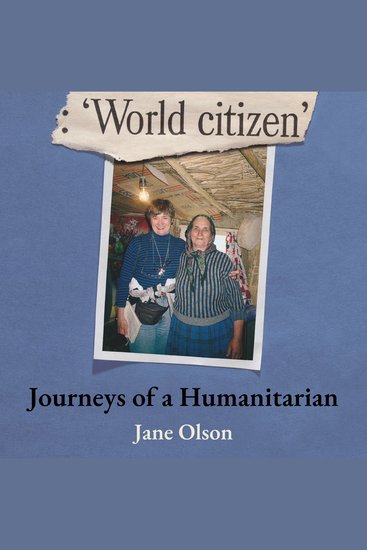
  • World Citizen Journeys of a Humanitarian - cover

    World Citizen Journeys of a...

    Jane Olson

    • 0
    • 0
    • 0
    These stories are about light and hope in the midst of unimaginable human suffering in war zones and places of extreme poverty around the world. Important lessons from a childhood in rural western Iowa are woven throughout, as are examples of human strength and resiliency. Each chapter can be read as a complete experience. Intimate details recorded by the author in journals and on film take the reader on memorable journeys with international human rights and humanitarian organizations. Despite being plunged into war zones, crowded refugee camps, and some of the poorest and most disease-affected places on the planet, we learn the life-saving impact of humanitarian intervention, the healing power of community, the importance of justice, and the truth that one caring person can indeed make a difference. To be a World Citizen is to embrace and champion the Universal Declaration of Human Rights, knowing that all lives are valuable and equally deserving of protection and support.
    Ver libro
  • The Wake-Up Call - Why the Pandemic Has Exposed the Weakness of the West and How to Fix It - cover

    The Wake-Up Call - Why the...

    Anónimo

    • 0
    • 0
    • 0
    ""[An] executive summary of modern political history studded with sweeping assertions and telling anecdotes."" -- The New York Times Book Review 
    ""Thought-provoking."" -- Kirkus Reviews 
    “A shot in the arm...powerful.” -- The Financial Times 
     
    ""The Wake-Up Call, refreshingly concise and eminently readable, highlights how the modern crisis of governance compounded the challenges of the pandemic."" -- Bloomberg 
    ""The Wake-Up Call argues that Covid-19 has exposed not just one president's shortcomings but a much more profound degeneration of governance dating back long before 2016...You will read no more interesting book on the political consequences of the pandemic than this."" -- Niall Ferguson, author of Civilization: The West and the Rest  
     
    NAMED ONE OF THE BEST BOOKS OF 2020 (BLOOMBERG) 
    An urgent and informed look at the challenges America and world governments will face in a post Covid-19 world. 
    The Covid-19 pandemic has revealed that governments matter again, that competent leadership is the difference between living and dying. A few governments proved adept at handling the crisis while many others failed. Are Western governments healthy and strong enough to keep their citizens safe from another virulent virus—and protect their economies from collapse? Is global leadership passing from the United States to Asia—and particularly China?  
    The Wake-Up Call addresses these urgent questions. Journalists and longtime collaborators John Micklethwait and Adrian Wooldridge identify the problems Western leaders face, and outline a detailed plan to help them become more vigilant, better prepared, and responsive to disruptive future events.  
    The problems that face us are enormous; as The Wake-Up Call makes clear, governments around the world must re-engineer the way they operate to successfully meet the challenges ahead. 
    Ver libro