Junte-se a nós em uma viagem ao mundo dos livros!
Adicionar este livro à prateleira
Grey
Deixe um novo comentário Default profile 50px
Grey
Assine para ler o livro completo ou leia as primeiras páginas de graça!
All characters reduced
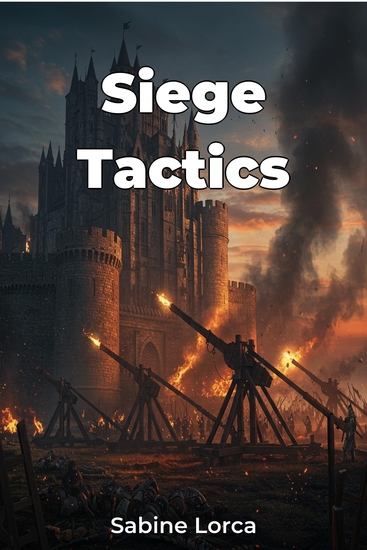
Siege Tactics - cover
LER

Siege Tactics

Sabine Lorca

Tradutor A AI

Editora: Publifye

  • 0
  • 0
  • 0

Sinopse

Siege Tactics explores the dynamic evolution of siege warfare throughout history, examining its impact on military strategy, urban development, and societal resilience. This book argues that siege warfare is not a static set of tactics but a continuously adapting process shaped by technology, strategy, and social conditions. One intriguing aspect is the constant arms race between offensive siege engines and defensive fortifications, which drove innovation and shaped urban landscapes. The book also highlights the psychological warfare inherent in prolonged sieges, demonstrating how these conflicts profoundly impacted civilian populations and economies.

 
The book traces the development of siege warfare from ancient times through the medieval period, the gunpowder era, and into the modern age. Beginning with the fundamental principles of siege warfare, including fortification design and assault tactics, it progresses through key historical periods and specific sieges like Constantinople and those of the English Civil War. This approach provides a holistic analysis of siege warfare's impact, combining technological, strategic, and social perspectives, making it valuable for military history enthusiasts and those interested in the interplay between technology, weaponry, and society.
Disponível desde: 29/03/2025.
Comprimento de impressão: 70 páginas.

Outros livros que poderiam interessá-lo

  • Constantinople - The Rise and Fall of the Byzantine Empire - cover

    Constantinople - The Rise and...

    Will Forrest

    • 0
    • 0
    • 0
    Step into the Enigmatic World of the Byzantine Empire! 
    With this audiobook, you will Embark on a captivating journey through the history of the Byzantine Empire. Immerse yourself in a tale of grandeur, intrigue, and adventure as you discover the secrets of this ancient civilization. 
    With this Audiobook you will:Explore the comprehensive and engaging story of the Byzantine Empire, from its origins to its eventual decline.Unravel the stories of renowned figures such as Emperor Justinian, Empress Theodora, and the brilliant general Belisarius, who shaped the course of the empire's history. 
    The Byzantine Empire, renowned for its breathtaking capital, Constantinople, was a realm of magnificence and intrigue. Our audiobook presents an enthralling and comprehensive account of this ancient civilization, masterfully weaving together historical facts with compelling storytelling.  
    Don't miss this chance to delve into the heart of the Byzantine Empire and uncover its long-lost secrets. 
    Grab your copy today and embark on an unforgettable historical journey.
    Ver livro
  • Economic Theories and Policies - Understanding Key Economic Systems and Strategies (4 in 1) - cover

    Economic Theories and Policies -...

    Arlo Holders

    • 0
    • 0
    • 0
    Take a look at this book bundle! It contains the following books: 
      - Mercantilism Explained: Mercantilism, a dominant economic theory from the 16th to the 18th century, played a pivotal role in shaping the economic and political landscape of early modern Europe. Rooted in the belief that a nation's wealth and power were measured by its stockpile of precious metals, particularly gold and silver, mercantilism emphasized the importance of maintaining a favorable balance of trade. Nations sought to maximize exports while minimizing imports, often employing protectionist policies to achieve this goal. This approach reflected the belief that global wealth was finite, creating fierce competition among nations to secure the largest share of resources and economic advantage. 
      - The Neoliberal Revolution: Neoliberalism is a term widely used to describe a set of economic policies and ideas that emphasize the importance of free markets, deregulation, privatization, and limited government intervention. Emerging in the mid-20th century, neoliberalism represented a distinct shift away from the welfare state and Keynesian economics, which had dominated Western economies in the post-World War II era. 
      - The Venture Capital Playbook: Venture capitalists, typically investors or firms, provide capital in exchange for equity ownership in the company. This investment is usually made in industries that are considered innovative or disruptive, such as technology, healthcare, and biotechnology. 
      - Venture Capital Explained: The venture capital industry is an essential component of the startup ecosystem, providing financial backing to companies that may not yet be profitable but have strong potential. Many of the world’s most successful companies, including Amazon, Google, and Facebook, received early funding from venture capital firms. 
     
    Ver livro
  • History Biographies - Marie Curie Nostradamus and Alan Turing - cover

    History Biographies - Marie...

    Kelly Mass

    • 0
    • 0
    • 0
    This is a combo of biographies about the following well-known individuals: 
    Marie Curie - Marie Salomea Skodowska Curie was a Polish-born, naturalized-French researcher and chemist who originated radioactivity research. She was the first woman to win the Nobel Reward, the first and only woman to win it two times, and the only individual to win the Nobel Reward in 2 different clinical classifications. 
    Her first Nobel Reward was co-won by her spouse, Pierre Curie, making them the first married set to win the reward and developing the Curie family tradition of 5 Nobel Prizes. She was the first woman to be selected as a teacher at the University of Paris in 1906. 
    Nostradamus - Michel de Nostredame, referred to as Nostradamus in Latin, was a French astronomer, doctor, and presumed seer mostly known for his work Les Prophéties, a collection of 942 poetic quatrains supposedly predicting future events. In the year 1555, the book was first released. 
    Since the release of his Les Prophéties, Nostradamus has acquired a very large following of followers who, in addition to the majority of the well-known press, credit him with properly anticipating many essential historic events. 
    Alan Turing - Alan Mathison Turing was a mathematician, computer system researcher, scholar, cryptanalyst, thinker, and theoretical biologist from the U.K. With the Turing device, which can be considered a design of a general-purpose computer system, Turing had a substantial influence on the development of theoretical computer technology, offering a formalization of the ideas of algorithm and calculation. Turing is considered the creator of theoretical computer technology and AI. Turing was born in Maida Vale, London, and raised in the south of England.
    Ver livro
  • Summer of 1876 The: Book Summary & Analysis - cover

    Summer of 1876 The: Book Summary...

    Alexander Pike

    • 0
    • 0
    • 0
    This content is an independent and unofficial summary created for informational and educational purposes only. It is not affiliated with, authorized, approved, licensed, or endorsed by the original author or publisher. All rights to the original work belong to its respective copyright holders. This summary is not intended to substitute the original book, but to offer a concise overview and interpretation of its main ideas.


    Step into one of the most pivotal seasons in American history—a time of invention, ambition, and reckoning. The Summer of 1876 brings to life a whirlwind of events that reshaped a nation on the edge of transformation. From the smoky battlefields of Little Bighorn to the clinking poker chips of Deadwood, from the rising hum of telegraphs to the thunder of trains racing across the plains, this gripping chronicle captures a summer when destiny galloped forward.
     
    Meet iconic figures like George Armstrong Custer, Wild Bill Hickok, and Wyatt Earp—not as legends, but as men driven by urgency, ego, and fate. Witness how innovation collided with conflict, and how small choices sparked massive consequences. With vivid detail and cinematic pace, this audiobook transforms the past into a blueprint for personal growth, leadership, and decision-making in high-stakes environments.
    Ver livro
  • Ludwig Wittgenstein - Language Logic and the Limits of Philosophy - cover

    Ludwig Wittgenstein - Language...

    Hector Davidson

    • 0
    • 0
    • 0
    Ludwig Wittgenstein, one of the most influential philosophers of the 20th century, profoundly shaped modern thought, particularly in the realms of language, logic, and the philosophy of mind. His philosophy spans two distinct periods, marked by an evolution in his views on the relationship between language, meaning, and reality. Wittgenstein’s work challenges the way we think about and use language, positing that philosophical problems often arise from misunderstandings of language and its limitations. 
    Wittgenstein’s early philosophy, as presented in his landmark work Tractatus Logico-Philosophicus, was grounded in the belief that language could mirror the structure of reality. According to his "picture theory of meaning," words and sentences are pictures that represent facts in the world. He argued that the limits of language are also the limits of the world, and anything that could not be meaningfully expressed through language was simply beyond the scope of philosophy. This view led him to conclude that many traditional philosophical problems were nonsensical, arising from a misuse of language. 
    However, Wittgenstein underwent a significant philosophical transformation after his work on the Tractatus, largely due to his dissatisfaction with the results of his early approach. By the time of his later work, particularly in Philosophical Investigations, Wittgenstein had rejected the picture theory of meaning and developed the concept of "language games." He argued that meaning is not inherent in words themselves but is derived from their use in various social contexts. Language, for Wittgenstein, is a tool embedded in human practices and activities. He claimed that understanding language requires understanding the ways it functions in specific contexts, challenging the idea of a fixed, underlying structure of meaning.
    Ver livro
  • Women of Ancient Egypt - Pharaohs Queens and Gods - cover

    Women of Ancient Egypt -...

    Layla Gupta

    • 0
    • 0
    • 0
    The role of women in Ancient Egyptian society was multifaceted, reflecting the complex and dynamic culture of this ancient civilization. Women in Egypt held a relatively high status compared to their counterparts in many other ancient cultures. They were considered equal to men in certain aspects, such as the ability to own property, initiate divorce, and partake in religious rituals. Women were also key figures in the household, and their roles in family and social structures were crucial for the stability and prosperity of Egyptian society. 
    One of the most notable aspects of the role of women in Ancient Egypt was their legal rights. Egyptian women had the legal ability to own land, businesses, and wealth, which provided them with a level of autonomy not commonly found in other ancient societies. This was particularly significant in a culture where family wealth and land were vital to survival and success. In cases of divorce or widowhood, women could retain ownership of their property, and were often entitled to a share of the family’s wealth. Women could also inherit property from their parents, and daughters were not excluded from inheritance as they often were in other cultures. 
    In the social realm, women had significant responsibilities within the family unit. They were primarily responsible for managing household duties, including the care of children, food preparation, and the overall maintenance of the home. These tasks, while often perceived as domestic, were essential to the functioning of society. Women also played important roles as mothers and caregivers, which was highly valued in Egyptian culture. The ideal woman in Egypt was often depicted as a loving and devoted mother, and this image was reflected in religious texts, art, and literature.
    Ver livro