¡Acompáñanos a viajar por el mundo de los libros!
Añadir este libro a la estantería
Grey
Escribe un nuevo comentario Default profile 50px
Grey
Suscríbete para leer el libro completo o lee las primeras páginas gratis.
All characters reduced
Navy Expansion - cover

Navy Expansion

Sabine Lorca

Traductor A AI

Editorial: Publifye

  • 0
  • 0
  • 0

Sinopsis

Navy Expansion explores the U.S. Navy's transformation from a modest fleet to a global maritime superpower. The book connects the Navy's growth to American foreign policy and technological advancements. Readers gain insight into how strategic decisions, like the late 19th-century "New Navy" era, and the need for technological superiority, such as the shift from ironclads to aircraft carriers, drove naval build-up. It emphasizes the interplay between military might and international relations, showing how naval power projects American influence. The book uniquely integrates technological, strategic, and political factors, avoiding a purely military-centric view. It examines the geopolitical landscape, technological advancements, and conflicts that tested the Navy's capabilities. Furthermore, the book addresses ethical considerations related to interventionism and maritime dominance. Beginning with the navy's nascent stages, the book progresses chronologically through key periods, including the World Wars, the Cold War, and the post-Cold War era. Each section analyzes the drivers of naval development. By drawing upon naval archives, government documents, and expert scholarship, Navy Expansion offers a comprehensive understanding of the U.S. Navy's role in shaping the modern world.
Disponible desde: 21/03/2025.
Longitud de impresión: 64 páginas.

Otros libros que te pueden interesar

  • Fearful and Dismissive Avoidant - A Dual Workbook to Help Both Avoidant Attachment Styles Navigate Their Triggers and Break Free from Old Patterns Using Proven Methods - cover

    Fearful and Dismissive Avoidant...

    Alex Kingsman

    • 0
    • 0
    • 0
    Do you have a dismissive avoidant or  fearful avoidant (also known as disorganised) style? 
    Avoidant tendencies can show up in different ways. If you are you stuck in your healing process, make sure you are applying the right strategy for your avoidant tendency type. The following 2-in-1 bundle contains theory and workbook solutions for both avoidant attachment styles. 
    Healing and becoming secure is effective with the right tools and information. In the following bundle you will find two manuscripts:Disorganized Attachment Workbook: How to Turn Intense Emotions into Catalysts for Healing Fearful Avoidant AttachmentAvoidant Help Workbook: Healing the Distance with Easy and Practical Everyday Exercises for Dismissive Avoidant Attachment Style🎁 Bonus in each book 
    . 
    Manuscript one - Disorganized Attachment Workbook 
    Do you want to stop getting in your own way and allow healthy, authentic relationships to develop? Do you want to start trusting again? Are you stuck in a pattern of emotional turmoil? 
    . 
    Manuscript two - Avoidant Help Workbook 
    Do you desire genuine connections and fulfilling relationships? Are you find yourself unintentionally sabotaging potential partnerships? Do you feel stuck and uncertain about how to start opening up? 
    . 
    This audiobook presents a new outlook on how to dismantle emotional barriers while remaining authentic. Discover exercises tailored for avoidants. Shed the fear of intimacy and self-sabotage in your relationships, as Kingsman offers a clear roadmap for change.
    Ver libro
  • Whose America? - Culture Wars in the Public Schools Second Edition - cover

    Whose America? - Culture Wars in...

    Jonathan Zimmerman

    • 0
    • 0
    • 0
    In this expanded edition of his 2002 book, Zimmerman surveys how battles over public education have become conflicts at the heart of American national identity. 
      
    Critical Race Theory. The 1619 Project. Mask mandates. As the headlines remind us, American public education is still wracked by culture wars. But these conflicts have shifted sharply over the past two decades, marking larger changes in the ways that Americans imagine themselves. In his 2002 book, Whose America?, Zimmerman predicted that religious differences would continue to dominate the culture wars. Twenty years after that seminal work, Zimmerman has reconsidered: arguments over what American history is, what it means, and how it is taught have exploded with special force in recent years. In this substantially expanded new edition, Zimmerman meditates on the history of the culture wars in the classroom—and on what our inability to find common ground might mean for our future.
    Ver libro
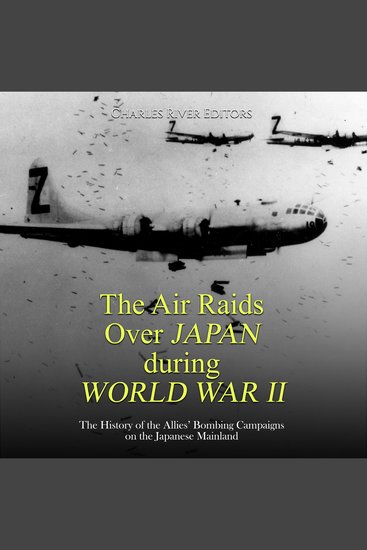
  • Air Raids Over Japan during World War II The: The History of the Allies’ Bombing Campaigns on the Japanese Mainland - cover

    Air Raids Over Japan during...

    Editors Charles River

    • 0
    • 0
    • 0
    The Americans would turn the war in the Pacific around in the middle of 1942, but in the wake of Pearl Harbor and the Japanese invasion of the Philippines, the country was in desperate need of a morale boost, and it would come in the form of the Doolittle Raid. In part to show that the Japanese were not invincible, and in part to reassure the American public that the nation would not lose the war, the Doolittle Raid included both Army and Navy units that launched 16 land-based medium bombers from an aircraft carrier, a feat that was the first of its kind but also one involving a great deal of risk. Getting the bombers and carriers in place to execute the mission involved much strategic planning and cooperation within the American military, and had it failed, it could have dealt a serious blow to the Americans’ Pacific presence due to the nation’s limited resources in that theater. 
    The first serious air raids over Japan came in November 1944, after the Americans had captured the Marianas Islands, and through February 1945, American bombers concentrated on military targets at the fringes of the city, particularly air defenses. However, the air raids of March 1945, and particularly on the night of March 9, were a different story altogether. In what is generally referred to as strategic or area bombing, waves of bombers flew low over Tokyo for over two and a half hours, dropping incendiary bombs with the intention of producing a massive firestorm. The American raids intended to produce fires that would kill soldiers and civilians, as well as the munitions factories and apartment buildings of those who worked in them. 325 B-29s headed toward Tokyo, and nearly 300 of them dropped bombs on it. Additional raids, this time largely on the north and west, came in April, and in May, raids hit Ginza and the south. Altogether, American bombers flew more than 4,000 missions over Tokyo before surrender.
    Ver libro
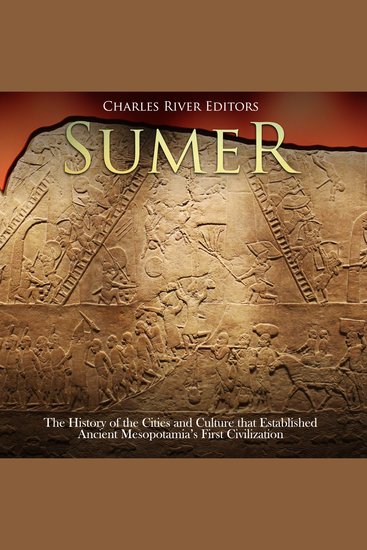
  • Sumer: The History of the Cities and Culture that Established Ancient Mesopotamia’s First Civilization - cover

    Sumer: The History of the Cities...

    Editors Charles River

    • 0
    • 0
    • 0
    When American archaeologists discovered a collection of cuneiform tablets in Iraq in the late 19th century, they were confronted with a language and a people who were at the time only scarcely known to even the most knowledgeable scholars of ancient Mesopotamia: the Sumerians. The exploits and achievements of other Mesopotamian peoples, such as the Assyrians and Babylonians, were already known to a large segment of the population through the Old Testament and the nascent field of Near Eastern studies had unraveled the enigma of the Akkadian language that was widely used throughout the region in ancient times, but the discovery of the Sumerian tablets brought to light the existence of the Sumerian culture, which was the oldest of all the Mesopotamian cultures. 
    Although the Sumerians continue to get second or even third billing compared to the Babylonians and Assyrians, perhaps because they never built an empire as great as the Assyrians or established a city as enduring and great as Babylon, they were the people who provided the template of civilization that all later Mesopotamians built upon. The Sumerians are credited with being the first people to invent writing, libraries, cities, and schools in Mesopotamia (Ziskind 1972, 34), and many would argue that they were the first people to create and do those things anywhere in world. 
    For a people so great it is unfortunate that their accomplishments and contributions, not only to Mesopotamian civilization but to civilization in general, largely go unnoticed by the majority of the public. Perhaps the Sumerians were victims of their own success; they gradually entered the historical record, established a fine civilization, and then slowly submerged into the cultural patchwork of their surroundings. 
    Ver libro
  • More Numbers Every Day - How Data Stats and Figures Control Our Lives and How to Set Ourselves Free - cover

    More Numbers Every Day - How...

    Micael Dahlen, Helge Thorbjørnsen

    • 0
    • 0
    • 0
    Your personal number detox: learn how numbers have taken control of your life—and how to get it back. How many hours of sleep did you get last week? How many steps did you walk today? How many friends do you have? It seems everywhere you go, you’re surrounded by numbers. You depend on them, so you think they’re dependable, neutral, exact. But the truth? Numbers lie. They mislead. They’re tricky, little manipulative devils. And they’re in the process of really messing things up for you. You just don’t know it yet.   Today we all strive to quantify everything: calories, likes, website traffic, and even friends. We measure ourselves against others and compare our real experiences to imagined averages. But in our rush to measure, we can lose sight of what matters. From internationally renowned economics professors Micael Dahlen and Helge Thorbjørnsen, More Numbers Every Day is a timely and powerful investigation—and warning—about the trouble numbers can bring us. With groundbreaking, empowering, sometimes frightening, and sometimes funny research, they describe how numbers creep into our heads and bodies, affecting how we think and feel. But numbers aren’t all bad. Sometimes they make us weaker, but sometimes they also make us stronger. More Numbers Every Day is more than just an exploration in to the somewhat mysterious, seemingly infinite pandemic of numbers. It’s a numerical vaccination—for a happier and more integrally healthy life.
    Ver libro
  • Unwilded - Finding Our Way Back to Nature (Unabridged) - cover

    Unwilded - Finding Our Way Back...

    Alastair Humphreys

    • 0
    • 0
    • 0
    Alastair Humphreys explores how our shift from lives immersed in nature to repetitive indoor routines has harmed our wellbeing, sense of connection and, in turn, the planet. It shows how we can quietly begin to restore what we have lost by going outside and paying attention to the wild beauty around us.
    
    Humans used to be embedded in the natural world, but today many of us live sedentary screen-based lives indoors, treating nature as something distant - to be watched on television or reached by flying elsewhere. 
    
    In Unwilded, Alastair Humphreys examines the consequences of this disconnection and how it shapes our wellbeing, childhood, education, diets, lifestyles and the liveability of towns. On a wider scale, it explains why the climate and ecological emergencies feel abstract and beyond our individual responsibility.
    
    At the heart of the book is shifting baseline syndrome: from the felling of the Sycamore Gap tree to the extinction of possibly the most abundant bird species in history, it is the quiet process by which each generation accepts a depleted world as normal. 
    
    Unwilded argues that change need not begin with grand gestures. It can begin with spending just fifteen minutes outdoors, paying attention. From nothing comes understanding, care and responsibility - and the beginning of rewilding ourselves and the world.
    Ver libro