Join us on a literary world trip!
Add this book to bookshelf
Grey
Write a new comment Default profile 50px
Grey
Subscribe to read the full book or read the first pages for free!
All characters reduced
Naval Warfare - cover

Naval Warfare

Sabine Lorca

Translator A AI

Publisher: Publifye

  • 0
  • 0
  • 0

Summary

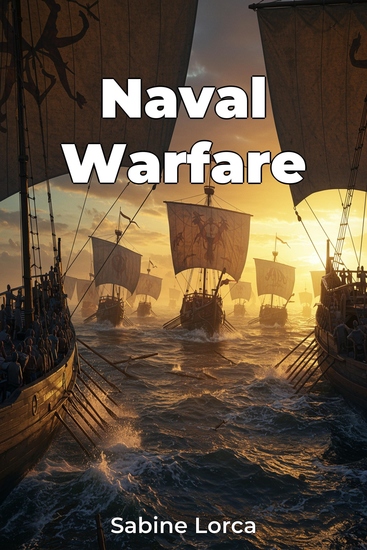
Naval Warfare explores the pivotal role of maritime conflict in shaping world history, focusing on how naval engagements, strategies, and technologies have influenced the rise and fall of global powers. The book highlights the often-underestimated impact of naval power on international relations and trade routes. For example, control of maritime trade routes has historically provided nations with significant economic and military advantages.

 
The book examines the evolution of naval technology, from ancient galleys to modern submarines, and how these advancements have impacted naval strategies. The book progresses chronologically, starting with ancient naval power and moving through the age of sail to modern naval warfare, analyzing significant sea battles and strategic campaigns.

 
By examining cases such as the rise of ironclads and the impact of naval aviation, the book illustrates how technology, tactics, and leadership intersect. Ultimately, Naval Warfare argues that mastery of the seas has been a critical factor in achieving global dominance, a thesis that remains relevant in today's interconnected world.
Available since: 03/29/2025.
Print length: 70 pages.
Other books that might interest you

  • Circus Maximus and the Colosseum The: The History of Ancient Rome’s Most Famous Sports Venues - cover

    Circus Maximus and the Colosseum...

    Editors Charles River

    • 0
    • 0
    • 0
    The ambitious and fearless emperors that built the legendary Roman Empire from scratch, the broad-shouldered and bronzed gladiators with their iconic plume helmets and glinting swords, and elaborate parties attended by toga-wearing Romans fueled by alcohol, violence, orgies, and other godless acts all paint a picture of Roman life. 
    At the Circus Maximus, the guttural cheers of the spectators reverberated across the enormous open space, but their cries could hardly be heard over the rumble of the ground. On the ellipse-shaped track, 5 charioteers would skew their bodies and steer their magnificent vehicles around the curves. Gusts of sand and dirt flew up from the whizzing wheels and encircled the pounding hooves of the stunning stallions. Distracted personnel and guards dragging their feet were considered fair game. As one chariot careened to the side, preparing to collide with another chariot, a row of guards might have to try to duck out of the way in the nick of time. Some would be trampled by hooves. Chariot races were dangerous for participants too. A charioteer could become disoriented and fail to position himself as his horses moved instinctively, sending his body catapulting forward out of the chariot. Needless to say, chariot racing in Rome was a nail-biting spectacle. 
    When the Colosseum was built in the late 1st century A.D., the Romans, a people known for their architectural acumen, managed to amaze themselves. Martial believed the Colosseum was so grand a monument that it was even greater than the other Wonders of the Ancient World, which had been written about and visited endlessly by the Romans and Greeks in antiquity. The Colosseum was a spectacular achievement in architecture, something new and innovative, and therefore an amazing “Wonder” in its own way. The Colosseum is a large stadium even by today’s standards, and its great size conveys the power of the empire as it dominates the landscape and towers over nearby buildings.
    Show book
  • The Old Testament in the Light of Assyria and Babylonia - Historical Records and Legends - cover

    The Old Testament in the Light...

    Theophilus G. Pinches

    • 0
    • 0
    • 0
    The Old Testament read against the Assyrian and Babylonian tablets - the flood, the tower, the kings named in both - by the Museum scholar who deciphered much of the material himself. This edition adds a gallery of 60 plates after painters including John Martin, Max Pietschmann and Lucas van Valckenborch, together with 11 restored and coloured illustrations.
    Show book
  • Archimedes: A short biography - 5 Minutes: Short on time - long on info! - cover

    Archimedes: A short biography -...

    5 Minutes, 5 Minute Biographies,...

    • 0
    • 0
    • 0
    Archimedes, Greek universal genius: Life and work in a short biography! Everything you need to know, brief and concise. Infotainment, education and entertainment at its best!
    Show book
  • Say Hello to My Little Friend - A Century of Scarface - cover

    Say Hello to My Little Friend -...

    Nat Segaloff

    • 0
    • 0
    • 0
    When Brian DePalma's operatically violent and profane Scarface debuted in 1983, the film drew almost as much fire as the relentless gunfire in the film itself. The movie was a remake of 1932's Scarface—revamped for a new era of drugs, sex, and graphic violence. Attacked as both a celebration of cocaine-fueled excess and a condemnation of it, the film's reputation only grew as the years went by. But the real story of its success started nearly a century ago—when Hollywood first fell in love with the American gangster . . . 


    Hollywood's infatuation with money, power, and organized crime has captured the public's imagination and made Scarface one of its most enduring modern myths. From a 1912 gangster film by D. W. Griffith to the 1932 hit Scarface starring Paul Muni, to Brian DePalma's 1983 shocker, the antihero's rise and fall exposes the dark side of the American Dream—whether it's Prohibition Era bootleggers or modern-day drug dealers. When actor Al Pacino got the idea of doing a remake of Scarface after screening the original, a legend was (re)born—and the rest is history. With guns blazing and chainsaws whirring, movie biz writer Nat Segaloff tears into this pop culture phenomenon with fascinating insights, stunning revelations, and a true fan's glee. This is a must-listen book for movie buffs, crime lovers, and culture vultures everywhere.
    Show book
  • Underwater - The Greed-Soaked Tale of Sexual Abuse in USA Swimming and Around the Globe - cover

    Underwater - The Greed-Soaked...

    Irvin Muchnick

    • 0
    • 0
    • 0
    While the celebrity victims of Dr. Larry Nassar and the USA Gymnastics sexual abuse scandals rightly got a lot of attention, the number of affected kids is far more numerous in swimming. Underwater tells the almost unbelievable story, in the U.S., Canada, Europe, Australia, Latin America, and the Middle East, of coaches who preyed on children while hopping from program to program, state to state, and even country to country, in a pattern similar to the pedophile priests of the Catholic Church. 
     
    Irvin Muchnick, an experienced investigative reporter of the dark side of our popular sports entertainments, gained access to thousands of pages of FBI files and other sources to expose scores of such scenarios, as well as the inaction of bureaucrats and even the most highly regarded politicians. The ranks of abusers include some of the most famous and celebrated coaches in swimming history. And there’s no fixing the problem, the author says, so long as hundreds of thousands of young swimmers annually — elite and casual athletes alike — remain at the mercy of the Olympic system’s money-hungry priorities.
    Show book
  • Norwegian Made Easy - Beginner - Volume 2 of 3 - cover

    Norwegian Made Easy - Beginner -...

    Lingo Wave

    • 0
    • 0
    • 0
    We broke our new series on learning Norwegian down into different learning stages. Start with the "Lower Beginner" books followed by the "Beginner" and "Upper Beginner" books. Next, progress to the "Intermediate" series, then test and reinforce your knowledge with the "Conversations" series. 
    This audiobook is divided into units.While it provides different learning patterns and accommodates various needs, this audiobook focuses on helping you improve your ability to understand, speak, and memorise Norwegian.  
    In Unit 1 you will hear Norwegian decoded with each syllable spoken very slowly and clearly with repetition. Immediately before each sentence is spoken, you will hear the translation, so you will always understand what is being said. 
    Unit 2 focuses solely on increasing your listening ability, which will improve your abilities to engage in dialogue with a native Norwegian speaker. This chapter requires you to listen very carefully to nuances in the language. 
    By Unit 3 you will already notice progress in your abilities to speak and understand Norwegian. The spoken translation is followed by two repetitions in Norwegian at a completely natural speed. While you are learning to process naturally spoken Norwegian, Units 3 and 4 will help you memorise new vocabulary and full sentences. 
    In Unit 5 you can test yourself on how much you have learned. If you are having difficulties, we suggest you revisit the listening, speaking, or memorisation section of Units 1, 2 3 or 4, according to what you need more help with. 
    Topics covered in this book: 
    1. Asking about family 
    2. Asking about relationship status 
    3. Expressing frequency 
    4. Talking about spare time activities and hobbies 
    5. Using quantifiers/determiners 
    6. Talking about preference 
    7. Talking about abilities 
    8. Talking about location of places 
    9. Describing appearance 
    10. Talking about personality 
    ...
    Show book