Begleiten Sie uns auf eine literarische Weltreise!
Buch zum Bücherregal hinzufügen
Grey
Einen neuen Kommentar schreiben Default profile 50px
Grey
Jetzt das ganze Buch im Abo oder die ersten Seiten gratis lesen!
All characters reduced
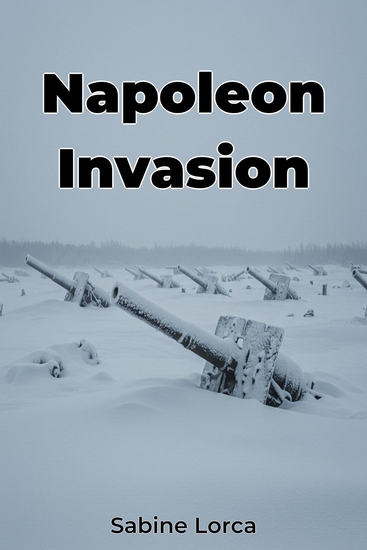
Napoleon Invasion - cover

Napoleon Invasion

Sabine Lorca

Übersetzer A AI

Verlag: Publifye

  • 0
  • 0
  • 0

Beschreibung

Napoleon Invasion meticulously examines Napoleon Bonaparte's disastrous 1812 campaign in Russia, highlighting the critical intersection of military strategy, environmental factors, and logistical capabilities. The book argues that Napoleon's underestimation of Russia's vastness and the brutal Russian winter, combined with the Russian army’s scorched-earth tactics, led to the disintegration of the Grande Armée. Readers gain insight into how logistical nightmares and environmental adversities transformed Napoleon's ambition into a catastrophic retreat, impacting European history and leading to the decline of Napoleon's empire. This detailed account explores the political climate of early 19th-century Europe and the breakdown of the Franco-Russian alliance, providing necessary background on military tactics and socio-political dimensions. The book progresses chronologically, starting with Napoleon's strategic objectives, analyzing key battles like Borodino, and focusing on the devastating retreat from Moscow. By drawing upon military dispatches, memoirs, and weather data, the book emphasizes the Russian winter's crucial role; for example, disease and starvation decimated the Grande Armée far more than direct combat losses. Unique in its approach, Napoleon Invasion distinguishes itself by comprehensively analyzing environmental and logistical factors alongside traditional military narratives. The book assesses the campaign's strategic consequences and touches on debates surrounding Napoleon's leadership, making it valuable for those seeking a nuanced understanding of the 1812 campaign and its broader implications.
Verfügbar seit: 20.03.2025.
Drucklänge: 51 Seiten.

Weitere Bücher, die Sie mögen werden

  • Breaking Bread - A Memoir - cover

    Breaking Bread - A Memoir

    Jonathan Jansen

    • 0
    • 0
    • 0
    Professor. Pundit. Public nuisance. In his columns, books and on social media, Jonathan Jansen is prolific, and he likes to speak his mind about schools and universities, race, politics and our complex South African society. 
      
    He has brought incisive analysis, compassion and a sense of humour to some of the most controversial issues in our country for many years. And now, in this memoir, Jansen goes back to his early years: growing up in a loving, fiercely evangelical family on the Cape Flats, being put on the road to purpose by an inspiring school teacher and becoming the first of his generation to go to university. Journey with Jansen as he finds his passion for teaching high school and becomes a leading academic and thinker amid great transformation in post-apartheid South Africa. 
      
    His gift for story-telling and his interactions with people from different walks of life offer moving insights into the intricacies of South African society, insights that are filled with wisdom and leadership lessons. Jansen’s patchwork of memories tells a bigger story than that of his own life. It’s a tale of learning the value of ‘breaking bread’ with others, of finding mutual recognition in our different fears and faiths, our fumbles and fortitude, our hurts and our hopes.
    Zum Buch
  • Byzantine Empire - cover

    Byzantine Empire

    Santiago Machain

    • 0
    • 0
    • 0
    This audiobook is narrated by an AI Voice.   
    Byzantine Empire traces the dramatic transformation of the Roman Empire’s eastern half into a distinct Byzantine civilization, charting its arc from the founding of Constantinople in 330 to the empire’s high-water mark under the Macedonian dynasty around 1025. Beginning with Constantine’s 'New Rome,' the book explores how geography, law, and faith fused to create a durable imperial culture. It follows the legalization and institutionalization of Christianity, the political theology that bound church and state, and the cultural splendors that culminated in Hagia Sophia’s luminous dome. 
    Through narrative chapters, readers encounter Justinian’s daring—his legal codification, the reconquest of lost provinces, the trauma of plague, and the brilliance of Hagia Sophia—before pivoting to the Arab conquests that reshaped frontiers and identities. The emergence of the theme system, the icon debates that tested the soul of Byzantine devotion, and the everyday economy of farms, markets, and guilds reveal an empire constantly reinventing itself. The story crescendos with the Macedonian Renaissance: a disciplined revival of letters, law, art, and arms that reconquered lands, codified governance in Greek, choreographed courtly ceremony, and exported Byzantine culture through missions to the Slavs and Rus’. 
    Written for general readers, this volume blends political narrative with human-scale vignettes—scribes and soldiers, merchants and monks—showing how resilience, administration, and a theology of beauty created a civilization at once traditional and experimental. It sets the stage for the empire’s later crises and transformations, while celebrating the ingenuity that made Byzantium the City of the World’s Desire.
    Zum Buch
  • Israelis and Palestinians - From the Cycle of Violence to the Conversation of Mankind - cover

    Israelis and Palestinians - From...

    Jonathan Glover

    • 0
    • 0
    • 0
    Can Israelis and Palestinians end their long conflict? The shocking violence of current events undermines hope, as does the long history of peace deals sabotaged by extremists on both sides. In this compelling and timely book, the eminent moral philosopher Jonathan Glover argues that one vital step towards progress is to better understand the disturbing psychology of the cycle of violence. 


    Glover explores the psychological flaws that entrap both sides: the urge to respond to wounds or humiliation with backlash; political or religious beliefs held with a rigidity that excludes compromise; and people's identity being shaped by the conflict in ways that make it harder to imagine or even desire alternatives. Drawing on the history of comparable conflicts that eased over time, Glover proposes some ways to gradually weaken the grip of this psychology. 


    Completed as casualties mounted in the latest political and humanitarian crisis, Israelis and Palestinians is essential for anyone concerned by the ongoing violence in the Middle East.
    Zum Buch
  • Law at the Movies - Sidney Lumet And Robert Bolt; Legal Novels From Turow And Grisham - cover

    Law at the Movies - Sidney Lumet...

    John Warwick Montgomery

    • 0
    • 0
    • 0
    Dr. Montgomery, in two lectures, looks at select legal issues raised in recent books and movies, analyzing and critiquing the efforts by Marxists and legal positivists to establish credible bases for human rights.
    Zum Buch
  • The 16 Human Desires That Make People Buy - cover

    The 16 Human Desires That Make...

    Reece Wideman

    • 0
    • 0
    • 0
    Novelty is the desire for something new. 
    A new experience, a new feeling, a new possibility. 
    In this audiobook, Reece Wideman explores how novelty shapes attention, motivation, and buying behavior — and why humans crave change even when life is stable. 
    Listeners will gain insight into how novelty drives impulse decisions, creativity, exploration, and consumer behavior, while learning how to engage newness intentionally without turning curiosity into chaos.
    Zum Buch
  • St Petersburg - cover

    St Petersburg

    Kelly Mass

    • 0
    • 0
    • 0
    St Petersburg's structures lay over the skeletons of the press-ganged servant workers who worked to build it, making it the label "the city built on bones." Historians approximate that 100,000 18th-century slaves are buried underneath the city's stunning Italianate estates and large Parisian-style streets.They passed away of cold, appetite, illness, or, if they were truly unfortunate, wolves. They were drawn from all around the Russian Empire at the time. They dedicated their lives for the magnificence of Imperial Russia, and the city they built, St Petersburg, stands as a testimony to the Russian state's single-mindedness.Its extravagant palaces radiate European elegance and were actively built in a Western way to bring Russia closer to Europe.Still, more than 3 centuries later, Russia has yet to finish this journey, and St Petersburg is a witness to the trouble of the journey.Let’s take a look at what else makes Saint Petersburg such a unique place.
    Zum Buch