¡Acompáñanos a viajar por el mundo de los libros!
Añadir este libro a la estantería
Grey
Escribe un nuevo comentario Default profile 50px
Grey
Suscríbete para leer el libro completo o lee las primeras páginas gratis.
All characters reduced
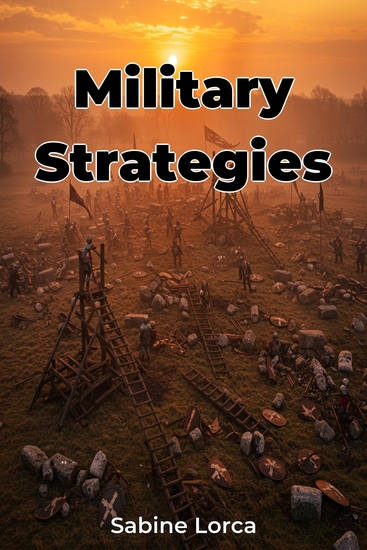
Military Strategies - cover

Military Strategies

Sabine Lorca

Traductor A AI

Editorial: Publifye

  • 0
  • 0
  • 0

Sinopsis

Military Strategies explores the evolution of battlefield tactics and strategic decisions that have shaped wars and influenced modern military doctrine. It examines pivotal moments in military history, revealing how strategic choices led to victory or defeat. The book highlights the constant interplay between military innovation and strategic adaptation, showcasing how breakthroughs in weaponry, communication, and transportation have revolutionized warfare. For example, the Roman legions adapted their tactics to conquer diverse enemies, while Napoleonic warfare led to the development of modern staff systems. The book argues that military history is a series of adaptations influenced by specific challenges. While fundamental principles of war remain constant, their application must be tailored to each conflict's unique context. Military Strategies guides readers through a comprehensive exploration, beginning with fundamental concepts like the principles of war and levels of warfare. Subsequent chapters delve into specific historical periods, using case studies of battles and campaigns to exemplify pivotal strategic shifts. Structured to provide a comprehensive understanding, the book progresses from establishing fundamental concepts to examining specific historical periods and concluding with an analysis of contemporary military challenges. This approach, combined with primary source accounts and detailed analyses, makes the book a valuable resource for military professionals and history enthusiasts alike.
Disponible desde: 29/03/2025.
Longitud de impresión: 70 páginas.

Otros libros que te pueden interesar

  • Titanic - A Fresh Look at the Evidence by a Former Chief Inspector of Marine Accidents - cover

    Titanic - A Fresh Look at the...

    John Lang

    • 0
    • 0
    • 0
    “By far the most thorough and well-written investigative book on RMS Titanic’s short life and tragic sinking that this reviewer has read . . . fascinating.” —Choice Reviews   The sinking of the Titanic on her maiden voyage in April 1912 was one of the defining moments of the twentieth century. Books and films about the disaster that befell the iconic liner are commonplace, and it seems almost inconceivable that anything fresh can emerge. But there is one angle that has not been covered, and Titanic examines the events of April 1912 from that completely new perspective. John Lang brings the standards of a twenty-first-century accident investigation to bear on the events of April 1912, using his expertise and his investigator’s instinct to determine exactly what happened a century ago, and what important lessons still need to be learned.  “A fascinating account . . . this book looks at the facts from a new perspective and uncovers some unexpected findings. A worthwhile read.” —Royal Naval Sailing Association  “Provides genuine insight into what almost certainly happened before, during and after the ice sliced through the five compartments on the liner’s starboard bow.” —Viewpoint  “Lang, with his experience of marine accident investigation has found an angle in examining events of April 1912 from the perspective of an MAIB officer. His analysis is supported by detailed background material enabling the reader to understand the events of the collision and sinking more fully as he brings the standards of a 21st century investigation to bear on the events in determining exactly what happened and why.” —Flash  
    Ver libro
  • The Invented State - Policy Misperceptions in the American Public - cover

    The Invented State - Policy...

    Emily Thorson

    • 0
    • 0
    • 0
    In The Invented State, Emily Thorson argues that a problematic and understudied aspect of political misinformation reflects widespread public misperception about what the government does. Because much of public policy is invisible to the public, there is fertile ground for false beliefs to flourish, leading to what Thorson terms the "invented state": systematic misperceptions about public policy. However, people get the facts wrong not because they are stupid or blinded by partisan loyalty. Misperceptions are created when three conditions are met: when citizens have incomplete information about an issue, when their own biases color their understanding of it, and when they feel that the issue is important. The invented state is created by exposure to misinformation and by individuals' cognitive errors. 


    Correcting these policy misperceptions is highly effective at reducing false beliefs. Providing people with corrective information has downstream effects on attitudes. When they learn how policies really work, their approval increases and they also shift their policy priorities. Contrary to pundits' assumptions of a public who is largely indifferent to policy, there is a deep public desire to learn basic facts about how the government works. Thorson meets that desire with analysis on how the media can identify and correct substantive policy misperceptions.
    Ver libro
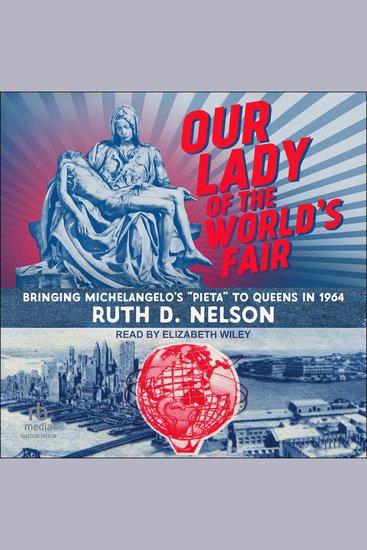
  • Our Lady of the World's Fair - Bringing Michelangelo's "Pieta" to Queens in 1964 - cover

    Our Lady of the World's Fair -...

    Ruth D. Nelson

    • 0
    • 0
    • 0
    Driven by different motives, Robert Moses and Francis Cardinal Spellman had the same vision: to display Michelangelo's masterpiece, the Pietà, in the Vatican's pavilion at the 1964 World's Fair in New York City. 


    As Ruth D. Nelson gracefully showcases, Moses believed this blockbuster would guarantee the fair's financial success. At the same time, Spellman, Archbishop of New York and the spiritual leader of Cold War America's Catholic community, hoped that at a time of domestic strife and global conflict, the Pietà's presence would have a positive spiritual impact on the nation. Although the fair did not turn out to be the financial bonanza that Moses expected, the Pietà drew record crowds of the faithful, art lovers, and the curious. 


    Nelson's fascinating uncovering of the intensive planning that went into designing the pavilion, transporting the art piece across the Atlantic, and coordinating Pope Paul VI's visit to New York in 1965—the first papal visit to the Western Hemisphere—demonstrates the sheer scale and opportunity of the two men's endeavors. Our Lady of the World's Fair depicts the skepticism and fierce criticism that faced the two New York power brokers. Rather than letting the negative weigh them down, they united and called on every resource at their disposal to make this unlikely cultural coup possible.
    Ver libro
  • Storytelling Skills - The Effectiveness of Storytelling Technique to Improve Communication and Create Opportunities for Success - cover

    Storytelling Skills - The...

    Jim Colajuta

    • 0
    • 0
    • 0
    An excellent narrative is remembered by everyone. Regardless of the subject matter, good tales stick with us, whether we hear them on the radio, read about them in the newspaper, or watch them unfold on live television. A good story can be pretty compelling when recounted by a great storyteller. Effective storytellers can captivate their audience, guide them in whichever direction they need, and leave listeners/readers with new information to absorb and a value to carry with them.There's an old adage that people who tell stories are the ones who dominate the world. Whether you're pitching an investor, conducting a meeting, or introducing a new initiative, storytelling should be at the heart of everything you do as a team. Even a phone chat with a potential client entails some form of narrative. You may connect with customers, engage with colleagues, and even start a movement by using the power of storytelling.People often believe that learning a lesson through observation is less painful than learning through experience. When we share and embrace our failures, we assist others in overcoming their own challenges. The story can invest a concept with meaning and emotions in a way that plain writing cannot. People are drawn to stories because they can grasp a concrete object. Stories elicit emotions and motivate people to act.Speeches, presentations, workshops, and even board meetings can all benefit from the use of storytelling. Don't forget about it; it's been one of humanity's most valuable abilities since the dawn of communication.
    Ver libro
  • Unlocking Your Potential: The True Power of Emotional Intelligence Mastery - Improve Relationships Boost Self-awareness and Lead with Empathy - cover

    Unlocking Your Potential: The...

    Ethan Matthews

    • 0
    • 0
    • 0
    "Unlocking Your Potential: The True Power of Emotional Intelligence Mastery: Improve Relationships, Boost Self-awareness, and Lead with Empathy" is a revolutionary manual created to assist readers in realizing the complete potential of their emotional intelligence. This book gives you the skills and knowledge you need to improve your relationships, develop self-awareness, and lead with empathy in a world where emotional intelligence is becoming more and more important for both personal and professional success. 
    This thorough manual deconstructs emotional intelligence, emphasizing self-awareness, self-control, empathy, and social skills. Readers will gain knowledge on how to recognize emotional cues, control their feelings, and react coolly in challenging circumstances. In addition to emphasizing the value of empathy in interpersonal interactions and leadership roles, the book provides helpful advice on how to build strong connections with others. 
    A different facet of emotional intelligence—like controlling your emotions or fostering stronger relationships—is covered in each chapter. This book gives you a methodical approach to change the way you interact with the outside world, whether your goals are to become a better communicator, handle conflict, or build enduring connections. 
    "Unlocking Your Potential" provides insightful lessons for anybody looking to increase their emotional intelligence, with an emphasis on practical strategies and real-world applications. This book will provide you with a road map to emotional mastery, regardless of whether you're a professional trying to improve your leadership abilities or an individual trying to strengthen your personal connections.
    Ver libro
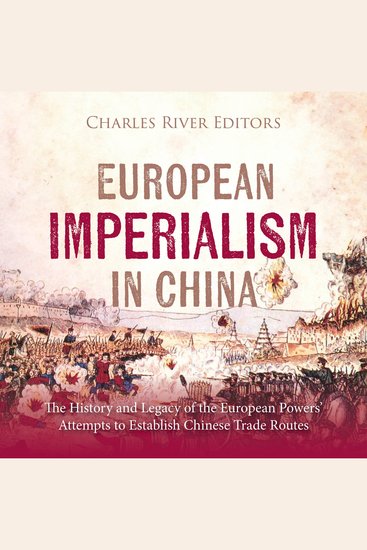
  • European Imperialism in China: The History and Legacy of the European Powers’ Attempts to Establish Chinese Trade Routes - cover

    European Imperialism in China:...

    Editors Charles River

    • 0
    • 0
    • 0
    During the 15th century, China had become economically and technologically advanced compared to civilizations in Europe at the time, and its fleet, which had reached a total of 3,500 ships, was unmatched by any other world power. Nevertheless, after conducting several trade expeditions with the massive fleet, the Chinese ships were either burned in the docks or left to rot. With that, China began to revert to the xenophobic policies of its past and reduce its presence in other lands. By 1525, the largest naval fleet in the world had essentially been destroyed or dismantled by China itself.  
    While China was in the process of isolating itself from the rest of the world, the European explorers were beginning to discover new lands, such as North America and South America. Among the countries doing the most exploring during this time were the Portuguese. The Portuguese had reached India in 1498, and by 1509 they had established part of their empire in India. This allowed the Portuguese to have a base of operations to further expand east into Asia. In 1511, the Portuguese captured the large spice trading center of Malacca in Malaysia, and like their base in India, Malacca allowed the Portuguese to have a foothold, thereby providing access to China and Southeast Asia. 
    The location of Macau was beneficial and strategically chosen by the Portuguese, as it was in close communication with Guangzhou and connected via a river system. In contrast to their earlier dealings with the Chinese, the Portuguese attempted to appear more humble and comply with the wishes of the Chinese rather than with force. As it turned out, the policy, in conjunction with increased European activities in the region, would help the Portuguese Empire hold on to Macau even as its fortunes dwindled everywhere else across the world.
    Ver libro