Unisciti a noi in un viaggio nel mondo dei libri!
Aggiungi questo libro allo scaffale
Grey
Scrivi un nuovo commento Default profile 50px
Grey
Iscriviti per leggere l'intero libro o leggi le prime pagine gratuitamente!
All characters reduced
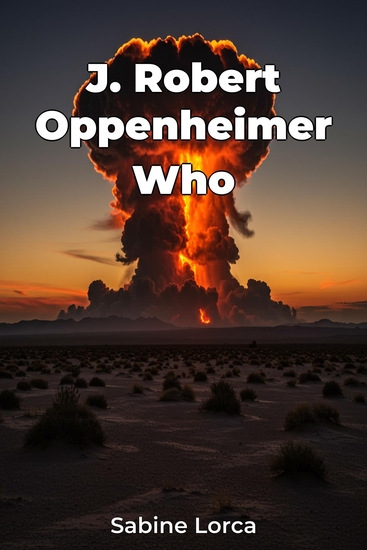
J Robert Oppenheimer Who - cover

J Robert Oppenheimer Who

Sabine Lorca

Traduttore A AI

Casa editrice: Publifye

  • 0
  • 0
  • 0

Sinossi

J. Robert Oppenheimer: Who explores the life of the theoretical physicist who led the Manhattan Project, a program that dramatically altered global power. The book examines the ethical challenges faced by scientists during wartime and the complex political landscape of the Cold War era. It follows Oppenheimer's journey from academia to becoming the leader of the Los Alamos Laboratory, where the atomic bomb was developed. The book highlights how Oppenheimer, despite lacking administrative experience, managed a vast team of scientists and engineers to achieve a seemingly impossible goal.

 
The narrative delves into Oppenheimer's early life and career, his pivotal role in the Manhattan Project, and the post-war period where he advocated for international control of atomic energy. The book reveals the intricate web of political forces that ultimately led to his downfall.

 
One intriguing fact is that the Manhattan Project involved immense logistical challenges, requiring the coordination of diverse experts and resources. Another is that Oppenheimer's later advocacy for international control clashed with powerful figures, leading to his security hearing.

 
Through extensive research and accessible narrative, the book offers a nuanced perspective on the intersection of science, politics, and ethics. It traces Oppenheimer's trajectory across three key sections: his early life and education, his leadership during the Manhattan Project, and his subsequent political struggles. This approach provides readers with a comprehensive understanding of Oppenheimer's life and the lasting impact of his work on military history and the world.
Disponibile da: 01/05/2025.
Lunghezza di stampa: 51 pagine.

Altri libri che potrebbero interessarti

  • The Gratitude Advantage - Leveraging Thankfulness to Transform Your Mind and Life - cover

    The Gratitude Advantage -...

    Caleb David

    • 0
    • 0
    • 0
    "Discover the transformative power of gratitude with 'The Gratitude Advantage,' a comprehensive guide to leveraging thankfulness to revolutionize your mindset and elevate your life. In a world often focused on what's lacking, this book offers a refreshing perspective, revealing how cultivating a grateful heart can unlock a wealth of happiness, resilience, and success. Through insightful reflections, practical exercises, and inspiring stories, you'll learn to shift your focus from negativity to appreciation, cultivate a positive mindset, and create a life of abundance. Discover how to incorporate gratitude into your daily routine, strengthen your relationships, and enhance your overall well-being. 'The Gratitude Advantage' isn't just about feeling good; it's about transforming your perspective and creating a life of lasting joy and fulfillment. Whether you're seeking greater happiness, improved relationships, or increased success, this book will empower you to harness the transformative power of gratitude. Embrace the advantage and experience the life-changing benefits of thankfulness."
    Mostra libro
  • Japan's Surrender - The Path to Victory in the Pacific and the End of World War II - cover

    Japan's Surrender - The Path to...

    Sage Winters

    • 0
    • 0
    • 0
    The Pacific theater of World War II was a brutal and protracted conflict, defined by fierce battles, shifting strategies, and immense human cost. By 1945, the war had entered its final stages, with the Allied forces, led primarily by the United States, gradually gaining the upper hand over Imperial Japan. The end of the Pacific War seemed inevitable, yet the path to Japan's surrender was far from straightforward. The road to victory in the Pacific involved a combination of military ingenuity, strategic alliances, and significant geopolitical shifts. However, the culmination of this path was not solely the result of battlefield victories but also of profound shifts in the political, economic, and moral considerations of both the Japanese leadership and the Allied powers. 
      
    The turning point in the Pacific War came with key battles such as the Battle of Midway in 1942, which severely crippled Japan’s naval forces, and the Allied island-hopping strategy, which successfully isolated and neutralized key Japanese strongholds in the Pacific. Despite these significant losses, Japan’s leadership remained determined to continue the war, believing that they could negotiate a favorable peace settlement or, at worst, fight to a bloody conclusion. In 1945, as Japan’s ability to defend its empire steadily diminished, the Allied forces intensified their efforts, culminating in the invasion of Okinawa—an operation that proved to be one of the bloodiest of the war. 
      
    As the war raged on, the Japanese home islands were subjected to relentless bombing campaigns, both conventional and, later, nuclear. The United States, having developed the atomic bomb, found itself at a crossroads. The decision to deploy this new weapon was fueled by the desire to force Japan’s surrender without having to launch a full-scale invasion, which would likely result in catastrophic casualties for both sides.
    Mostra libro
  • aka bpNichol - A Preliminary Biography - cover

    aka bpNichol - A Preliminary...

    Frank Davey

    • 0
    • 1
    • 0
    Reflecting on the career of a prominent poet, this biography focuses on Canadian wordsmith Barrie Nichol — more commonly known by his pen name, bpNichol — who was a practicing lay psychoanalyst and vice president of one the largest and long-lasting North American communes for more than a decade. Recognizing his international influence as both a visual and sound poet, Nichol's literary achievements are reviewed, including The Martyrology, a renowned, seven-volume poem, four novels, two musical comedies, six children's books, hundreds of hand-drawn visual poems, and even 10 episodes of Jim Henson's hit television series Fraggle Rock. Penned by one of Nichol's numerous literary collaborators, this account reveals the close connections among the writer's various activities, particularly how the autobiographical inquiries and Freudian dream theory linked with the young poet's biographical self-awareness. The book demonstrates how the Subject's main psychoanalytic client was his own writing, following Nichol as he explored its slips, accidental puns, and unintended meanings and implications for the communal future of the human species, both in high literature and comical prime time television.
    Mostra libro
  • Clovis and Mississippian Peoples The: The History of the Ancient Cultures that Influenced Indigenous Groups in North America - cover

    Clovis and Mississippian Peoples...

    Editors Charles River

    • 0
    • 0
    • 0
    When most people think of “ancient American civilizations,” the Aztec, Maya, or Inca cultures probably come to mind immediately, because the societies in Mesoamerica and South America left behind permanent structures for millions of visitors from around the world to see each year. But in fact, there were people inhabiting the region over 11,000 years earlier. 
    The discovery of distinct arrow tips throughout the United States, Canada, and parts of northern Mexico in the early 20th century, often referred to by archaeologists as projectile points, is a testament to the success of the Paleolithic culture, now known as Clovis. Modern scholars point to the extensive nature of Clovis archaeological sites as proof of its importance, yet these same scholars have only begun to uncover this culture, and as they do, more questions are raised than there are answers. Although most of the questions are not controversial, some of the answers scholars have forwarded are. Any examination of the Clovis culture begins with what is known. Archaeologists know the approximate chronological and geographic range of the Clovis culture, and they can identify what made the Clovis people unique. These were the projectile points the Clovis people made, setting them apart from most people that came before and after them 
    	In North America, from about 1000-1500 CE, an equally complex culture formed along the banks of the Mississippi, Missouri, and Ohio Rivers. From Red Wing, Minnesota to Greenhouse, Louisiana, and from Spiro, Oklahoma to Macon, Georgia, societies built impressive mound structures that served as ritual platforms, burial sites, and residences for the elites. These mounds also served as the focal points of urban areas of varying sizes that were connected to each other through trade and ideology, forming a culture that modern historians have since designated the “Mississippian culture.” 
    Mostra libro
  • Africa 101 - The Pan African Lifestyle Guide to Relocating Investing & Living the African Dream in the Motherland - cover

    Africa 101 - The Pan African...

    Emmanuel Bope, Solange Bope

    • 0
    • 0
    • 0
    Africa 101: The Pan African Lifestyle Guide to Relocating, Investing & Living the African Dream in the Motherland is your ultimate guide to thriving in Africa. Designed for the global Black diaspora, it offers practical advice, inspiring insights, and essential steps for those ready to relocate, invest, or immerse themselves in the continent. Whether you're looking to reconnect with your roots, travel, acquire citizenship, or scale business opportunities, this guide provides the foundational essentials to embrace and enjoy a true Pan-African lifestyle.
    Mostra libro
  • The Perennials - The Megatrends Creating a Postgenerational Society - cover

    The Perennials - The Megatrends...

    Mauro F. Guillén

    • 0
    • 0
    • 0
    Get the best from accelerating social change with the new audiobook from the bestselling author of 2030 and “acclaimed thought leader” (Kirkus), Mauro Guillén. Adam Grant praises how the book "invites us to rethink our careers, our families, and our future plans.” Find out why business leaders and bestselling authors around the world are calling it "sharply relevant and necessary" (William P. Lauder), "insightful and deeply researched" (Richard Florida), and "a must read" (Mohammed A. El-Erian). In today’s world, the acceleration of megatrends – increasing longevity and the explosion of technology among many others – are transforming life as we now know it.In The Perennials, bestselling author of 2030 Mauro Guillén unpacks a sweeping societal shift triggered by demographic and technological transformation. Guillén argues that outmoded terms like Boomers, Gen X, Millennials, and Gen Z have long been used to pigeonhole us into rigid categories and life stages, artificially preventing people from reaching their full potential. A new postgenerational workforce known as “perennials” – individuals who are not pitted against each other either by their age or experience – makes it possible to liberate scores of people from the constraints of the sequential model of life and level the playing field so that everyone has a chance at living a rewarding life. Guillén unveils how this generational revolution will impact young people just entering the workforce as well as those who are living and working longer. This multigenerational revolution is already happening and Mauro Guillén identifies the specific cultural, organizational and policy changes that need to be made in order to switch to a new template and usher in a new era of innovation powered by the perennials.A Macmillan Audio production from St. Martin’s Press.
    Mostra libro