Junte-se a nós em uma viagem ao mundo dos livros!
Adicionar este livro à prateleira
Grey
Deixe um novo comentário Default profile 50px
Grey
Assine para ler o livro completo ou leia as primeiras páginas de graça!
All characters reduced
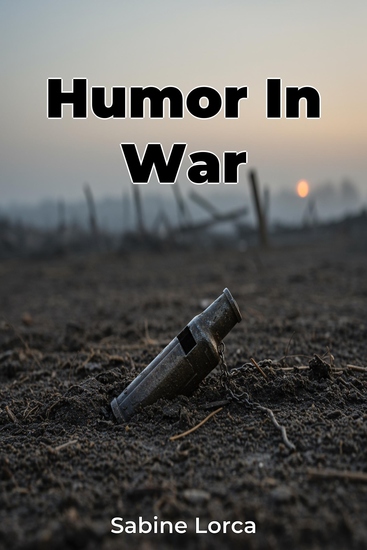
Humor In War - cover
LER

Humor In War

Sabine Lorca

Tradutor A AI

Editora: Publifye

  • 0
  • 0
  • 0

Sinopse

Humor In War explores the unexpected role of humor as a vital coping mechanism during wartime. It delves into how soldiers and civilians use jokes, satire, and gallows humor to navigate the horrors of conflict. The book isn't about military strategy but instead focuses on the resilience of the human spirit, highlighting how humor serves as stress relief and helps build camaraderie amid chaos. One intriguing aspect explored is the distinction between officially sanctioned humor, like propaganda, and the subversive, underground jokes that reflect genuine anxieties. The book examines the diverse forms of wartime humor and its psychological functions, considering social and cultural contexts. It draws on personal letters, diaries, and military archives, analyzing humor through psychology, sociology, and cultural studies. The approach challenges traditional war narratives by emphasizing everyday acts of resilience. Understanding the impact of humor as a coping mechanism is crucial, as it allows individuals to process trauma and maintain a sense of control. The book progresses from establishing a theoretical framework to case studies across different conflicts, from World War I to the present, examining specific humor forms and their target audiences. Ultimately, Humor In War considers the long-term effects of wartime humor on collective memory and national identity, offering insights into psychological resilience and the maintenance of sanity.
Disponível desde: 29/03/2025.
Comprimento de impressão: 59 páginas.

Outros livros que poderiam interessá-lo

  • Greenbrier Bunker The: The History of the Emergency Cold War Bunker Designed for Congress during a Nuclear War - cover

    Greenbrier Bunker The: The...

    Charles River Editors

    • 0
    • 0
    • 0
    In October 1962, American spy planes discovered the Soviets were building nuclear missile sites in Cuba, and intelligence officials informed President John F. Kennedy of this on October 16th. It went without saying that nuclear missile sites located just miles off the coast of the American mainland posed a grave threat to the country, especially because missiles launched from Cuba would reach their targets in mere minutes. That would throw off important military balances in nuclear arms and locations that had previously ensured the Cold War stayed cold. Almost all senior American political figures agreed that the sites were offensive and needed to be removed, but how? Ultimately, Kennedy's administration crafted an eventual plan that sought to avoid all-out war: a blockade of Cuba. 
    In the weeks and months following the crisis, Kennedy sought to ease nuclear tensions. By 1963, the first agreement was signed to limit the testing of nuclear devices, and the habit of secretly taping all meetings, phone calls, and other communications continued, due to the great assistance the practice had provided throughout the crisis.  
    As it turned out, October 1962 was probably the closest the Soviet Union and United States came to formally engaging in a war against each other, but of course, the possibility of a destructive nuclear war had been contemplated years before the Cuban Missile Crisis. That doomsday scenario is precisely why the federal government was working on a secret nuclear fallout bunker underneath the Greenbrier Hotel in West Virginia in the years preceding the crisis. Its existence would remain a secret for decades until being declassified shortly after the collapse of the Soviet Union, and to this day the bunker remains both a source of curiosity and mystery. 
    Ver livro
  • The Zelensky Effect - cover

    The Zelensky Effect

    Olga Onuch, Henry E. Hale

    • 0
    • 0
    • 0
    With Russian shells raining on Kyiv and tanks closing in, American forces prepared to evacuate Ukraine's leader. Just three years earlier, his apparent main qualification had been playing a president on TV. But Volodymyr Zelensky reportedly retorted, 'I need ammunition, not a ride.' Ukrainian forces won the battle for Kyiv, ensuring their country's independence even as a longer war began for the southeast. 


    You cannot understand the historic events of 2022 without understanding Zelensky. But the Zelensky effect is less about the man himself than about the civic nation he embodies: what makes Zelensky most extraordinary in war is his very ordinariness as a Ukrainian. 


    The Zelensky Effect explains this paradox, exploring Ukraine's national history to show how its now-iconic president reflects the hopes and frustrations of the country's first 'independence generation'. Interweaving social and political background with compelling episodes from Zelensky's life and career, this is the story of Ukraine told through the journey of one man who has come to symbolize his country.
    Ver livro
  • Stories from Kathasaritasagara series -4 - From Various sources - cover

    Stories from Kathasaritasagara...

    Anusha HS

    • 0
    • 0
    • 0
    The book Kathasaritsagara has been created by Soma Deva. It consists of 21,500 shlokas. 
    This book Kathasaritsagara has been divided into 18 lambakaas, and those 18 lambakaas are still more divided into 125 Tharanga's. 
    Some lambakaas are very big, while some are very small. 
    If there are 115 Shlokas in the 11th Lambaka, there are around 4925 Shlokas in 12th Lambaka. 
    During ancient times from the mouth of Lord Shiva, this story got birth. Those who listen to this story will experience all sorts of worldly pleasures. They will be blessed by Lord Shiva and at last reach jnana Loka by the blessings of lord shiva.
    Ver livro
  • The Discovery of Guiana - cover

    The Discovery of Guiana

    Sir Walter Raleigh

    • 0
    • 0
    • 0
    Unveil the Mysteries of El Dorado in The Discovery of Guiana by Sir Walter Raleigh 
    Dive into the heart of South America with Sir Walter Raleigh's thrilling account of his 1595 expedition in search of the legendary city of gold, El Dorado. The Discovery of Guiana blends vivid descriptions of the lush Amazonian landscape with encounters of its diverse indigenous cultures. Raleigh's narrative captures the essence of the Elizabethan era's spirit of exploration and adventure. 
    Why Read This Book? 
    - Rich Descriptions: Experience the untamed beauty of Guiana through Raleigh’s detailed portrayal of its environment and peoples. 
    - Historical Insight: Gain a deeper understanding of the dynamics between European explorers and the New World. 
    - Intriguing Adventure: Follow Raleigh’s quest for the mythical treasures of El Dorado, adding allure and mystery to his journey. 
    Whether you're a history buff or thrive on adventure tales, this book offers a compelling glimpse into a daring expedition that has shaped our understanding of the Americas. 
    Embark on an unforgettable exploration with The Discovery of Guiana. Raleigh’s work is more than a travelogue; it’s an inspiring story of ambition and discovery. Secure your copy today and witness the wonders of the Amazon through the eyes of one of history’s most renowned explorers. 
    This audiobook was narrated and produced by RAM Studios, where humans and artificial intelligence collaborate to create an excellent listening experience. (The reading is done primarily by AI)
    Ver livro
  • The Status and Recognition of Post-1992 Transnistria - An Investigation of the Case for de jure Independence - cover

    The Status and Recognition of...

    Richard Colbey

    • 0
    • 0
    • 0
    The only book in English on the subject. Of topical relevance in the context of the current conflict in Ukraine.
    Ver livro
  • Tunisian Campaign The: The History of the Decisive Battles that Ended the Fighting in North Africa during World War II - cover

    Tunisian Campaign The: The...

    Editors Charles River

    • 0
    • 0
    • 0
    The fighting in North Africa during World War II is commonly overlooked, aside from the famous battle at El Alamein that pitted the British under General Bernard Montgomery against the legendary “Desert Fox,” Erwin Rommel. But while the Second Battle of El Alamein would be the pivotal action in North Africa, the conflict in North Africa began all the way back in the summer of 1940 when Italian dictator Benito Mussolini declared Italy’s entrance into the war. 	Dealing with the Italians was one thing, but the British faced an entirely different monster in North Africa when Erwin Rommel, a German general who had gained much fame for his role in the invasions of Poland and France, was sent to North Africa in February 1941. Rommel’s directives from the German headquarters were to maneuver in a way that would allow him to hide the fact that his ultimate goal was the capture of Cairo and the Suez Canal. The ultimate plan was that Rommel would not reveal the Germans’ true intentions in North Africa until after the Germans had made headway in their invasion of the Soviet Union. 
    ith the Axis forces trying to push through Egypt towards the Suez Canal and the British Mandate of Palestine, American forces landed to their west in North Africa, which ultimately compelled Rommel to try to break through before the Allies could build up and overwhelm them with superior numbers. Given that the combined Allied forces under Montgomery already had an advantage in manpower, Montgomery also wanted to be aggressive, and the fighting would start in late October 1942 with an Allied attack.  
    	The ensuing Tunisian Campaign was a complicated, last-ditch, cut-and-thrust effort on the part of the doomed Axis forces. The various Allied forces arriving from the west were heavily bloodied before U.S. and British airborne and commando units began to mop up key ports and landing facilities.  Rommel and his army were clearly staring at defeat. 
    Ver livro