¡Acompáñanos a viajar por el mundo de los libros!
Añadir este libro a la estantería
Grey
Escribe un nuevo comentario Default profile 50px
Grey
Suscríbete para leer el libro completo o lee las primeras páginas gratis.
All characters reduced
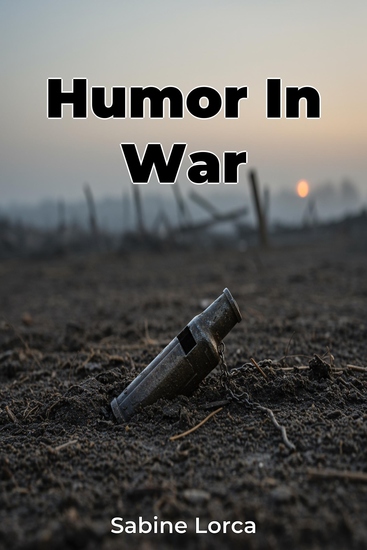
Humor In War - cover

Humor In War

Sabine Lorca

Traductor A AI

Editorial: Publifye

  • 0
  • 0
  • 0

Sinopsis

Humor In War explores the unexpected role of humor as a vital coping mechanism during wartime. It delves into how soldiers and civilians use jokes, satire, and gallows humor to navigate the horrors of conflict. The book isn't about military strategy but instead focuses on the resilience of the human spirit, highlighting how humor serves as stress relief and helps build camaraderie amid chaos. One intriguing aspect explored is the distinction between officially sanctioned humor, like propaganda, and the subversive, underground jokes that reflect genuine anxieties. The book examines the diverse forms of wartime humor and its psychological functions, considering social and cultural contexts. It draws on personal letters, diaries, and military archives, analyzing humor through psychology, sociology, and cultural studies. The approach challenges traditional war narratives by emphasizing everyday acts of resilience. Understanding the impact of humor as a coping mechanism is crucial, as it allows individuals to process trauma and maintain a sense of control. The book progresses from establishing a theoretical framework to case studies across different conflicts, from World War I to the present, examining specific humor forms and their target audiences. Ultimately, Humor In War considers the long-term effects of wartime humor on collective memory and national identity, offering insights into psychological resilience and the maintenance of sanity.
Disponible desde: 29/03/2025.
Longitud de impresión: 59 páginas.

Otros libros que te pueden interesar

  • Starting a World War: The History of the Events and Battles that Began World War I and World War II - cover

    Starting a World War: The...

    Editors Charles River

    • 0
    • 0
    • 0
    By the 20th century, warfare was nothing new to the European powers, especially when it came to fighting each other. Conflicts had been a mainstay on the European continent for over two millennia. Even after the Napoleonic wars had enveloped Europe in large scale war for nearly 20 years in the 19th century, the Europeans’ imperialism continued unabated. It would take the devastation of World War I to shock Europe and jolt the world’s superpowers out of their imperialistic tendencies.  
    	With Europe anticipating a potential war, all that was missing was a conflagration. That would start in 1908, when Austria-Hungary annexed Bosnia-Herzegovina in the Balkan Peninsula, drawing it into dispute with Russia. Moreover, this upset neighboring Serbia, which was an independent nation. From 1912-1913, a conflict was fought in the Balkans between the Balkan League and the Ottoman Empire, resulting in the weakening of the Ottoman Turks. After the First Balkan War, a second was fought months later between members of the Balkan League itself. The final straw came June 28, 1914, when a Serbian assassinated Archduke Franz Ferdinand, the heir to the throne of Austria-Hungary, in Sarajevo, Bosnia.   
    The Munich Agreement is widely reviled today and is held up as the epitome of appeasement, but historians still debate its effects on the Second World War, as well as Neville Chamberlain's character and motivations. Some believe the attempted appeasement of Nazi Germany hastened, or even caused, the mayhem occupying the next seven years. Others believe that the pact merely failed to alter war's inevitable arrival in either direction.  
    Of course, as most people now know, the invasion of Poland was merely the preface to the Nazi blitzkrieg of most of Western Europe, which would include Denmark, Belgium, and France by the summer of 1940
    Ver libro
  • Empires of Persia The: The History and Legacy of the Dynasties that Ruled Persia from Antiquity to Today - cover

    Empires of Persia The: The...

    Editors Charles River

    • 0
    • 0
    • 0
    Lying in the middle of a plain in modern day Iran is a forgotten ancient city: Persepolis. Built two and a half thousand years ago, it was known in its day as the richest city under the sun. Persepolis was the capital of Achaemenid Persian Empire, the largest empire the world had ever seen, but after its destruction, it was largely forgotten for nearly 2,000 years, and the lives and achievements of those who built it were almost entirely erased from history. Alexander the Great’s troops razed the city to the ground in a drunken riot to celebrate the conquest of the capital, after which time and sand buried it for centuries. 
    The Parthian people created an empire that lasted almost 500 years, from the mid-3rd century BCE until 224 CE, and it stretched from the Euphrates River in the west to Central Asia and the borders of Bactria in the east. In fact, the expansive empire challenged the Romans on numerous occasions for supremacy in the Near East. 
    During the first half of the 1st millennium CE, an empire arose in Persia that extended its power and influence to Mesopotamia in the east, Arabia in the south, the Caucasus Mountains in the north, and as far east as India. This empire, known alternatively as the Sasanian Empire or Sassanid Empire, was the last of three great dynasties in Persia—the Achaemenid and the Parthian being the first two dynasties—before the rise of Islam. 
    Amid the upheaval in the Islamic world following Muhammad’s death, the Umayyad Caliphate lasted for less than a century, but in that time it managed to become one of the most influential of the major caliphates established following him. 	The Umayyads would be replaced by the far more intelligent and crafty Abbasids, who managed to wield powerful tools like propaganda to undermine their opponents, but eventually, the Ottomans would consolidate control of the area for nearly 500 years.  
    Ver libro
  • We Hold Our Breath - A Journey to Texas Between Storms - cover

    We Hold Our Breath - A Journey...

    Micah Fields

    • 0
    • 0
    • 0
    Developed as the commercial hub of the Texas cotton and sugarcane industries, Houston was designed for profit, not stability. Its first residents razed swamplands into submission to construct a maze of highways and suburbs, giving the city a sprawling, centerless energy as storms and floods rattled coastal Texas. 


    When Hurricane Harvey made landfall in 2017, Fields set off from his home in Iowa back to the battered city of his childhood to rescue his mother. Fields tracks the devastation of Hurricane Harvey, one storm in a long lineage that threatens the fourth largest city in America. 


    Fields depicts the history of Houston with reverence and lyrical certainty, investigating the conflicting facets of Texan identity that are steeped in racial subjugation, environmental collapse, and capitalist greed. He writes of the development of the modern city in the wake of the destruction of Galveston in 1900; of the oil booms and busts that shaped the city; of the unchecked lust for growth that makes Houston so expressive of the American dream. 


    We Hold Our Breath is a portrait of a city that exists despite it all, a city whose story has always been one of war waged relentlessly against water.
    Ver libro
  • The Emerald Tablets of Thoth the Atlantean - cover

    The Emerald Tablets of Thoth the...

    Doreal

    • 0
    • 0
    • 0
    The history of the tablets translated in the following pages is strange and beyond modern scientists' comprehension. Their age is astounding, dating back 36,000 years B.C. Thoth is an Atlantean Priest-King who established a colony in ancient Egypt after the mother country was sunk. He was the builder of the Great Pyramid of Giza, which has been incorrectly attributed to Cheops. He included his knowledge of ancient wisdom as well as securely hidden records and instruments from ancient Atlantis. 
    From approximately 50,000 B.C. to 36.000 B.C., he ruled the ancient race of Egypt for approximately 16,000 years. The ancient barbarous race among which he and his followers had settled had advanced to a high level of civilization at the time. Thoth was immortal, that is, he had defeated death, passing only when he wished and not through death. His vast knowledge elevated him to the throne of the various Atlantean colonies, including those in South and Central America. 
    When the time came for him to leave Egypt, he built the Great Pyramid over the entrance to the Great Halls of Amenti, placed his records inside, and appointed guards from among the highest of his people to guard his secrets. The descendants of these guards later became the pyramid priests, through whom Thoth was deified as the God of Wisdom, The Recorder, by those living in the age of darkness that followed his death. The halls of Amenti were transformed into the underworld, the Halls of the Gods, where the soul passed after death for judgment. 
    The ego of Thoth passed into the bodies of men in later ages, as described in the tablets. As a result, he incarnated three times, the last time as Hermes, the thrice-born. In this incarnation, he left the Emerald Tablets, a later and far less complete exposition of the ancient mysteries.
    Ver libro
  • Pompey the Great: The Life and Legacy of the Legendary Roman General Who Lost the Civil War to Julius Caesar - cover

    Pompey the Great: The Life and...

    Editors Charles River

    • 0
    • 0
    • 0
    Thanks to Caesar’s victory in the civil war, Pompey is mostly remembered not for being one of Rome’s greatest generals, but for being defeated by Caesar and then ignominiously murdered after he fled to Egypt, where the boy pharaoh Ptolemy XIII decapitated Pompey and offered his head to Caesar as a gift. Although Caesar was there chasing Pompey’s men, he quickly became involved in Egypt’s own civil war. As a consequence of Ptolemy’s barbarity, Caesar impulsively decided to side with his sister Cleopatra in her bid for the throne of Egypt, escalating what was rapidly becoming an all-out civil war.  
    	Of course, before the civil war, Pompey was one of the most powerful men in Rome. Gnaeus Pompeius was born on September 29, 106 BCE and went on to become regarded as one of the greatest statesmen and generals of the late Roman Republic. He was given the title “the Great” by his troops in Africa in 82 BCE and assumed the cognomen Magnus after 81 BCE. Pompey belonged to the senatorial nobility, the Pompeii, and the family had its first consul in 141 BCE. He loved all things Greek and spoke the language fluently. He gained much of his early military experience working on the staff of his father Pompeius Strabo, and the family base was in Picenum in eastern Italy. Strabo had significantly increased the family’s clients when he was consul in 88 BCE.  
    	In time, Pompey played a role in defeating many of Rome’s enemies across the world, from Africa to Spain, and he even helped put down Spartacus’ uprising. He had built his military power and acumen by participating in Rome’s previous civil war between Gaius Marius and Sulla, sharpening both his political and military skills, and he used them to great effect for decades during one of ancient Rome’s most chaotic – and important – periods. Perhaps just as importantly, following his successes in Africa, he demanded a triumph and refused to disband his army.
    Ver libro
  • Crafting Consistency - Building a Sustainable Writing Routine - cover

    Crafting Consistency - Building...

    Virversity Online Courses

    • 0
    • 0
    • 0
    Crafting Consistency is essential for both new and seasoned writers seeking to establish and maintain a productive writing routine. Enhance your writing journey by overcoming barriers, managing time efficiently, and building a creative environment.Key Course Highlights:- Set clear writing objectives to guide your process.- Identify and tackle personal challenges.- Grasp the significance of consistency in writing.- Master time management tailored for writers.- Design an inspiring and creative writing space.- Devise a personalized writing schedule.- Break down large projects with achievable goals.- Combat procrastination using effective techniques.- Cultivate a daily writing habit for long-term success.- Sustain motivation and nurture your writing passion.- Utilize tools to track progress and measure success.- Overcome writer's block with inventive solutions.- Seamlessly balance writing with other life commitments.- Adapt your routine as life circumstances change.Unlock the potential of consistent writing by setting precise goals for clear direction. The course helps you recognize personal productivity hurdles and provides strategies to overcome them. Prioritize writing sessions by crafting an inspiring and focused environment.Align your schedule with your lifestyle, identifying peak writing times for optimum productivity. Feel accomplished by setting and achieving manageable goals, and reduce procrastination with tested focus techniques. Foster a daily writing habit and keep your motivation alive to drive progress and improvement.Conquer writer’s block and harmonize writing with daily life seamlessly. Adapt writing approaches to evolving circumstances. Completing Crafting Consistency equips you with the skills to integrate writing seamlessly into your life, transforming your journey with the power of consistency. Embrace this transformation today.
    Ver libro