Join us on a literary world trip!
Add this book to bookshelf
Grey
Write a new comment Default profile 50px
Grey
Subscribe to read the full book or read the first pages for free!
All characters reduced
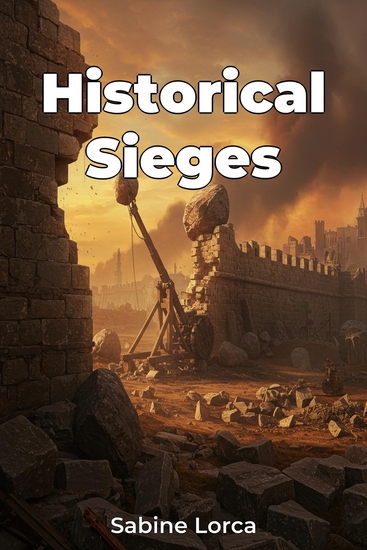
Historical Sieges - cover

Historical Sieges

Sabine Lorca

Translator A AI

Publisher: Publifye

  • 0
  • 0
  • 0

Summary

Historical Sieges explores how siege warfare shaped history, impacting empires and civilizations through dynamic interactions of offensive and defensive tactics. The book examines pivotal sieges, like the siege of Constantinople, through strategic, tactical, and technological lenses. Understanding these historical events offers insights into military strategy, engineering innovations, and societal resilience under extreme conditions.

 
The book progresses chronologically, detailing the evolution of siege technologies, from ancient battering rams to gunpowder artillery. It analyzes strategies employed by both besiegers and defenders, such as blockades, mining, and sorties. 

 
The narrative also considers the social and economic impact of sieges, including the disruption of trade and the spread of disease. The siege of Tenochtitlan, for example, illustrates how sieges could decide the fate of entire civilizations.

 
Drawing from primary accounts and expert analysis, Historical Sieges offers a balanced view of these complex events, acknowledging their ethical dimensions. The book's value lies in its unique approach, connecting military history with broader fields like engineering and sociology, offering a deeper understanding of warfare’s lasting impact on societies.
Available since: 03/29/2025.
Print length: 70 pages.

Other books that might interest you

  • A Tyranny for the Good of Its Victims - The Ugly Truth about Stakeholder Capitalism - cover

    A Tyranny for the Good of Its...

    Andrew F. Puzder

    • 0
    • 0
    • 0
    Asset manager mega-giants BlackRock, State Street, and Vanguard have accumulated unprecedented levels of stock ownership in every major US company. Voting the shares they hold for clients allows these companies to force their own "environmental, social, and governance" or "ESG" agenda on the American corporate sector and, by extension, on all of us. An asset manager's traditional duty is to maximize returns for its investors, but these financial elites expand their duties through "stakeholder capitalism," the idea that a company is responsible not only for its actual shareholders, but for everyone who is affected by the company. Thus, they can impose their preferred ESG goals under the guise of benefiting an amorphous group of non-investors. 


    This elite-dominated economic system is nothing more than socialism in sheep's clothing. "ESG" defines the champagne socialist agenda that would devastate the working and middle classes globally. Now, in the face of rising opposition, these financial elites are rebranding—shifting their terminology to conceal their intent. A Tyranny for the Good of its Victims exposes how these elites have pursued—and will continue to pursue—their ESG goals: to transform our consumer-driven free-market economy into one that is subject to their elitist demands, overriding the will of the people whom they deem incapable of self-government.
    Show book
  • The Great Famine of 1896-1897 - Famines in Colonial India - cover

    The Great Famine of 1896-1897 -...

    Sarah Willards

    • 0
    • 0
    • 0
    The Great Famine of 1896-1897 was one of the most devastating periods of hunger and suffering in colonial India. Spanning across large regions, particularly in the Deccan Plateau, this famine marked a tragic chapter in the history of British colonial rule. It resulted in the death of hundreds of thousands of people, although the exact number remains disputed due to the limited data available from that era. 
    This famine was not an isolated event but part of a larger pattern of food scarcity issues that India faced under British colonial governance. However, the 1896-1897 famine stood out due to the scale of its impact, the widespread malnutrition it caused, and the delayed and ineffective relief efforts by the British authorities. The failure to provide adequate assistance and the harsh economic policies implemented during this period are considered by many as contributing factors to the famine’s severity. 
    The environmental conditions in India played a significant role in the famine. A series of poor monsoons coupled with crop failures resulted in a severe food shortage. However, the effects of the famine were compounded by British policies that prioritized export of food grains from India to feed the empire’s industrial needs. This practice exacerbated food scarcity in the affected regions, leaving local populations without the resources they needed to survive.
    Show book
  • Libertarianism and Its Practices - Exploring Libertarian Policies and Their Real-World Application (2 in 1) - cover

    Libertarianism and Its Practices...

    Arlo Holders

    • 0
    • 0
    • 0
    This book contains the following two topics: 
      - The Libertarian Ideal: Libertarianism is a political philosophy that places individual liberty at its core, emphasizing the importance of personal freedom, limited government, and voluntary cooperation. Rooted in centuries of intellectual thought, libertarianism advocates for a society in which individuals are free to pursue their own goals and aspirations as long as they respect the rights of others. This emphasis on freedom and responsibility makes libertarianism distinct from other political ideologies, which often prioritize collective goals or centralized authority. 
      - Libertarian Policies: Rooted in the principles of classical liberalism, libertarianism advocates for a limited government whose primary role is to protect individual rights and maintain peace. It emphasizes personal responsibility, free markets, and the belief that voluntary exchange is the foundation of a prosperous society. At its core, libertarianism seeks to protect the rights of individuals to live as they see fit, free from the coercive power of the state. The history of libertarian thought can be traced back to influential philosophers such as John Locke, who argued for the natural rights of individuals to life, liberty, and property. His ideas formed the intellectual groundwork for the concept of limited government, which would later be expanded by thinkers like Adam Smith, who promoted the idea of free markets. The Enlightenment era, with its focus on reason, individualism, and skepticism of authority, provided a fertile ground for the development of libertarian ideas. In the 20th century, libertarianism gained further prominence through the works of economists such as Friedrich Hayek and Milton Friedman, who critiqued the expansion of government power and emphasized the importance of individual liberty in economic affairs.
    Show book
  • Mamata - Beyond 2021 - cover

    Mamata - Beyond 2021

    Shubhankar, Jayanta Ghosal,...

    • 0
    • 0
    • 0
    In the West Bengal election of 2021, the longest state election in the history of India, Mamata Banerjee won the khela, and the BJP lost the plot. How did this happen? 
    The author, Jayanta Ghosal, travelled to all the districts of West Bengal and unearthed certain key factors that helped the Trinamool win the state. For instance, there was a massive gap in the BJP's understanding of Bengali identity, which Mamata was able to exploit. An 'overdose' of central intervention, ranging from paramilitary forces to intelligence agencies to target key TMC leaders, added to the BJP's disconnect with voters. Increasingly, the state felt the divide between New Delhi and Bengal grow. 
    The book details how Mamata was successfully able to portray herself as the 'daughter of Bengal' who worked tirelessly for the state's poor and disadvantaged. It also asks the question: with the state elections under her belt, what will be Mamata's path to the general elections of 2024? Does she consider herself a candidate for the prime minister's post?
    Show book
  • Misinformation Nation - Foreign News and the Politics of Truth in Revolutionary America - cover

    Misinformation Nation - Foreign...

    Jordan E. Taylor

    • 0
    • 0
    • 0
    In Misinformation Nation, Jordan E. Taylor reveals how foreign news defined the boundaries of early American politics and ultimately drove colonists to revolt against Britain and create a new nation. 


    News was the lifeblood of early American politics, but newspaper printers had few reliable sources to report on events from abroad. Though frequently false, the information that Americans encountered in newspapers, letters, and conversations framed their sense of reality, leading them to respond with protests, boycotts, violence, and the creation of new political institutions. Fearing that their enemies were spreading fake news, American colonists fought for control of the news media. As their basic perceptions of reality diverged, Loyalists separated from Patriots and, in the new nation created by the revolution, Republicans inhabited a political reality quite distinct from that of their Federalist rivals. 


    The American Revolution was not only a political contest for liberty, equality, and independence (for white men, at least); it was also a contest to define certain accounts of reality to be truthful while defining others as false and dangerous. Misinformation Nation argues that we must also conceive of the American Revolution as a series of misperceptions, misunderstandings, and uninformed overreactions.
    Show book
  • Why I Became an X Troop Commando - A Life of Colin Anson the German who Fought for Churchill - cover

    Why I Became an X Troop Commando...

    Helen Fry

    • 0
    • 0
    • 0
    A fascinating and moving biography of Colin Anson, the German refugee who became an elite British commando 


    Born in Germany in 1922, Colin Anson's (Claus Ascher) childhood was marked by the trials of Nazism. His father was arrested by the Gestapo in 1937 and transported to Dachau, where he died shortly after. Colin, aged just seventeen, escaped to Britain in the Kindertransport. As soon as he was old enough, Colin volunteered in the Pioneer Corps. Then, in 1942, he was recruited for the elite commando unit X-Troop. 


    Colin took part in the invasions of Sicily and Italy in 1943, where he sustained a near-fatal injury. But just months later, he returned to duty. He fought in the Yugoslav islands, became the first Allied soldier to liberate Corfu, and was stationed in postwar Frankfurt. 


    In this unique biography, Helen Fry traces the remarkable story of Colin's life. Drawing on extensive interviews, Fry recounts his actions in X-Troop and beyond in his own words—and sheds new light on the experience of refugees in the British forces.
    Show book