Junte-se a nós em uma viagem ao mundo dos livros!
Adicionar este livro à prateleira
Grey
Deixe um novo comentário Default profile 50px
Grey
Assine para ler o livro completo ou leia as primeiras páginas de graça!
All characters reduced
Fortified Cities - cover
LER

Fortified Cities

Sabine Lorca

Tradutor A AI

Editora: Publifye

  • 0
  • 0
  • 0

Sinopse

Fortified Cities explores the profound impact of military strategy on urban design throughout history. Examining fortified cities from ancient times to the early modern period, the book reveals how the constant threat of war shaped urban landscapes and societal structures. One intriguing insight is how innovations in siege technology, such as battering rams and siege towers, spurred corresponding advancements in defensive architecture, creating a continuous cycle of adaptation. The book argues that understanding urban fortification is essential for grasping historical conflicts and appreciating the enduring influence of military considerations on urban development.

 
The book delves into the evolution of defensive urban planning, the role of fortified cities in historical conflicts, and the dynamics of siege warfare, considering both attacker and defender perspectives. For example, the strategic placement of walls, gates, towers, and moats was crucial for effective defense. Structured in three parts, the book progresses from foundational principles like glacis and bastions to case studies of specific cities like Constantinople and Vienna, ultimately analyzing the evolution of siege tactics and technologies.

 
This unique approach integrates military history with fields like archaeology, architecture, and political science, offering a holistic understanding of urban fortification's impact. Drawing upon archaeological reports and historical chronicles, Fortified Cities adopts a balanced perspective, highlighting the strategic rationale behind defensive designs and the interplay between attack and defense, making it valuable for military history enthusiasts and students of urban planning alike.
Disponível desde: 29/03/2025.
Comprimento de impressão: 77 páginas.

Outros livros que poderiam interessá-lo

  • The Inner Child Recovery Workbook - Move On From The Past Address Abandonment Trauma and Achieve Emotional Freedom - cover

    The Inner Child Recovery...

    Samantha Parker

    • 0
    • 0
    • 0
    Have you ever felt abandoned, as if everyone you care about always leaves? 
    Are you tired of feeling shackled by unseen emotional chains, unsure of how to break free?I understand how exhausting it can be, feeling like you're always carrying the weight of your past. But I want you to know that it's not just you—it’s the wounded inner child within, crying out for healing and attention.Does any of these situations sound familiar?You struggle with deep-seated feelings of abandonment, fearing that those you love might one day leave.Your self-worth seems intertwined with past failures or traumatic events, making it hard to move forward.You frequently experience intense emotions that seem disproportionate to the situation at hand.Attempts to form new, healthy relationships are hindered by a fear of vulnerability.You feel stuck in a cycle of negative self-talk and self-sabotage, unable to break free.You find yourself repeating the same harmful patterns, despite knowing they lead to pain.Imagine for a second, what if you could …Feel an enduring sense of belonging wherever life takes you.Turn your past pain into a source of undeniable strength.Love deeply without fear, embracing vulnerability as a superpower.Rediscover joy, letting laughter light up even your darkest days.Speak to yourself with the kindness of a lifelong friend.Transform every challenge into a victory, growing stronger with each step.But first, a warning… 
    This workbook isn't a quick fix. It's a deep, meaningful guide designed for those like you who are honest with themselves and ready for real change. It requires time, effort, and commitment to the exercises within these pages, but the rewards—true emotional freedom and a stronger sense of self—are worth it.
    Ver livro
  • From Poverty To Power - The first and most powerful of his books originally subtitled The Realization of Prosperity and Peace - cover

    From Poverty To Power - The...

    James Allen

    • 0
    • 0
    • 0
    Before the global sensation As a Man Thinketh, there was From Poverty to Power (1901), James Allen‘s first and, in his view, more significant work. Unlike other books, it was written while he was still working as a journalist, and before the success of As A Man Thinketh. Written with an energy and directness that defined his emerging philosophy in its earliest stages, this book presents a foundational exploration of spiritual law that Allen felt his later, more popular work only hinted at. 
    The book is structured in two distinct parts: "The Path to Prosperity" and "The Way of Peace" . In the first, Allen argues that enduring external success is not a matter of chance, but the inevitable result of inward mental adjustment and growth . The second part shifts to the pursuit of inner tranquility, guiding the reader toward a state of calm beyond the reach of outer turmoil . 
    Conceived as "a book for all those who are in search of better conditions, wider freedom, and increased usefulness," From Poverty to Power is a concise and potent statement of the principles that would define the modern self-help movement.
    Ver livro
  • Queen Victoria's Jubilee - cover

    Queen Victoria's Jubilee

    Mark Twain

    • 0
    • 0
    • 0
    "Every nation has its own way of celebrating, but England's pageantry is unmatched."
    
    Mark Twain's Queen Victoria's Jubilee captures the splendour and sentimentality surrounding the celebration of the sixty years of Queen Victoria's reign in 1897. With his characteristic wit and keen social commentary, Twain reflects on the grandeur of the festivities and the deep emotional connection between the queen and her subjects, interweaving humour with poignant insights into British identity, tradition, and the complexity of monarchy in a rapidly changing world.
    Samuel Langhorne Clemens, better known by his pen name Mark Twain (1835–1910), grew up along the banks of the Mississippi River, and his early experiences inspired many of his most famous works, including The Adventures of Tom Sawyer and Adventures of Huckleberry Finn. Widely celebrated as America's greatest humorist, Twain captured the spirit of a rapidly changing nation, and his sharp wit, keen eye for human nature, and gift for storytelling made him not only a beloved novelist but also a popular lecturer and essayist.
    
    Twain's innovative style, character-driven storytelling and ability to interweave humour with profound social critique laid the groundwork for modern American literature and has inspired countless authors, including Ernest Hemingway and F. Scott Fitzgerald. Indeed, Hemingway famously declared that "all modern American literature comes from one book by Mark Twain called Huckleberry Finn."
    Ver livro
  • Secrets of a Surgeon: The Gripping Impact of Medicine’s Dark Past - "Unlock the secrets of surgical history! Dive into captivating audio lessons that reveal medicine's hidden truths" - cover

    Secrets of a Surgeon: The...

    Jasper Forrester

    • 0
    • 0
    • 0
    Secrets of a Surgeon: The Gripping Impact of Medicine’s Dark Past 
    ⭐⭐ Simplified Guide & Explanations Included ⭐⭐ 
    Are you eager to advance in your career and enrich your understanding through compelling medical narratives? 
    Looking for a comprehensive resource that includes all the essential elements to explore courage and resilience found within harrowing medical stories? 
    Your search ends here! 
    This guide is your definitive companion for deepening your understanding, applying your skills, and engaging in immersive accounts of medical experiences. With this, you’re prepared for success. 
    Updated for the latest insights into medicine’s past. 
    Key features of this enriched guide: 
    - Profound insights into the gripping impact of medicine’s dark past 
    - Detailed exploration of courageous medical narratives 
    - Effective strategies for absorbing and reflecting on these powerful stories 
    Our guide stands out with its thorough coverage, which is essential for your understanding. Topics aren’t merely touched upon; they are examined with clarity and depth. 
    Structured with clarity and straightforward language, our guide ensures seamless transitions between themes. Say farewell to convoluted jargon and welcome clear, precise, and engaging content. 
    So, why wait? Click the BUY NOW button, secure your guide, and embark on your journey to rediscover the courage and resilience through the profound stories of medicine's past! 
    Embark on this enlightening exploration today!
    Ver livro
  • Portuguese Empire - Historical Overview of One of the Most Powerful Trading Routes in Europe - cover

    Portuguese Empire - Historical...

    Kelly Mass

    • 0
    • 0
    • 0
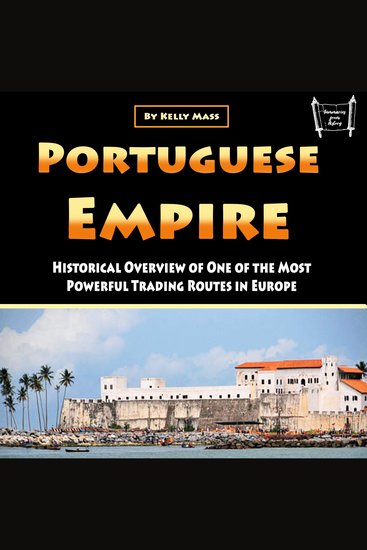
    The Portuguese Empire comprised a vast network of colonies, factories, and overseas territories established by Portugal. Beginning with the capture of Ceuta in North Africa in 1415 and continuing until the handover of sovereignty over Macau to China in 1999, it stands as one of the longest-lasting empires in European history. The empire's roots can be traced back to the 15th century, and by the early 16th century, it had established a global presence with strategic bases in North and South America, Africa, Asia, and Oceania. 
    The rise of the Portuguese Empire coincided with the dawn of the Age of Discovery, a period characterized by exploration and expansion. Following the Reconquista, which concluded in 1492, Portuguese sailors embarked on expeditions along the African coast and the Atlantic archipelagos starting in 1418. Leveraging advancements in navigation, mapping, and maritime technology, particularly the caravel—a vessel adept at oceanic travel—they aimed to uncover a sea route to the lucrative spice trade of the East. Key milestones during this era included Bartolomeu Dias’s successful rounding of the Cape of Good Hope in 1488 and Vasco da Gama’s historic arrival in India in 1498. Around 1500, Pedro Álvares Cabral arrived at the shores of Brazil, either by chance or as part of a broader imperial strategy.
    Ver livro
  • History of Chile - Colonialism Independence and Political Reform - cover

    History of Chile - Colonialism...

    Kelly Mass

    • 0
    • 0
    • 0
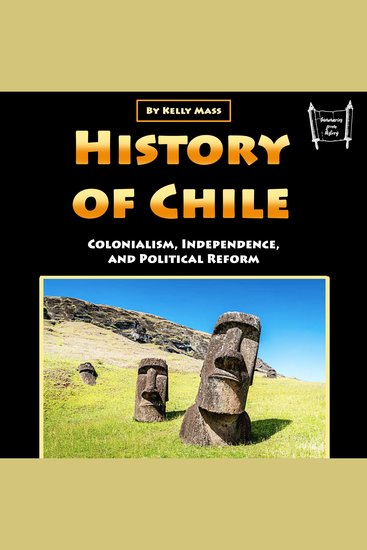
    The history of Chile spans thousands of years, with evidence suggesting that the region was inhabited as early as 10,000 years ago. Migrating Native Americans are believed to have settled in the fertile valleys and coastal areas, forming over a dozen distinct Amerindian cultures. These early inhabitants may have arrived via the Pacific coast in a rapid expansion predating the Clovis civilization or through trans-Pacific migration. Archaeological sites such as Monte Verde, Cueva del Milodón, and the Pali Aike Crater provide critical evidence of this early human activity. Monte Verde, in particular, predates the Clovis site by thousands of years, challenging traditional theories of the first human migrations to the Americas. 
    By the time of Spanish exploration in the 16th century, various indigenous groups occupied the land. The Mapuche, who inhabited south-central Chile, were the most significant and resilient, maintaining their independence through centuries of conflict with Spanish colonizers and later the Chilean state. Their resistance was emblematic of the challenges faced by Spanish conquistadors who arrived in 1540 under the leadership of Pedro de Valdivia. Despite fierce resistance, Valdivia founded Santiago in 1541, marking the beginning of Chile's colonial era. 
    Chile was part of the Spanish Empire from 1540 to 1818. During this period, the colony developed an economy centered on agriculture and the extraction of natural resources like saltpeter and, later, copper. While these resources bolstered the economy, they also led to over-reliance on commodity exports and tensions with neighboring countries. The War of the Pacific (1879–1884) exemplified such conflicts, as Chile battled Bolivia and Peru over control of the nitrate-rich Atacama Desert.
    Ver livro