¡Acompáñanos a viajar por el mundo de los libros!
Añadir este libro a la estantería
Grey
Escribe un nuevo comentario Default profile 50px
Grey
Suscríbete para leer el libro completo o lee las primeras páginas gratis.
All characters reduced
Fortified Cities - cover

Fortified Cities

Sabine Lorca

Traductor A AI

Editorial: Publifye

  • 0
  • 0
  • 0

Sinopsis

Fortified Cities explores the profound impact of military strategy on urban design throughout history. Examining fortified cities from ancient times to the early modern period, the book reveals how the constant threat of war shaped urban landscapes and societal structures. One intriguing insight is how innovations in siege technology, such as battering rams and siege towers, spurred corresponding advancements in defensive architecture, creating a continuous cycle of adaptation. The book argues that understanding urban fortification is essential for grasping historical conflicts and appreciating the enduring influence of military considerations on urban development.

 
The book delves into the evolution of defensive urban planning, the role of fortified cities in historical conflicts, and the dynamics of siege warfare, considering both attacker and defender perspectives. For example, the strategic placement of walls, gates, towers, and moats was crucial for effective defense. Structured in three parts, the book progresses from foundational principles like glacis and bastions to case studies of specific cities like Constantinople and Vienna, ultimately analyzing the evolution of siege tactics and technologies.

 
This unique approach integrates military history with fields like archaeology, architecture, and political science, offering a holistic understanding of urban fortification's impact. Drawing upon archaeological reports and historical chronicles, Fortified Cities adopts a balanced perspective, highlighting the strategic rationale behind defensive designs and the interplay between attack and defense, making it valuable for military history enthusiasts and students of urban planning alike.
Disponible desde: 29/03/2025.
Longitud de impresión: 77 páginas.


Otros libros que te pueden interesar

  • Prince The (Fingerprint Classics) - cover

    Prince The (Fingerprint Classics)

    Niccolò Machiavelli

    • 0
    • 0
    • 0
    The Prince by Niccolò Machiavelli is a timeless political treatise that explores the dynamics of power, leadership, and statecraft. Written in the early 16th century, this concise yet provocative work offers pragmatic advice to rulers on how to gain, maintain, and consolidate authority, often advocating for realism over idealism. Machiavelli examines historical examples and human behavior to present strategies that prioritize effectiveness over morality, making the book both influential and controversial. Its insights into political maneuvering and the nature of authority have cemented it as a foundational text in political philosophy and realpolitik.
    Ver libro
  • Cleopatra VII: The Last Queen of Egypt – Power Love and Betrayal - The Untold Story of Cleopatra’s Rise Her Love Affairs with Caesar & Mark Antony and Her Tragic Fall - cover

    Cleopatra VII: The Last Queen of...

    Clifton Larson

    • 0
    • 0
    • 0
    Cleopatra VII, the last Pharaoh of Egypt, was more than just a queen—she was a warrior, a strategist, and a lover who defied the world’s greatest empires. From her dramatic rise to power to her legendary affairs with Julius Caesar and Mark Antony, Cleopatra’s story is one of ambition, intelligence, and heartbreak. This immersive audiobook takes you deep into the political intrigue, passion, and betrayal that defined her reign. Discover the real Cleopatra—beyond the myths and Hollywood portrayals—in a gripping tale of love, war, and destiny.
    Ver libro
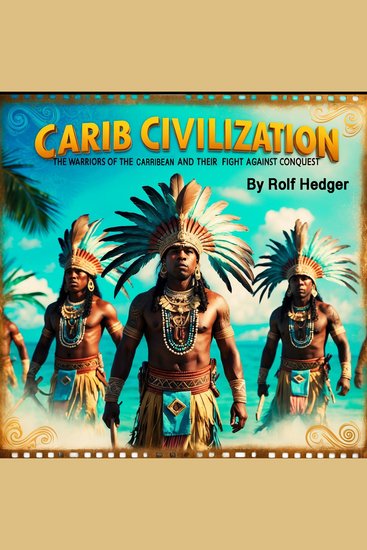
  • Carib Civilization - The Warriors of the Caribbean and Their Fight Against Conquest - cover

    Carib Civilization - The...

    Rolf Hedger

    • 0
    • 0
    • 0
    The Carib civilization, known for their resilience and military prowess, was one of the dominant forces in the Caribbean before and during the early phases of European colonization. The Caribs, who were part of the larger Arawakan language family, developed a distinct culture that set them apart from other indigenous groups in the region. Their territory spanned many of the islands in the Lesser Antilles, with notable populations in Dominica, Saint Vincent, and Grenada. While they were widely recognized for their fierce resistance against European colonizers, their rich history and cultural achievements also played a significant role in shaping the Caribbean. 
    The early origins of the Caribs are a subject of ongoing research, but they are believed to have migrated from South America, possibly from the Orinoco River Basin in present-day Venezuela. Over time, they settled in various parts of the Caribbean, with their most prominent presence being on the islands of the Lesser Antilles. The Caribs are often distinguished from their neighbors, the Arawaks, due to their more aggressive and militaristic nature, a characteristic that would become critical in their dealings with the European powers who arrived on their shores. 
    Carib society was organized around a hierarchical structure with a chief, or ouin (sometimes known as karifuna), at the top, followed by warriors, farmers, and fishermen. Despite their reputation as fierce fighters, the Caribs were also skilled agriculturalists and fishermen. Their diet was rich in cassava, corn, fruits, and fish, which they caught using canoes made from hollowed trees. The Caribs' ability to navigate the seas using their advanced knowledge of the stars and ocean currents made them formidable maritime traders and warriors. They built large, ocean-going canoes capable of carrying multiple warriors, enabling them to wage successful raids across the Caribbean islands.
    Ver libro
  • Summary of Dave Rubin's Don't Burn This Book - cover

    Summary of Dave Rubin's Don't...

    Falcon Press

    • 0
    • 0
    • 0
    Buy now to get the main key ideas from Dave Rubin's Don't Burn This Book 
      
    Has the contemporary left abandoned the true values of liberalism? In Don’t Burn This Book (2020), Dave Rubin examines the state of the political left in today’s world and finds that it suffers from mob mentality and threatens our freedoms. Rubin offers a guide to a classical liberal approach to politics and life, based on his experiences and views of the world. Simultaneously, he deconstructs the left and its regressive ideologies built on empty outrage and baseless self-victimization.
    Ver libro
  • Sociology of Social Structures - Understanding Social Systems and Institutions (5 in 1) - cover

    Sociology of Social Structures -...

    Fred Grandsen

    • 0
    • 0
    • 0
    This book provides an in-depth exploration of the intricate social systems that shape human behavior, societal norms, and everyday life.  
    The Sociology of Crime examines the complex relationship between social structures and criminal behavior. It looks into how crime is defined, why individuals commit crimes, and how societal reactions to crime shape both law enforcement and criminal justice policies. 
    The Sociology of Deviance delves into behaviors that deviate from societal norms and the social processes that label them as deviant. This section explores how norms are constructed, the role of social institutions in defining deviance, and the impact of these labels on individuals and groups. 
    The Sociology of Education explores the role of education in society, focusing on how educational institutions serve as agents of socialization, reproduction of social structures, and vehicles for upward mobility. 
    The Sociology of Work highlights the changing nature of work, labor markets, and employment practices in contemporary society. It covers the evolution of work structures, from industrial labor to service-oriented economies, and the social implications of labor practices on individuals and communities. 
    The Sociology of Consumption looks at the cultural and social aspects of consumption, including how consumer behaviors are influenced by economic forces, marketing, and social norms. This book explores the relationship between identity and consumption, how consumer culture reflects social values, and the environmental and ethical implications of consumerism.  
    Together, these five books offer a comprehensive understanding of the key social structures and institutions that influence human behavior and societal development.
    Ver libro
  • Anxiety Relief Tools for Kids and Teens with ADHD: A Practical Guide for Parents - Mindfulness Strategy for Kids and Teens with ADHD and Anxiety - cover

    Anxiety Relief Tools for Kids...

    Eunice Churchill

    • 0
    • 0
    • 0
    All children and teens stress out at times, but if they also have ADHD, their anxiety can skyrocket. Anxiety Relief Tools for Kids and Teens with ADHD: A Practical Guide for Parents has smart strategies that equip parents to equip their children to deal with anxiety. In this book, parents gain insight into how ADHD affects their children and why it causes so much anxiety. This guide is filled with exercises and activities that teach children and teens how to recognize their own ADHD symptoms, counteract them, and start reducing the anxiety caused by ADHD. It offers suggestions for how to help them master critical study skills so that they can accurately recall what they have learned. Since anxiety can also be triggered by certain medical conditions, there is a quick overview so that parents can see if some of their child’s anxiety might be caused by one of them. An awesome strategy, Role Playing, has been proven to effectively reduce anxiety by helping kids and teens experience anxiety-producing scenarios and practice how to handle them. Two chapters in this book contain ready-to-use role-playing skits as well as ideas for creating new scenarios. 
    Here’s a glimpse of the topics covered in this book:
    Ver libro