Join us on a literary world trip!
Add this book to bookshelf
Grey
Write a new comment Default profile 50px
Grey
Subscribe to read the full book or read the first pages for free!
All characters reduced
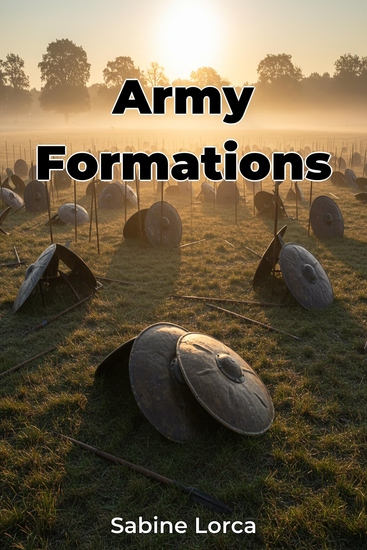
Army Formations - cover

Army Formations

Sabine Lorca

Translator A AI

Publisher: Publifye

  • 0
  • 0
  • 0

Summary

Army Formations examines the evolution of military formations and their impact on combat effectiveness throughout history. It explores how armies have adapted their tactical formations to achieve victory, often against greater odds. The book details the principles behind formation design, considering factors like weapon technology and terrain, while also examining how these formations have been employed in different historical periods.

 
One intriguing aspect is the analysis of how formations affect morale and command and control, highlighting that a unit's structure is as important as individual bravery. The book progresses chronologically, from ancient phalanxes to modern maneuver warfare tactics, dedicating chapters to influential formations like the Roman legion and Napoleonic line infantry. Each formation's strengths and weaknesses are analyzed through historical accounts and battle analysis, emphasizing the critical role of adaptability.

 
A key insight is that rigid adherence to outdated formations, regardless of past successes, often leads to defeat, showcasing the importance of military strategy and military science. The book uniquely integrates historical analysis with modern tactical theory, making it valuable for both military historians and those interested in the future of warfare.
Available since: 03/29/2025.
Print length: 71 pages.


Other books that might interest you

  • Age of Reason - The Crucial Time in Which the Renaissance and Transformation in Knowledge Took Place (3 in 1) - cover

    Age of Reason - The Crucial Time...

    Kelly Mass

    • 0
    • 0
    • 0
    This is a 3 in 1 combo, with the following topics: 
    1 - Age of Enlightenment: Finally… finally, humanity began to wake up. Finally, they decided to take science, knowledge, politics, development, multiple angles and perspectives, and the details of our everyday lives a bit more seriously. For centuries, raw and primal urges and principles had taken hold of conquerors, officials, and governments. But there was a light at the end of the tunnel. Humanity just needed to acknowledge knowledge. It needed to value the art of studying phenomena and learning, not just spiritual notions and religion. Welcome to the book about how this happened. Welcome to a glimmer of hope in humanity’s realization of what this world is and what lies in the elements yet to be discovered. 
    2 - Renaissance: The Renaissance is a time in European history marking the shift from the Middle Ages to modernity and covering the 15th and 16th centuries, identified by an effort to restore and exceed ideas and accomplishments of classical antiquity. It happened after the Crisis of the Late Middle Ages and was related to great social change. Aside from the basic periodization, advocates of a "long Renaissance" might put its start in the 14th century and its end in the 17th century. 
    3 - Dutch East India Trading Company: Did you know that the Dutch were some of the first who came up with stocks? They were also known for their gigantic fleet, their ships, their colonies, and so much more. The 17th century was a golden age, a golden century for the Dutch, who discovered how to go to the new world in Asia, America, and other continents to transport spices, minerals, and other materials. 
    The Dutch East India Company, officially the United East India Company (Dutch: Vereenigde Oost Indische Compagnie; VOC), was a megacorporation created in the early 17th century by a government-directed merger of many competing Dutch trade services.
    Show book
  • Dhammapada The - The Way of the Buddha Vol09 - Compassion - The Ultimate Flowering of Wisdom - cover

    Dhammapada The - The Way of the...

    Osho

    • 0
    • 0
    • 0
    The Dhammapada Vol. 09 continues Osho's celebrated series of talks on the Dhammapada, one of the most influential collections of the Buddha's teachings. In this volume, Osho explores one of the most beautiful dimensions of the spiritual journey: compassion—the natural flowering of meditation and awareness.
    Rather than offering a traditional commentary, Osho creates a bridge between the Buddha's timeless wisdom and the challenges of contemporary life. Alternating between illuminating the Buddha's original sutras and responding to questions from his audience, he reveals how ancient insights become practical guidance for modern seekers.
    Compassion, Osho explains, is not a moral ideal or something to be cultivated through discipline. It is the natural outcome of inner transformation. As meditation deepens, anger, greed, fear, jealousy, and attachment are not suppressed—they are understood and transcended. The same energies are transformed into compassion, freedom, wisdom, and love.
    Throughout these talks, Osho explores the nature of awareness, inner freedom, truth, responsibility, and the courage to live consciously. He presents the Buddha not as a figure to be worshipped, but as an invitation to discover truth through direct experience.
    Talks in This Volume
    
    - Be On Guard
    - Is There Life Before Death?
    - Buddhas Only Point the Way
    - Freedom Is Something Inner
    - The Risk Is Worth Taking
    - Truth Cannot Be Lost
    - Two Flowers Bloom
    - The Nature of Things
    - Consciousness Is the Only Revolution
    - Intelligent People Are Dangerous
    OSHO TALKS - from original recordings of live events with Osho and his audience of seekers and friends from around the world. Recorded at the Osho International Meditation Resort, Pune, India.
    Copyright © ℗ Osho International Foundation
    Show book
  • The Light Between Apple Trees - Rediscovering the Wild Through a Beloved American Fruit - cover

    The Light Between Apple Trees -...

    Priyanka Kumar

    • 0
    • 0
    • 0
    As a child in the foothills of the Himalayas, Priyanka Kumar was entranced by forest-like orchards of diverse and luscious fruit—especially apples. These biodiverse orchards seemed worlds away from the cardboard apples that lined supermarket shelves. Yet on a small patch of woods near her home in Santa Fe, Kumar discovered a wild apple tree—and the seeds of an odyssey were planted. In The Light Between Apple Trees, Kumar takes us on a dazzling and transformative journey to rediscover apples, unearthing a rich and complex history while illuminating how we can reimagine our relationship with nature.Apples are popular, but in our everyday lives we rarely encounter more than a handful of varieties: of the sixteen thousand apple varieties once celebrated in America, scarcely a fifth remain accessible. Kumar reveals the richness of a hidden world. She brilliantly weaves together science and childhood memories with the apple's storied history, from its roots in Kazakhstan to Spanish orchards in the Southwest and Thomas Jefferson's beloved Monticello fruitery.The Light Between Apple Trees is a lyric odyssey that will forever change how you look at an "apple a day." Kumar shows how—if we follow untamed paths—the tang and texture of an apple can lead us back to the wild.
    Show book
  • Caesar’s Civil War: The History of the Conflict against Pompey the Great that Ended the Roman Republic - cover

    Caesar’s Civil War: The History...

    Editors Charles River

    • 0
    • 0
    • 0
    The ultimate conqueror, statesman, dictator, visionary, and opportunist, during his time in power, Julius Caesar expanded the borders of Rome to almost twice their previous size, revolutionized the infrastructure of the Roman state, and destroyed the Roman Republic for good, leaving a line of emperors in its place. His legacy is so strong that his name has become, in many languages, synonymous with power: the emperors of Austria and Germany bore the title Kaiser, and the Tsars of Russia also owe the etymology of their title to Caesar. 
    Even in his time, Caesar was in many ways larger than life, and because of his legacy as virtual founder of the Roman Empire, much of what was written about – and by – him during his life and immediately after his assassination was politically motivated. The fact that he was murdered on the Ides of March is universal knowledge, but it’s often forgotten that he was stabbed while entering the Curia of Pompey, one of the Senate’s meeting places, in March of 44 BCE. The curia was a theater dedicated to Pompey the Great, Caesar’s rival in the civil war that ended the Republic and made Caesar dictator. When Caesar was stabbed, he fell at the base of a colossal statue of Pompey. 
    Thanks to Caesar’s victory in the civil war, Pompey is mostly remembered not for being one of Rome’s greatest generals, but for being defeated by Caesar and then ignominiously murdered after he fled to Egypt, where the boy pharaoh Ptolemy XIII decapitated Pompey and offered his head to Caesar as a gift. Although Caesar was there chasing Pompey’s men, he quickly became involved in Egypt’s own civil war. As a consequence of Ptolemy’s barbarity, Caesar impulsively decided to side with his sister Cleopatra in her bid for the throne of Egypt, escalating what was rapidly becoming an all-out civil war.
    Show book
  • Youth Vaping Unveiled - Exploring Motivations Behind Vaping and Substance Use - cover

    Youth Vaping Unveiled -...

    Dr. Josh J. Mack

    • 0
    • 0
    • 0
    As we delve deeper into this topic, we will navigate the intricate web of influences that drive these behaviors. From the powerful force of peer pressure to the allure of projecting a particular social image, urban youth often find themselves at a crossroads where their choices are influenced by a myriad of factors. The accessibility of vaping products and drugs in urban environments, coupled with the lack of awareness about their consequences, further complicates the landscape. Moreover, we will explore how, for some urban youth, vaping and substance use serve as coping mechanisms for the stress, trauma, and mental health challenges they face. The quest for social acceptance and recognition may sometimes lead them down a path of experimentation that can have lasting implications. 
     This exploration is not merely an academic exercise but a crucial endeavor to shed light on the dynamics of urban youth culture and to provide insights that can inform prevention and intervention strategies. By understanding the motivations behind these behaviors, I aim to empower educators, parents, community leaders, and the youth themselves to make informed decisions and foster healthier environments. Each chapter of this book will delve into a different facet of this complex issue, offering perspectives, research findings, and strategies for addressing the challenges posed by vaping and substance use among urban youth. Through knowledge and understanding, we can work collectively to support urban youth in making choices that lead to healthier and more positive outcomes. 
    Join me on this journey of exploration and discovery as we seek to comprehend why urban youth smoke vapes and do drugs to impress their peers and, in doing so, strive to create a better future for them and their communities.
    Show book
  • Coloring Life - How Loss Invites Us to Live More Vibrant Lives - cover

    Coloring Life - How Loss Invites...

    Dr. Alise Cortez

    • 0
    • 0
    • 0
    Coloring Life: How Loss Invites Us to Live More Vibrant Lives is Dr. Alise Cortez's newest work on grief, meaning, and resilience. It's first a story, an intimate sharing of her experience of losing her parents and how she struggled to make sense of their death. Reading it is like coming home to an old friend and being wrapped in a hug for solace and comfort. Nestled in that embrace to help you connect and better understand your loss, the book's second part offers "whispers of wisdom" she gained through her loss. Death is a great teacher. Losing the ones we love the most can inspire us to treasure our relationships, expand our consciousness, and live more fully.
    Show book