¡Acompáñanos a viajar por el mundo de los libros!
Añadir este libro a la estantería
Grey
Escribe un nuevo comentario Default profile 50px
Grey
Suscríbete para leer el libro completo o lee las primeras páginas gratis.
All characters reduced
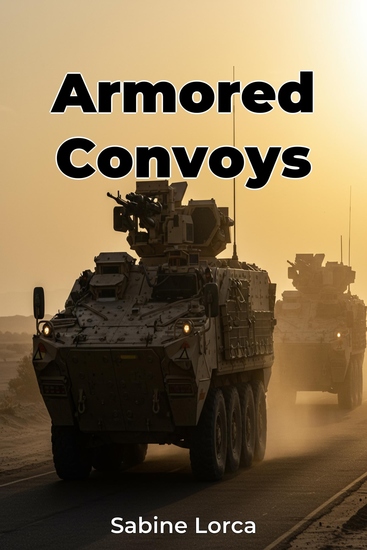
Armored Convoys - cover

Armored Convoys

Sabine Lorca

Traductor A AI

Editorial: Publifye

  • 0
  • 0
  • 0

Sinopsis

Armored Convoys explores the complex and crucial role of armored convoys in military history and modern warfare. These mobile fortresses are essential for securing military supply chains, enabling the safe passage of vital resources through dangerous territories. The book illuminates the evolution of convoy tactics, from ancient protected transport to the sophisticated strategies employed in contemporary counterinsurgency operations. One intriguing fact is how the rise of guerrilla warfare has directly influenced innovations in vehicle armor and electronic countermeasures. The book traces the strategic importance of supply line security, tactical doctrines for countering ambushes, and technological advancements in armored vehicle design.

 
Beginning with the early uses of protected transport, the study progresses through key historical case studies like World War II’s Eastern Front and the challenges of Vietnam's jungle terrain. It concludes by evaluating the future of armored convoys, considering the impact of emerging technologies. Through historical analysis and examination of military archives, the book underscores the critical link between effective military campaigns and reliable supply chains.
Disponible desde: 29/03/2025.
Longitud de impresión: 79 páginas.
Otros libros que te pueden interesar

  • Secrets to Learning Languages - Season 1 - Fluency Toolkit Polyglot Methods Gamification and Neuroplasticity - cover

    Secrets to Learning Languages -...

    Anya Lewis

    • 0
    • 0
    • 0
    Secrets to Learning Languages – Season 1 (Fluency Toolkit, Polyglot Methods, Gamification and Neuroplasticity) is your practical roadmap to confident communication. Host Anya blends real-world study tactics with polyglot-proven methods: immersion made simple, spaced repetition that actually sticks, habit systems you can sustain, and gamification to keep motivation high. Across 23 bite-size episodes, you'll learn how to build a balanced routine (reading, writing, listening, speaking), choose the right tools, and sound natural faster with smart conversation drills. You'll also tap into brain-friendly strategies based on neuroplasticity—so every session compounds your results. Whether you're starting from zero or leveling up a second (or third) language, this season gives you the structure, examples, and momentum to turn daily practice into measurable progress. Press play, follow the mini-goals, and watch your fluency grow.
    Ver libro
  • Black Hearts and Painted Guns - A Battalion's Journey into Iraq's Triangle of Death - cover

    Black Hearts and Painted Guns -...

    Kelly Eads, Daniel S. Morgan

    • 0
    • 0
    • 0
    “Will give readers a feeling for what it was like to fight in the Global War on Terror and the kind of young people who stepped forward to do it.” —On Point: The Journal of Army HistoryKelly Eads joined the 101st Airborne Division soon after 9/eleven, his experience reflecting the patriotism and commitment of so many young men and women who responded to the attack. He deployed to Iraq twice with the 2nd Battalion, 502nd Infantry Regiment.Early in their deployment to Iraq, the 2nd Battalion brought the fight directly to the enemy by setting up patrol bases in the local areas where they lived and operated. Soon they built a reputation for themselves, becoming known to the enemy as the Black Hearts—The 502nd had been distinguished on the battlefield by black hearts on their helmets since World War II. Their Scout Platoon became known as Painted Guns due to their practice of camouflaging their rifles.During Eads’ deployments, the battalion would experience thousands of Improvised Explosive Devices and firefights. They would spend countless hours in blistering 120-degree desert heat, controlling roads and preventing enemy freedom of movement; and would dedicate months to hunting enemy mortar teams and terror cells.With the help of Dan Morgan, an Infantry officer who deployed multiple times to Iraq and Afghanistan as a commander and operations officer, Eads takes the reader on a rollercoaster of combat experiences during the hunt for the most violent terrorist in Iraq, Abū Muṣʻab Zarqāwī, bringing to life the painstaking and horrid details of combat in a sectarian war. He tells the story of the soldiers’ camaraderie, built through adversity, and the love of family that sustained them.
    Ver libro
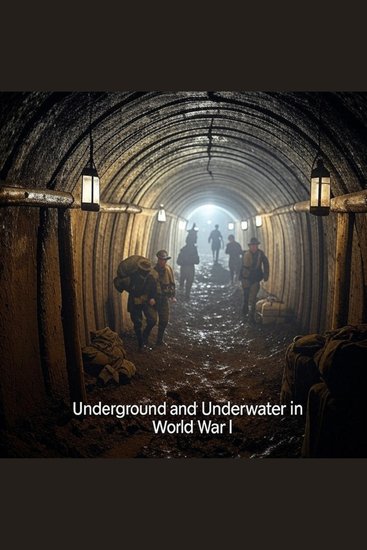
  • Underground and Underwater in World War I: The History and Legacy of the Hidden Fighting during the Great War - cover

    Underground and Underwater in...

    Editors Charles River

    • 0
    • 0
    • 0
    Most books and documentaries about the war focus on the carnage of the trenches, depicting the ceaseless bombardment and sniping, and the assaults and counterattacks that took millions of lives. This was the experience of most frontline soldiers during that great conflict, but it was not the only experience. There was another war going on beneath the trenches, a war of tunnels and mines fought by men who didn’t see sunlight for days at a time and who lived in constant fear of cave-ins and enemy detection. These men, who had mostly been miners in civilian life, lived a twilight existence, working long hours in silence and near darkness while great battles raged overhead. They suffered from fatigue, stress, and the knowledge that they could be killed at any time by an unseen enemy. Despite this, they persevered, and the mines they laid under enemy trench systems turned the tide of at least one major battle.  
    	The sleek hunter-killers lurking beneath the waves, using periscopes to close in unnoticed on their prey, added a new, nerve-wracking element to naval warfare. The mere threat of submarine attack immediately altered naval tactics and strategies employed by both the Western Allies and the Central Powers, shifting them towards a more cautious approach, especially at the war’s start when the submarine threat remained untested. 	During World War I, German U-boats operated solo except on one occasion. Initially, the British and nations supplying England with food and materiel scattered vessels singly across the ocean, making them vulnerable to the lone submarines. However, widespread late war re-adoption of the convoy system tipped the odds in the surface ships' favor.
    Ver libro
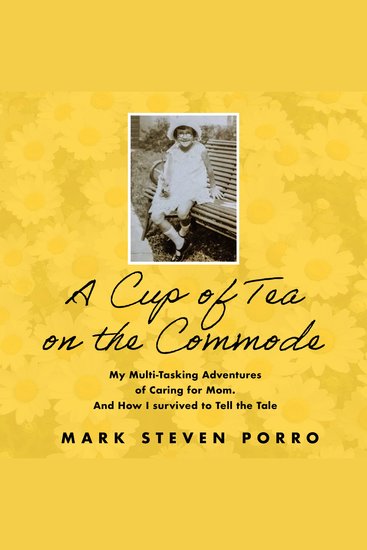
  • A Cup of Tea on The Commode - My Multi-Tasking Adventures of Caring for Mom and How I Survived to Tell the Tale - cover

    A Cup of Tea on The Commode - My...

    Mark Steven Porro

    • 0
    • 0
    • 0
    Mark enjoyed his carefree bachelor’s life in Los Angeles. He had no steady girlfriend, no children, few responsibilities outside of work. But that all changed when “The Call” came. Genevieve, his eighty-nine-year-old mother, was on her deathbed. He rushed back to New Jersey to be by her side. Hours became days, days became weeks, then she woke up. So, he moved back into his childhood home and took over her care. His first task was to remove all hazards, which included the current caregivers. 
     
    After, Mark asked his mother, “Do you trust me?” She whispered, “Yes.” “Do you understand I will do everything in my power to keep you healthy and safe?” She smiled and nodded. “That means I’m in charge, and that means now you must obey me.” Her mood shifted in an instant. She looked him dead in the eye, then puckered up her lips. He wasn’t sure if this was a sign of surrender or one wishing him luck. He kissed her and hoped for the best. 
     
    The parent/child role reversal may not have been unique to Mark, but how he dealt with it was. One day, hoping to make Genevieve’s time on the commode a tad more pleasant, he offered her a cup of her favorite beverage. It was a hit, and a cup of tea on the commode became a staple on the morning menu, and the clear choice for the title of this intimate, funny, and heartwarming memoir of how eldercare can be done. 
     
    A Cup of Tea on the Commode chronicles Mark’s multitasking adventures of filling his mother’s last years with love, laughter, and joy. Though not always successful, he came pretty damn close.
    Ver libro
  • Great Kingdoms of Africa - cover

    Great Kingdoms of Africa

    David Adjaye

    • 0
    • 0
    • 0
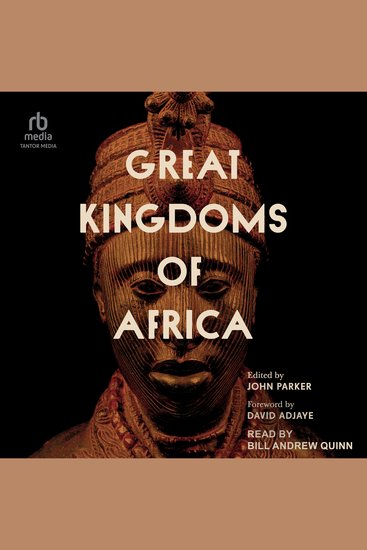
    A groundbreaking, sweeping overview of the great kingdoms in African history and their legacies, written by world-leading experts. 


    This is the first book for nonspecialists to explore the great precolonial kingdoms of Africa that have been marginalized throughout history. Great Kingdoms of Africa aims to decenter European colonialism and slavery as the major themes of African history and instead explore the kingdoms, dynasties, and city-states that have shaped cultures across the African continent. 


    This groundbreaking book offers an innovative and thought-provoking overview that takes us from ancient Egypt and Nubia to the Zulu Kingdom almost two thousand years later. Each chapter is written by a leading historian, interweaving political and social history and drawing on a rich array of sources, including oral histories and recent archaeological findings. Great Kingdoms of Africa is a timely and vital book for anyone who wants to expand their knowledge of Africa's rich history.
    Ver libro
  • Capitalism and Crises - How to Fix Them - cover

    Capitalism and Crises - How to...

    Colin Mayer

    • 0
    • 0
    • 0
    The world is encountering multiple crises—climate, droughts, floods, energy, food, and pandemics, to name a few. We have a problem, this is the solution. 


    Capitalism and Crises is about how capitalism can fix them—how it can solve not cause them. The reason why it has caused them is that we have misconceived the nature of our capitalist system. We have failed to understand the key institution at the heart of it—business—and as a result we have allowed it to cause as well as solve problems. This book describes why this has happened and what needs to change to address it. 


    Drawing on history, philosophy, psychology, and biology as well economics, law, and finance, Mayer describes what has gone wrong, what needs to change, and how to fix it. He sets out the big challenges that capitalism must address and how it should set about doing that, and discusses how financial institutions should be at the heart of this, and how the public sector can work with the private on a common purpose of solving problems and creating shared prosperity. Capitalism and Crises provides an inspiring and motivational roadmap of how we as practitioners, policymakers, consumers, employees, communities, students, and citizens of the world can together tackle the challenges of the twenty-first century—to flourish and survive.
    Ver libro