¡Acompáñanos a viajar por el mundo de los libros!
Añadir este libro a la estantería
Grey
Escribe un nuevo comentario Default profile 50px
Grey
Suscríbete para leer el libro completo o lee las primeras páginas gratis.
All characters reduced
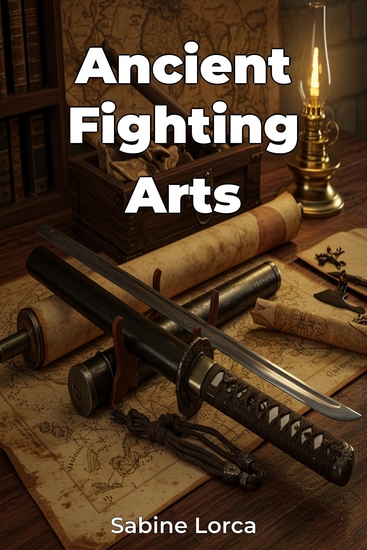
Ancient Fighting Arts - cover

Ancient Fighting Arts

Sabine Lorca

Traductor A AI

Editorial: Publifye

  • 0
  • 0
  • 0

Sinopsis

Ancient Fighting Arts explores the surprising connections between historical combat methods and their influence on modern martial arts and even Japanese manga. It reveals how ancient warfare strategies and weaponry innovations shaped close-quarters fighting techniques across various civilizations. For example, the book highlights how swordsmanship evolved through centuries of social and political changes, a legacy still visible today. The book examines the evolution of battlefield tactics, the lineages of specific martial arts like grappling and archery, and the incorporation of ancient combat aesthetics into manga. By analyzing primary sources, archaeological findings, and martial arts manuals, Ancient Fighting Arts bridges the gap between military history and cultural expression. The book progresses through chapters that dissect ancient weaponry, explore specific martial arts traditions, and analyze their representation in manga, offering a unique perspective that combines historical research with popular culture analysis.
Disponible desde: 10/03/2025.
Longitud de impresión: 64 páginas.

Otros libros que te pueden interesar

  • How to Flourish - An Ancient Guide to Living Well - cover

    How to Flourish - An Ancient...

    Aristotle, Susan Sauvé Meyer

    • 0
    • 0
    • 0
    Aristotle's Nicomachean Ethics is one of the greatest guides to human flourishing ever written, but its length and style have left many readers languishing. How to Flourish is a colloquial new translation by Susan Sauvé Meyer that makes Aristotle's timeless insights about how to lead a good life more engaging and accessible than ever before. 


    For Aristotle, flourishing involves becoming a good person through practice, and having a life of the mind. To that end, he draws vivid portraits of virtuous and vicious characters and offers sound practical advice about everything from eating and drinking to managing money, controlling anger, getting along with others, and telling jokes. He also distinguishes different kinds of wisdom that are essential to flourishing and offers an unusual perspective on how to appreciate our place in the universe and our relation to the divine. 


    Omitting Aristotle's digressions and repetitions and overly technical passages, How to Flourish provides connecting commentary that allows listeners to follow the continuous line of his thought. The result is an inviting and lively version of an essential work about how to flourish and lead a good life.
    Ver libro
  • Freedom - cover

    Freedom

    Anónimo

    • 0
    • 0
    • 0
    Create a life you don’t need a vacation from. It’s not what we know that matters, it’s what we practice. Life begins in the presence of freedom. We can wait to live the life of freedom we want until we check off all the boxes we think are necessary to do so, or we can recognize the freedom we already have and build from there. Freedom is the result of taking radical responsibility for one’s life, through the personal boundaries that dissolve self-destructive behaviors and the empowering act of nonviolent, community civic engagement. 
    This book is intended to ignite solutions to income inequality and inspire individuals to design a life they don’t need a vacation from.
    Ver libro
  • Buddhism in Myanmar - A Short History - cover

    Buddhism in Myanmar - A Short...

    Anónimo

    • 0
    • 0
    • 0
    This is a Pariyatti audiobook of "Buddhism in Myanmar: A Short History" (Wheel Publication No. 399–401) by Roger Bischoff narrated by Shelina Hetherington. 
     
    "Myanmar, or Burma as the nation has been known throughout history, is one of the major countries following Theravada Buddhism. In recent years Myanmar has attained special eminence as the host for the Sixth Buddhist Council, held in Yangon (Rangoon) between 1954 and 1956, and as the source from which two of the major systems of Vipassaná meditation have emanated out into the greater world: the tradition springing from the Venerable Mahāsi Sayādaw of Thathana Yeiktha and that springing from Sayagyi U Ba Khin of the International Meditation Centre. 
     
    "This booklet is intended to offer a short history of Buddhism in Myanmar from its origins through the country’s loss of independence to Great Britain in the late nineteenth century. I have not dealt with more recent history as this has already been well documented. To write an account of the development of a religion in any country is a delicate and demanding undertaking and one will never be quite satisfied with the result. This booklet does not pretend to be an academic work shedding new light on the subject. It is designed, rather, to provide the interested nonacademic reader with a brief overview of the subject. 
     
    "One of the objectives of the narrative is to show that the Buddha’s Teaching did not make a lasting impression on Myanmar immediately upon first arrival. The Sásana had to be re-introduced or purified again and again from the outside until Myanmar had matured to the point of becoming one of the main shrines where the Theravada Buddhist teachings are preserved. The religion did not develop in Myanmar. Rather, the Myanmar people developed through the religion until the Theravada faith became embedded in their culture and Pali Buddhism became second nature to them."   —Roger Bischoff
    Ver libro
  • The Race to the South Pole – Scott vs Amundsen - The Epic Battle for Antarctic Supremacy and the Price of Victory - cover

    The Race to the South Pole –...

    Jake Wood

    • 0
    • 0
    • 0
    In 1911, two legendary explorers set out on the most dangerous race in history—to become the first humans to reach the South Pole. Robert Falcon Scott, leading the British expedition, relied on tradition and sheer grit. Roald Amundsen, the Norwegian, used innovative techniques and calculated precision. 
    This audiobook takes you through the frozen wastelands of Antarctica, revealing the true story of courage, endurance, and sacrifice. Discover: 
    ✅ The tactics and technology that determined success or failure 
    ✅ The grueling conditions faced by both expeditions 
    ✅ How Amundsen’s strategic genius led to victory 
    ✅ Why Scott’s tragic end became one of the most legendary stories of heroism 
    The Race to the South Pole – Scott vs. Amundsen is a must-listen for history lovers, adventure enthusiasts, and anyone fascinated by the limits of human endurance.
    Ver libro
  • Enlightenment The: An Enthralling Guide to a Period of Scientific Political and Philosophical Discourse in European History - cover

    Enlightenment The: An...

    Billy Wellman

    • 0
    • 0
    • 0
    Can you imagine how the world would be different today if there had been no Enlightenment era?  
    The Age of Enlightenment, which lasted throughout the 18th century, brought about fundamental changes in people’s thinking and transformed the entire fabric of society. 
    Even ordinary people began to question the entrenched beliefs and dogmas. They wanted education, justice, freedom, and progress. They struggled to eliminate despotic rulers and desired to be governed by democratically elected representatives. 
    But how did this fundamental shift in thinking occur in a relatively short period? And who were the great thinkers and philosophers of that era who dared to go against the established authority of the church and the power of the autocrats? Are you curious about how the Enlightenment influenced the French and American Revolutions?  
    If so, this audiobook holds the answers you seek. You will also learn about the following:The ideals of the Enlightenment, including reason, individual freedom, and democracy;How the average person viewed the Enlightenment;The philosophy and impact of great thinkers like Rousseau, Locke, Hume, and Voltaire;How the American and French Revolutions brought about changes to the traditional monarchy;The massive progress in education, science, and social justice;A brief look at the Scientific Revolution and the inventions that changed history;The explosive growth of trade and commerce that reduced poverty and created wealth;The remarkable women who stood up for women’s rights;And much, much more! 
    Scroll up and click the “add to cart” button to learn more about the Enlightenment!
    Ver libro
  • How to Teach College - Inspiring Diverse Students in Challenging Times - cover

    How to Teach College - Inspiring...

    James W. Loewen

    • 0
    • 0
    • 0
    A posthumous book by the bestselling author of Lies My Teacher Told Me, sharing the strategies and secrets of an award-winning, fifty-year career as a college professor 
      
    “Not a few professors teach solely because they have to, to hold a position that lets them do what they really want to do, which is ‘their work’—their research, their writing. … Those professors miss the joys of teaching.”—from the introduction to How to Teach College 
      
    Widely known as the bestselling author of Lies My Teacher Told Me: Everything Your American History Textbook Got Wrong, James W. Loewen, who passed away in 2021, was a leading sociologist of race relations and a prizewinning college educator. With a teaching career spanning over half a century at Tougaloo College, Harvard University, University of Vermont, and Catholic University, Loewen taught the way he wrote: with creativity, humor, and a high expectation that students can handle the truth. 
      
    How to Teach College is an invaluable resource for professors teaching in increasingly fraught American classrooms. With a special emphasis on teaching students from diverse backgrounds and potentially controversial subjects, this posthumously published book comes to us in Loewen’s vibrant, original, and inimitable voice. In it, he offers advice from the epic (how to convey a love of one’s topic and motivate students to become lifelong learners) to the technical (how to design a syllabus, manage the classroom, testing and grading)—all drawing on firsthand anecdotes from his own courses on sociology and race relations. 
      
    Edited by Loewen’s son, Nicholas Loewen, a longtime high school teacher, and sociology professor Michael Dawson, How to Teach College is sure to inspire generations of teachers to come. 
      
    “How to Teach College is a 'cookbook' of over one hundred (I counted!) practical lessons, techniques, tricks, and gimmicks that Jim learned in his fifty-year career as a college teacher. It provides a clear road map that will make teaching easier, more effective, and more rewarding for students and professors alike. While it speaks directly to teachers, I hope that educational leaders at every level will read—and absorb—this brilliant, eminently sensible, and highly readable book.”—John Merrow, former PBS Education correspondent 
      
    This audiobook contains a supplemental PDF.
    Ver libro