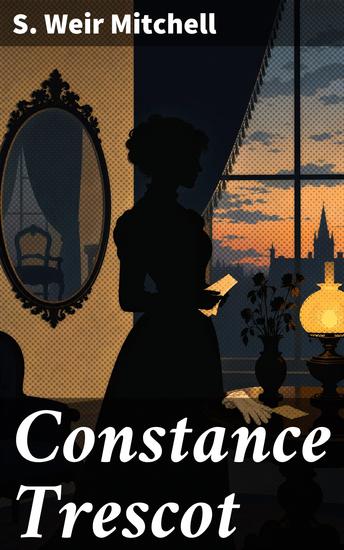
Constance Trescot
S. Weir Mitchell
Publisher: Good Press
Summary
In *Constance Trescot*, S. Weir Mitchell offers a late-nineteenth-century American novel of psychological observation, social nuance, and moral testing. The narrative centers on a cultivated woman whose inner life is shaped by love, duty, and the constraints of genteel society, and it reflects Mitchell's characteristic interest in the tensions between emotional sincerity and social performance. Written in an elegant, measured prose style, the book belongs to the tradition of post-Civil War domestic and society fiction, yet it is distinguished by an unusually attentive rendering of temperament, feeling, and ethical conflict. Mitchell—best known as a Philadelphia physician, neurologist, and man of letters—brought to his fiction a trained sensitivity to the workings of mind and body. His medical career, together with his broad literary ambitions, informed his portrayals of nervous strain, self-discipline, and the complex pressures placed upon educated women and men in modern society. In *Constance Trescot*, these interests converge in a fiction that is both socially observant and psychologically exact. This novel is especially recommended to readers interested in American realism, women's inward experience in nineteenth-century fiction, and the crossover between medical and literary ways of understanding character. It rewards attentive reading with intelligence, grace, and historical insight.
Available since: 06/29/2026.
Print length: 227 pages.