¡Acompáñanos a viajar por el mundo de los libros!
Añadir este libro a la estantería
Grey
Escribe un nuevo comentario Default profile 50px
Grey
Suscríbete para leer el libro completo o lee las primeras páginas gratis.
All characters reduced
Cornwall - cover

Cornwall

S. Baring-Gould

Editorial: DigiCat

  • 0
  • 0
  • 0

Sinopsis

In "Cornwall," S. Baring-Gould masterfully blends travel writing with rich historical exploration, immersing readers in the enchanting landscapes, folklore, and cultural intricacies of the Cornish region. His literary style is marked by an engaging narrative voice, vivid descriptions, and a meticulous attention to detail that captures the essence of Cornwall's rugged coastlines and quaint villages. Set against the backdrop of the late 19th century, the book serves as both a guide and a profound reflection on the social fabric and traditions of Cornwall, inspiring a deeper appreciation for this unique part of Britain. S. Baring-Gould was a multifaceted writer, best known for his works on folklore and his passionate interest in rural life, which undoubtedly shaped his depiction of Cornwall. A man of many talents, Baring-Gould was not only a clergyman but also a journalist, and he traveled extensively throughout his life, allowing him to gather a wealth of experiences and knowledge that permeate his writing. His deep-seated fascination with local customs and history informs his narrative, inviting readers to see Cornwall through the eyes of its people. This book is a treasure trove for travelers, historians, and lovers of literature alike. Baring-Gould's engaging prose and insightful observations elevate "Cornwall" beyond a mere travel guide, making it an essential read for anyone seeking to grasp the spirit and charm of this captivating region. It invites readers to embark on a journey of discovery, igniting curiosity and prompting a longing to explore Cornwall's landscapes and legacies.
Disponible desde: 29/05/2022.
Longitud de impresión: 119 páginas.

Otros libros que te pueden interesar

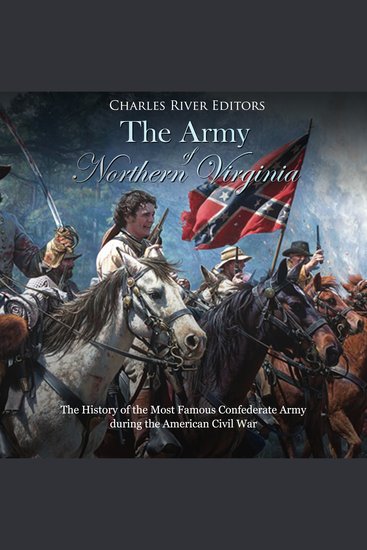
  • Army of Northern Virginia The: The History of the Most Famous Confederate Army during the American Civil War - cover

    Army of Northern Virginia The:...

    Editors Charles River

    • 0
    • 0
    • 0
    Americans have long been fascinated by the Civil War, marveling at the size of the battles, the leadership of the generals, and the courage of the soldiers. Since the war's start over 150 years ago, the battles have been subjected to endless debate among historians and the generals themselves. The Civil War was the deadliest conflict in American history, and had the two sides realized it would take 4 years and inflict over a million casualties, it might not have been fought. Since it did, however, historians and history buffs alike have been studying and analyzing the biggest battles ever since.  
    	Of course, the most famous battles of the war involved the Army of the Potomac facing off against Robert E. Lee’s Army of Northern Virginia at places like Antietam and Gettysburg.  Antietam was the bloodiest day of the war and forced Lee out of Maryland, allowing Lincoln to issue the Emancipation Proclamation. The following summer would see the biggest and most famous battle at Gettysburg. Lee would try and fail to dislodge the Union army with attacks on both of its flanks during the second day and Pickett’s Charge right down the center of the line on the third and final day. Meade’s stout defense held, barely, repulsing each attempted assault, handing the Union a desperately needed victory that ended up being one of the Civil War’s turning points.  
    	Lee is remembered today for constantly defeating the Union’s Army of the Potomac in the Eastern theater from 1862-1865, considerably frustrating Lincoln and his generals. His leadership of his army led to him being deified after the war by some of his former subordinates, especially Virginians, and he came to personify the Lost Cause’s ideal Southern soldier. His reputation was secured in the decades after the war as a general who brilliantly led his men to amazing victories against all odds. But Lee wasn’t perfect, andd he was most criticized for Gettysburg and Pickett's Charge in particular.
    Ver libro
  • Negativity Neutralized: A Guide to Handling Difficult People - Navigating Challenging Relationships with Grace - cover

    Negativity Neutralized: A Guide...

    Jennifer Scott

    • 0
    • 0
    • 0
    In "Negativity Neutralized," discover a comprehensive roadmap for managing difficult relationships and fostering positive interactions. This guide delves into the complexities of human behavior, providing practical strategies to handle negativity with empathy and assertiveness. Through clear, assertive communication and effective boundary-setting, readers will learn how to protect their mental and emotional well-being while maintaining respect and professionalism. 
    The book emphasizes the importance of understanding the root causes of negative behavior, encouraging readers to approach challenging individuals with compassion rather than judgment. Techniques such as active listening and using "I" statements are highlighted as essential tools for de-escalating conflicts and fostering constructive dialogue. 
    Emotional resilience is a key focus, with strategies for building and maintaining resilience through mindfulness, self-care, and stress management. Readers are encouraged to view difficult relationships as opportunities for personal growth, enhancing their emotional intelligence and overall interpersonal skills. 
    "Negativity Neutralized" also underscores the value of seeking support from friends, family, and professionals, offering guidance on when and how to seek help. By integrating these principles into daily life, readers can navigate negativity effectively, transforming challenging interactions into opportunities for growth and fostering healthier, more positive relationships. 
    Empower yourself with the tools and insights needed to handle difficult people gracefully and create a supportive and positive environment in both personal and professional spheres. 
     
    Ver libro
  • Vladimir Lenin - The Russian Revolutionary Who Helped Found the Soviet Union - cover

    Vladimir Lenin - The Russian...

    Kelly Mass

    • 0
    • 0
    • 0
    Vladimir Ilyich Ulyanov, known by his revolutionary name Lenin, was a pivotal figure in Russian history and a key architect of the Soviet Union. Born on April 22, 1870, in Simbirsk, Russia, Lenin came from an upper-middle-class family. His life and legacy are closely intertwined with the establishment of the first socialist state in the modern world. From 1917 until his death in 1924, Lenin served as the head of government of Soviet Russia, and later the Soviet Union, where he oversaw the transformation of the country into a one-party socialist state ruled by the Communist Party. 
    Lenin’s path to power was shaped by both personal tragedy and intellectual transformation. The execution of his older brother, Alexander, in 1887 for attempting to assassinate Tsar Alexander III profoundly impacted Lenin, pushing him toward revolutionary socialist ideas. In his youth, Lenin showed promise as a student but was expelled from Kazan Imperial University for his involvement in anti-Tsarist protests. He subsequently pursued a legal degree, which laid the groundwork for his later work as a political theorist. By 1893, he had moved to Saint Petersburg, where he became deeply involved in Marxist activism, organizing workers and intellectuals against the oppressive Tsarist regime.
    Ver libro
  • Finding Endurance - Shackleton My Father and a World Without End - cover

    Finding Endurance - Shackleton...

    Darrel Bristow-Bovey

    • 0
    • 0
    • 0
    The discovery of Endurance briefly swept the anxiety and rancour of 2022 from the headlines of the world, and new generations thrilled again to one of the greatest tales of all time. 
     
    Acclaimed South African writer Darrel Bristow-Bovey has a deeply personal relationship with the story of Endurance and in this lyrical, loving journey into past and present, into humanity and the natural world, above and below the Antarctic ice, he revisits the famous story from a contemporary perspective, wondering why it seems to mean more today than ever before, and exploring our changing relationship with ourselves and the ice, and with our shared story of survival. 
     
    Drawing on literature, natural history, personal memoir and the thrilling epics of polar adventure, this is finally a celebration of the human spirit and the delivering powers of calculated optimism. If the story of Ernest Shackleton and Endurance tells us anything, it's that in the face of self-inflicted natural disaster, when there's no one to help us but ourselves, we can still pull off a miracle or two. From the bottom of the Weddell sea, Endurance still whispers that not all is lost, and not forever.
    Ver libro
  • The Picnic - A Dream of Freedom and the Collapse of the Iron Curtain - cover

    The Picnic - A Dream of Freedom...

    Matthew Longo

    • 0
    • 0
    • 0
    In August 1989, a group of Hungarian activists organized a picnic on the border of Hungary and Austria. But this was not an ordinary picnic—it was located on the dangerous militarized frontier known as the Iron Curtain. Tacit permission from the highest state authorities could be revoked at any moment. On wisps of rumor, thousands of East German "vacationers" packed Hungarian campgrounds, awaiting an opportunity, fearing prison, surveilled by lurking Stasi agents. The Pan-European Picnic set the stage for the greatest border breach in Cold War history: hundreds crossed from the Communist East to the longed-for freedom of the West. 


    Drawing on dozens of original interviews, Matthew Longo tells a gripping and revelatory tale of the unraveling of the Iron Curtain and the birth of a new world order. Just a few months after the Picnic, the Berlin Wall fell, and the freedom for which the activists and refugees had risked imprisonment was suddenly available to everyone. But were they really free? And why, three decades since the Iron Curtain was torn down, have so many sought once again to build walls? 


    Cinematically told, The Picnic recovers a time when it seemed possible for the world to change. With insight and panache, Longo explores the opportunities taken—and the opportunities we failed to take—in that pivotal moment.
    Ver libro
  • Elizabethan Eras The: The Lives and Legacies of England’s Two Most Famous Queens - cover

    Elizabethan Eras The: The Lives...

    Editors Charles River

    • 0
    • 0
    • 0
    Until the implementation of new legislation on March 26, 2015, men were given preference to women in the British royal line. This system of male primogeniture meant that women seldom inherited the throne, and even when they did, they were often dominated by male councillors. Those women who married British kings gained the title of Queen, but they were queen consorts, holding the title with no power. This meant only a select few women ruled in their own right.  
    	When Queen Elizabeth II came to the throne in 1952, many commentators heralded the beginning of her reign as the second Elizabethan age. The first one, of course, concerned the reign of Henry VIII’s second surviving daughter and middle surviving child, Queen Elizabeth I, one of England’s most famous and influential rulers. It was an age when the arts, commerce and trade flourished. It was the epoch of gallantry and great, enduring literature. It was also an age of wars and military conflicts in which men were the primary drivers and women often were pawns.  
    	Elizabeth I changed the rules of the game and indeed she herself was changed by the game. She was a female monarch of England, a kingdom that had unceremoniously broken with the Catholic Church, and the Vatican and the rest of Christendom was baying for her blood. She had had commercial and militaristic enemies galore. In the end, she helped change the entire structure of female leadership.  
    	Queen Elizabeth II has become so much a part of British society and culture that her presence is taken almost for granted, setting the standard people now expect of a British monarch. The longest lived and second longest reigning monarch in British history, Elizabeth II has overseen her country during a time of incredible turmoil and ever-accelerating change, providing a stable figure at the heart of a nation going through seemingly endless upheavals.
    Ver libro