¡Acompáñanos a viajar por el mundo de los libros!
Añadir este libro a la estantería
Grey
Escribe un nuevo comentario Default profile 50px
Grey
Suscríbete para leer el libro completo o lee las primeras páginas gratis.
All characters reduced
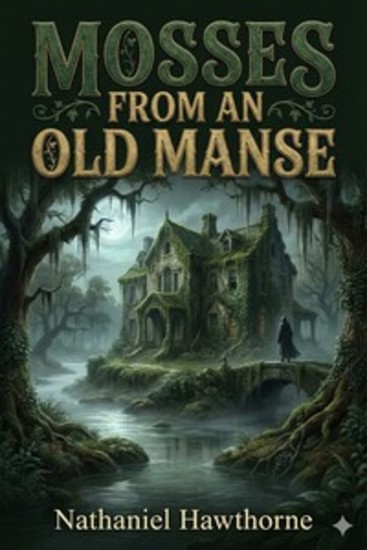
Mosses from an old manse - cover

Mosses from an old manse

Nathaniel Hawthorne

Editorial: Bu Classics Books

  • 0
  • 0
  • 0

Sinopsis

This evocative collection of short stories finds Hawthorne at the height of his symbolic power, exploring themes of sin, isolation, and the supernatural. Each tale serves as a window into the hidden recesses of the heart, where dreams and reality often blur into a single, haunting vision. From the eerie presence of the past to the psychological weight of secrets, these narratives challenge the reader to look beyond the surface. It is a profound meditation on the human condition, wrapped in the atmosphere of a secluded, timeless manse.
Disponible desde: 06/03/2026.
Longitud de impresión: 628 páginas.
Otros libros que te pueden interesar

  • The Prize - From their pens to your ears genius in every story - cover

    The Prize - From their pens to...

    Mary Webb

    • 0
    • 0
    • 0
    Mary Gladys Meredith was born on 25th March 1881 at Leighton Lodge in the village of Leighton, near Shrewsbury in Shropshire.  
    Mary was home-schooled by her father before being sent to a finishing school in Southport in 1895. Her longs walks in the countryside helped her develop a heightened sense of observation and description, of both people and places, which later infused both her poetry and prose. 
    When she was 20 she developed symptoms of Graves' disease, a thyroid disorder that caused bulging protuberant eyes and throat goitre. This caused life-long ill health and was a possible contributor to her early death.  
    Mary was first published as a teenager when her brother sent to a local newspaper her poem on a recent rail accident.  Mary, who was in the habit of destroying her work was appalled though placated when she discovered that it had received some positive appreciation in readers letters. 
    1912 brought marriage to Henry Bertram Law Webb, a teacher. He supported her literary work which, in 1917, resulted in the publication of her novel ‘The Golden Arrow.’ 
    A few years later they acquired a property in London where, it was hoped, recognition of her literary talents would be more easily recognised.   
    Her 1924 novel, ‘Precious Bane’, won the Prix Femina Vie Heureuse, the prestigious French literary prize awarded by an all-female jury. 
    Most of her poetry and various other works were only published after her death. 
    By 1927 her health was deteriorating and her marriage failing.   
    Mary Webb died on 8th October 1927 at St Leonards-on-Sea, East Sussex.  She was 46.
    Ver libro
  • Last Train After Midnight - The train never stopped The passengers never blinked - cover

    Last Train After Midnight - The...

    R.K. Night

    • 0
    • 0
    • 0
    A late-night commuter falls asleep aboard the final train home. 
     
    When he wakes, the train no longer stops at stations. The passengers sit frozen in silence. Nobody blinks. Nobody speaks. 
    And when one of them finally smiles at him, he realizes something terrifying
    Ver libro
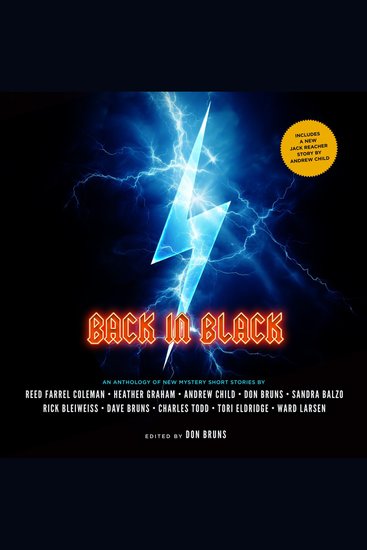
  • Back in Black - An Anthology of New Mystery Short Stories - cover

    Back in Black - An Anthology of...

    Don Bruns, Reed Farrel Coleman,...

    • 0
    • 0
    • 0
    Inspired by songs from AC/DC’s bestselling album, Back in Black, this anthology contains ten murder mysteries from ten bestselling writers—including a new Jack Reacher original by Andrew Child. 
    The third collection in the Music and Murder Mystery Series, Back in Black features one story for each song from the seminal hard rock album of the same name. This book showcases ten brilliant mystery writers at the top of their game, including Reed Farrel Coleman, Heather Graham, Tori Eldridge, Ward Larsen, and Andrew Child, among others. 
    Chilling and unexpected, Back in Black has a mystery for everyone.
    Ver libro
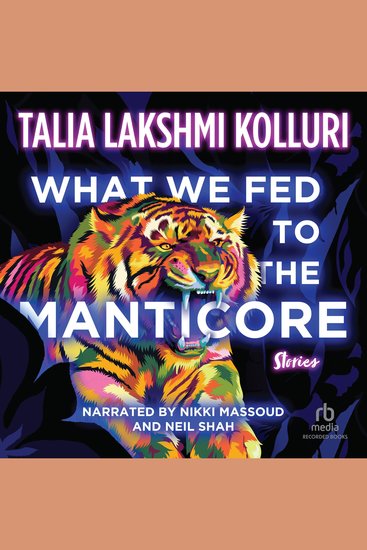
  • What We Fed to the Manticore - cover

    What We Fed to the Manticore

    Talia Lakshmi Kolluri

    • 0
    • 0
    • 0
    In nine stories that span the globe, What We Fed to the Manticore takes readers inside the minds of a full cast of animal narrators to understand the triumphs, heartbreaks, and complexities of the creatures that share our world. 
     
    Through nine emotionally vivid stories, all narrated from animal perspectives, Talia Lakshmi Kolluri’s debut collection explores themes of environmentalism, conservation, identity, belonging, loss, and family with resounding heart and deep tenderness. In Kolluri’s pages, a faithful  
    hound mourns the loss of the endangered rhino he swore to protect. Vultures seek meaning as they attend to the antelope that perished in Central Asia. A beloved donkey’s loyalty to a zookeeper in Gaza is put to the ultimate test. And a wounded pigeon in Delhi finds an unlikely friend. 
     
    In striking, immersive detail against the backdrop of an ever-changing international landscape, What We Fed to the Manticore speaks to the fears and joys of the creatures we share our world with, and ultimately places the reader under the rich canopy of the tree of life.
    Ver libro
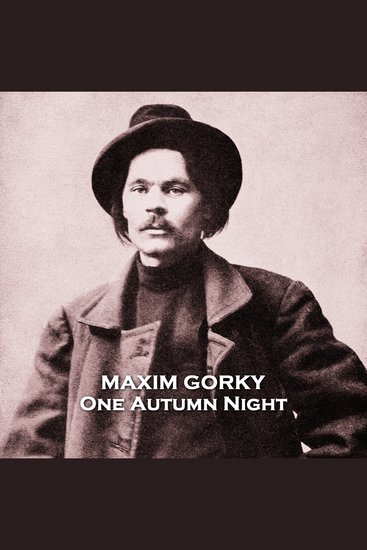
  • One Autumn Night - From their pens to your ears genius in every story - cover

    One Autumn Night - From their...

    Maxim Gorky

    • 0
    • 0
    • 0
    Alexei Maximovich Peshkov was born on 28th March 1868, in Nizhny Novgorod, Russia. 
    Better known as Maxim Gorky he was orphaned at 11 and ran away from home at 12.  At 19 he had already attempted suicide and thereafter travelled, by foot, across the Russian Empire for 5 years. 
    His first book ‘Essays & Stories’ in 1898 was a sensation and so began a long career as an author of short stories, novels and plays.  Gorky saw writing as a moral and political act that would help to change the unjust world around him.  He was an ardent early advocate of the emerging Marxist movement and publicly opposed the Tsarist regime leading several times to his arrest.  
    In 1904 he began his own theatre but the censor banned every play and Gorky was forced to abandon the project. 
    But Gorky was a financially successful author, editor, and playwright and gave monies to political parties as well as for civil rights and social reform.  The brutal shooting of workers, which set in motion the Revolution of 1905, pushed Gorky more decisively toward radical solutions.  
    In 1906 he went to the United States to raise funds for the Bolsheviks. Those experiences including a scandal over travelling with his lover and not his wife deepened his contempt for the ‘bourgeois soul.’ 
    Gorky now moved to Capri in Italy, both for health reasons and to escape the increasingly repressive times in Russia.  
    An amnesty for the 300th anniversary of the Romanov dynasty saw him return to Russia in 1914. His politics remained close to the Bolshevik cause.  But soon, after the 1918 revolution, his essays referred to Lenin as a tyrant for his senseless arrests and repression.  He was soon appealing to the outside world for food aid after the catastrophic crop failure. 
    In October 1921 Gorky returned to Italy, now in Fascist hands, and settled in Sorrento until 1932.  His health worsened with the onset of tuberculosis. 
    He wrote several successful books there but now decided to find an understanding with the communist regime. Stalin invited him home and his return was hailed as a major propaganda victory.  He was decorated with the Order of Lenin, and a province, a park, and various streets re-named in his honour. 
    But he had his faults too.  In 1933, Gorky co-edited a book on the White Sea-Baltic Canal and denied even a single prisoner died during its construction, but thousands had. As well, knowing that some Nazis were homosexual, a phrase was attributed to him that said ‘exterminate all homosexuals and fascism will vanish’.  Although he was himself was quoting another he was decidedly homophobic. 
    With the increase of Stalinist repression in 1935 Gorky was placed under unannounced house arrest. 
    Maxim Gorky died on the 18th June 1936 from pneumonia.  He was 68. 
    Stalin and Molotov were among those who carried Gorky's urn of ashes at his funeral.
    Ver libro
  • Should the World Fail to Fall Apart - Stories - cover

    Should the World Fail to Fall...

    A. J. Payler

    • 0
    • 0
    • 0
    From A. J. Payler, master of modern fiction behind Bank Error in Your Favor, The Killing Song, and Terror Next Door comes Should the World Fail to Fall Apart—six stories of people pushed beyond forgiveness in a world without pity, personal struggle against overwhelming odds, & the resilience that resides at the center of the human heart. 
     Featuring: "An Abyss Below Every Floor": Years of research… decades of study… and it’s all led up to this. But even with the eyes of the world upon him and the backing of the world’s most powerful billionaire, he never could have predicted the horrific truth that lies at the heart of everything. 
    "Spoilers on Page Thirteen": Don’t dare skip ahead… the spoilers will come for you soon enough! Unemployment can make a person desperate… but will Jamie be able to make the grade—or will the spoilers on the next page ruin it for him? 
    "Ma Always Said Redheads Were Trouble": Mick makes bad choices and blames bad luck when his life goes wrong. Virginia is an international mystery woman at the top of her game with a plan to boost her power to new levels. Unfortunately, to pull it off she needs Mick’s help. 
    "Buried, Frozen": The only thing that made those seemingly unending days in prison bearable was knowing what was waiting for him on the outside… but he never could have imagined what he’d find waiting for him, cold and dark at the bottom of that hole. 
    "Dry Eye Syndrome": Midland City's resident superhero can fight off his nemeses all day and night... but his ultimate vulnerability might be his all too human heart. 
     Also featuring "You Are the Protagonist" (as seen in Flash in a Flash) and the original comic book script version of "Dry Eye Syndrome"!
    Ver libro