¡Acompáñanos a viajar por el mundo de los libros!
Añadir este libro a la estantería
Grey
Escribe un nuevo comentario Default profile 50px
Grey
Suscríbete para leer el libro completo o lee las primeras páginas gratis.
All characters reduced
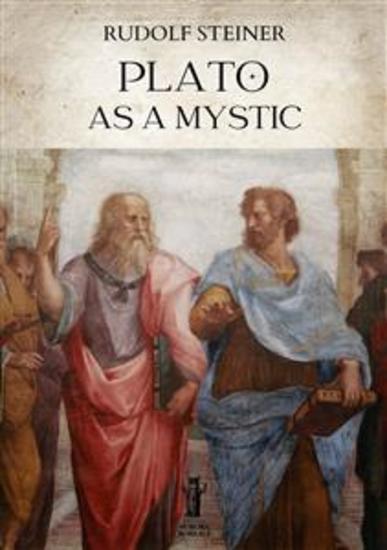
Plato as a Mystic - cover

Plato as a Mystic

Rudolf Steiner

Editorial: Edizioni Aurora Boreale

  • 0
  • 0
  • 0

Sinopsis

Rudolf Steiner (1861-1925) was an Austrian philosopher, esotericist, and clairvoyant. He is considered one of the greatest and most influential spiritual masters of the twentieth century.
Plato as a Mystic, the Rudolf Steiner’s study which we propose to our readers today, is taken from Christianity as Mystical Fact, a Steiner’s primitive and fundamental work, first published in German in 1902; an essay that, in Steiner's intentions, intends to demonstrate how Christianity was born from what had been prepared in the pre-Christian Mysteries. A theory that is certainly questionable and refuted by many philosophers and intellectuals, including Arturo Reghini and Friedrich Nietzsche.
According to Steiner, «The importance of the Mysteries to the spiritual life of the Greeks may be realised from Plato's conception of the universe. There is only one way of understanding him thoroughly. It is to place him in the light which streams forth from the Mysteries. (…) The Platonic view of the universe sets out to be knowledge which by its very nature is also religion. It brings knowledge into relation with the highest to which man can attain through his feelings».
Disponible desde: 03/08/2024.

Otros libros que te pueden interesar

  • Messalina - A Story of Empire Slander and Adultery - cover

    Messalina - A Story of Empire...

    Honor Cargill-Martin

    • 0
    • 0
    • 0
    This is the story of Messalina – third wife of Emperor Claudius and one of the most notorious women to have inhabited the Roman world. 
     
    The scandalous image of the Empress Messalina as a ruthless and sexually insatiable schemer, derived from the work of Roman historians such as Tacitus and Suetonius, has taken deep root in the Western imagination. The stories they told about her included nightly visits to a brothel and a twenty-four-hour sex competition with a prostitute. Tales like these have defined the empress's legacy, but her real story is much more complex. 
     
    In her new life of Messalina, the classicist Honor Cargill-Martin reappraises one of the most slandered and underestimated female figures of ancient history. Looking beyond the salacious anecdotes, she finds a woman battling to assert her position in the overwhelmingly male world of imperial Roman politics – and succeeding. Intelligent, passionate, and ruthless when she needed to be, Messalina's story encapsulates the cut-throat political manoeuvring and unimaginable luxury of the Julio-Claudian dynasty in its heyday. 
     
    Cargill-Martin sets out not to 'salvage' Messalina's reputation, but to look at her life in the context of her time. Above all, she seeks to reclaim the humanity of a life story previously circumscribed by currents of high politics and patriarchy.
    Ver libro
  • 15+ Political Science Classics Collection - The Art of War Tao Te Ching The Republic Meditations The Prince Utopia Utilitarianism Anarchism and others - cover

    15+ Political Science Classics...

    Sun Tzu, Lao Tzu, Plato, Marcus...

    • 0
    • 0
    • 0
    What is Political Science?
    Within human society, it is customary to distinguish between the following spheres: economic, political, social, and spiritual.
    The political sphere is important in that it involves and determines the interactions of different political powers.  This understanding lies at the foundation of any political analysis of public life.
    Politics as a specific sector within human society is as old as it is modern. Many famous statesmen and scientists are credited as the authors of laws and political systems. 
    In today's global community, facing growing pressures of political extremism and radicalism, knowledge of basic political science principles should help students develop a democratic ethos and foster qualities, such as political tolerance, compromise, and cooperation, while learning to express and defend their interests in a civilized manner.
    The foundation of political science lies in the accumulated knowledge of mankind.
    Each included piece o this collection is required reading at some of the best universities on the planet including: Harvard, Princeton, Yale, and Columbia Universities, the Massachusetts Institute of Technology (MIT), and the Universities of Oxford and Cambridge, among others.
     
    Sun Tzu: The Art of War
    Lao Tzu: Tao Te Ching
    Plato: The Republic
    Marcus Aurelius: Meditations
    Niccolo Machiavelli: The Prince
    Thomas More: Utopia
    Tommaso Campanella: The City of the Sun
    Francis Bacon: The New Atlantis
    Thomas Paine: Common Sense
    John Stuart Mill: Utilitarianism
    Karl Marx and Friedrich Engels: The Communist Manifesto
    Vladimir Lenin: The State and Revolution
    Rosa Luxemburg: Reform or Revolution
    Peter Kropotkin: The Conquest of Bread
    Emma Goldman: Anarchism: What It Really Stands For
    Leon Trotsky: Fascism: What It Is and How to Fight It
    Ver libro
  • Life Skills For A Broken World - cover

    Life Skills For A Broken World

    Dr. Ahona Guha

    • 0
    • 0
    • 0
    A revolutionary framework for living well in a broken world, from acclaimed author and psychologist. 


    How can I manage heartbreak? How do I cope with death? How can I learn to tolerate anxiety and have hope? 


    In this helpful, practical, and realistic guide to good psychological health, Dr. Ahona Guha shows us how to cope, thrive, and still feel hopeful for the future. Combining techniques from a range of therapeutic modalities, she demonstrates how we can build a range of essential psychological skills, and apply them to live a more tranquil and joyful life. 


    Life Skills for a Broken World is a breath of fresh air, cutting through the confusion to provide solid, practical, and evidence-based answers to existential questions, big and small.
    Ver libro
  • The Human Predicament - A Candid Guide to Life's Biggest Questions - cover

    The Human Predicament - A Candid...

    David Benatar

    • 0
    • 0
    • 0
    Are our lives meaningful, or meaningless? Is our inevitable death a bad thing? Would immortality be an improvement? Would it be better to hasten our deaths by suicide? Many people ask these big questions—and some people are plagued by them. Analytic philosophers have said relatively little about these important questions. The Human Predicament invites listeners to take a clear-eyed and unfettered view of the human condition. 


    David Benatar here offers a substantial, but not unmitigated, pessimism about the central questions of human existence. He argues that while our lives can have some meaning, we are ultimately the insignificant beings that we fear we might be. He maintains that the quality of life leaves much to be desired in even the best cases. Worse, death is generally not a solution; in fact, it exacerbates rather than mitigates our cosmic meaninglessness. While it can release us from suffering, it imposes another cost-annihilation. This state of affairs has nuanced implications for how we should think about many things, including immortality and suicide, and how we should think about the possibility of deeper meaning in our lives. Ultimately, this thoughtful, provocative, and deeply candid treatment of life's big questions will interest anyone who has contemplated why we are here, and what the answer means for how we should live.
    Ver libro
  • The Norse Eddas - The Ancient Texts of Norse Mythology - cover

    The Norse Eddas - The Ancient...

    Odessa Nightshade

    • 0
    • 0
    • 0
    The Norse Eddas are among the most significant collections of ancient texts in Norse mythology, preserving the beliefs, legends, and wisdom of the Viking Age. These texts, passed down through oral tradition before being written down, provide a glimpse into the cosmology, gods, heroes, and prophecies that shaped the worldview of the Norse people. At the heart of these works are the Poetic Edda and the Prose Edda, two distinct but complementary sources that serve as the foundation of our understanding of Norse mythology. While the Poetic Edda consists of mythological and heroic poems that likely originated in pre-Christian Scandinavia, the Prose Edda, written by the Icelandic scholar Snorri Sturluson in the 13th century, provides an organized narrative and interpretation of these myths.  
      
    Norse mythology is unique among the world’s great mythological traditions, offering a vision of a cosmos that is both grand and tragic. The stories contained in the Eddas depict a universe governed by fate, where even the gods themselves are not immune to doom. Central to these myths is the idea of cyclical destruction and rebirth, embodied in the prophecy of Ragnarok—the apocalyptic battle that will end the reign of the gods and bring forth a new world. Unlike the immortals of other mythologies, the Norse gods are flawed, mortal beings who struggle against inevitable destruction, making their tales both heroic and deeply human.  
      
    Beyond their mythological significance, the Eddas also reflect the values, traditions, and daily life of the Norse people. Honor, loyalty, and wisdom are recurring themes, guiding both gods and mortals in their choices and destinies.
    Ver libro
  • Survival Food - North Woods Stories by a Menominee Cook - cover

    Survival Food - North Woods...

    Thomas Pecore Weso

    • 0
    • 0
    • 0
    In these coming-of-age tales set on the Menominee Indian Reservation of the 1980s and 1990s, Thomas Pecore Weso explores the interrelated nature of meals and memories. As he puts it, “I cannot separate foods from the moments in my life when I first tasted them.” Weso’s stories recall the foods that influenced his youth in northern Wisconsin: subsistence meals from hunted, fished, and gathered sources; the culinary traditions of the German, Polish, and Swedish settler descendants in the area; and the commodity foods distributed by the government—like canned pork, dried beans, and powdered eggs—that made up the bulk of his family’s pantry. His mom called this “survival food.” These stories from the author’s teen and tween years—some serious, some laugh-out-loud funny—will take readers from Catholic schoolyards to Native foot trails to North Woods bowling alleys, while providing Weso’s perspective on the political currents of the era. The book also contains dozens of recipes, from turtle soup and gray squirrel stew to twice-baked cheesy potatoes. This follow-up to Weso’s Good Seeds: A Menominee Indian Food Memoir is a hybrid of modern foodways, Indigenous history, and creative nonfiction from a singular storyteller. “This book is not only about survival food, but about the singular beauty, creativity, and fortitude that comes out of that survival.” —Chef Sean Sherman, author, The Sioux Chef’s Indigenous Kitchen “Survival Food is interesting because it’s one part cookbook, three parts memoir, one part history, and one part multidisciplinary exploration of its setting, northern Wisconsin." —James Norton, The Cookbook Test
    Ver libro