¡Acompáñanos a viajar por el mundo de los libros!
Añadir este libro a la estantería
Grey
Escribe un nuevo comentario Default profile 50px
Grey
Suscríbete para leer el libro completo o lee las primeras páginas gratis.
All characters reduced
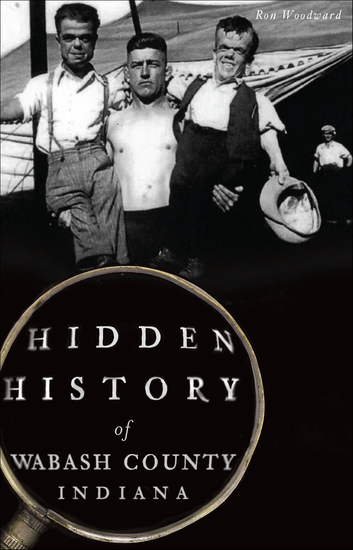
Hidden History of Wabash County Indiana - cover

Hidden History of Wabash County Indiana

Ron Woodward

Editorial: The History Press

  • 0
  • 0
  • 0

Sinopsis

Take the road less traveled through Wabash County's forgotten stories and overlooked characters. Bob Printy may have run off to join the circus, but Jocko the monkey decided to make Wabash his home after he escaped a traveling carnival. Discover the story of Chief LeGros and learn what life was like in nineteenth-century Wabash County. Spend some time with Tommy R. Miller, who sacrificed his life caring for fellow servicemen in Vietnam. Author Ron Woodward shares the compelling, little-known history of this Indiana county.
Disponible desde: 27/07/2015.
Longitud de impresión: 131 páginas.

Otros libros que te pueden interesar

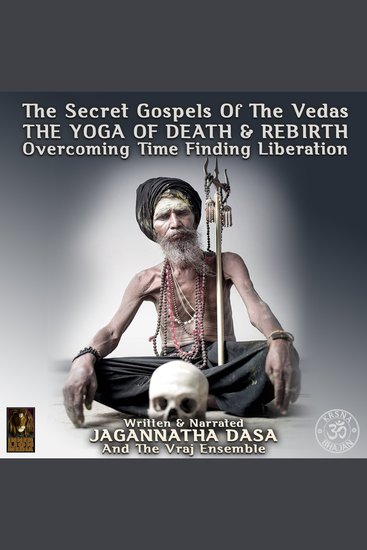
  • Secret Gospels Of The Vedas The - The Yoga Of Death & Rebirth Overcoming Time Finding Liberation - cover

    Secret Gospels Of The Vedas The...

    Jagannatha Dasa, The Vraj Ensemble

    • 0
    • 0
    • 0
    "Once again give me this earth, once again the sky and universe, once again this land blessed by the moon, once again this land of plenty." The Rig Veda "Whenever we take birth, may our deeds be such that we get a pure mind, long life, good health, vitality, intellect, strong sense organs and a powerful body. In next life also, keep us away from bad deeds and indulge us in noble actions." The Yajur Veda 4.15 "One who conducts noble actions obtains noble lives in next births with strong body and sharp intellect. Those who conduct bad deeds get birth in lower species. To experience the fruits of past actions is natural trait of soul. After death, the soul resides in Vayu, Jala, Aushadhi etc. and again enters the womb to take next birth." Athar Veda 5.1.2 Death - it comes to us all. it is a sacrifice for the good life we lead at the end of our long fortuitous road. Or is it? For millenniums the yogis of India following the ancient Vedic path have clearly spoken about what we call in the west- life after death. To the unenlightened materialist life begins with birth and ends with the final inevitable dissolution of the gross material body. But to the enlightened ones ordinary life and death are seen as nothing particularly special - and at most the unclouded end of the infinite beginning. It is true that some of the more virtuous and godly among us may escape the never ending wheel of repeated birth and death however most are commanded to return to this material world by the process of reincarnation, or if they are particularly unlucky hover around this gross material sphere for untold eons as homeless, restless, disembodied, hopeless, spirits. It is of these unfortunate souls to whom we address this most unique Icon audiobook presentation. Here for the first time is the secret yoga of the ghostly realms and our rebirth beyond. 
     
    DEDICATED TO VRNDA DEVI & MANGAL MAHARAJ
    Ver libro
  • Wild Democracy - Anarchy Courage and Ruling the Law - cover

    Wild Democracy - Anarchy Courage...

    Anne Norton

    • 0
    • 0
    • 0
    Wild Democracy calls for a more anarchic, more courageous democracy. This is an ethic for people who know the rights they hold, and who struggle to rule themselves. This is an ethic for unfinished revolutions; an ethic for those who will not be mastered. This is an ethic for those who hold fast to the rights they have by nature. 


    Democracy is always a risky business; full of promise and danger. The promise is the freedom to rule ourselves. The danger is fear: fear of the unknown, fear of the unruly, fear of one another, fear of anarchy. The fearful look for a strong hand, a powerful leader, a protector, a gun. Anarchy leads to courage, to self-reliance, self-discipline, self-rule, and solidarity. Anarchy is the nursery of democracy. It is not anarchy we have to fear, it is authoritarianism. 


    We have been taught to see the people as a problem to be managed. Anne Norton sees them as a source of strength. Anarchic democracy grows wild: springing from the everyday actions of ordinary human beings. 


    Liberalism and conservatism alike have turned away from the democratic, to institutions, rules, and regulations. Anne Norton turns to anarchic people who practice democratic ethics.
    Ver libro
  • The Tech Coup - How to Save Democracy from Silicon Valley - cover

    The Tech Coup - How to Save...

    Marietje Schaake

    • 0
    • 0
    • 0
    Under the cover of "innovation," technology companies have successfully resisted regulation and have even begun to seize power from governments themselves. Facial recognition firms track citizens for police surveillance. Cryptocurrency has wiped out the savings of millions and threatens the stability of the global financial system. Spyware companies sell intelligence tools to anyone who can afford them. This new reality—where unregulated technology has become a forceful instrument for autocrats worldwide—is terrible news for democracies and citizens. 


    In The Tech Coup, Marietje Schaake explains how technology companies crept into nearly every corner of our lives and our governments. She takes us beyond the headlines to high-stakes meetings with human rights defenders, business leaders, computer scientists, and politicians to show how technologies have gone from being heralded as utopian to undermining the pillars of our democracies. To reverse this existential power imbalance, Schaake outlines solutions to empower elected officials and citizens alike. Democratic leaders can—and must—resist the influence of corporate lobbying and reinvent themselves as dynamic, flexible guardians of our digital world. Schaake offers a frightening look at our modern tech-obsessed world—and a clear-eyed view of how democracies can build a better future before it is too late.
    Ver libro
  • The Concept of Presocratic Philosophy - Its Origin Development and Significance - cover

    The Concept of Presocratic...

    André Laks

    • 0
    • 0
    • 0
    When we talk about Presocratic philosophy, we are speaking about the origins of Greek philosophy and Western rationality itself. But what exactly does it mean to talk about “Presocratic philosophy” in the first place? How did early Greek thinkers come to be considered collectively as Presocratic philosophers? In this brief book, André Laks provides a history of the influential idea of Presocratic philosophy, tracing its historical and philosophical significance and consequences, from its ancient antecedents to its full crystallization in the modern period and its continuing effects today.Laks examines ancient Greek and Roman views about the birth of philosophy before turning to the eighteenth-century emergence of the term “Presocratics” and the debates about it that spanned the nineteenth and twentieth centuries. He analyzes the intellectual circumstances that led to the idea of Presocratic philosophy—and what was and is at stake in the construction of the notion. The book closes by comparing two models of the history of philosophy—the phenomenological, represented by Hans-Georg Gadamer, and the rationalist, represented by Ernst Cassirer—and their implications for Presocratic philosophy, as well as other categories of philosophical history. Other figures discussed include Plato, Aristotle, Cicero, Diogenes Laertius, Schleiermacher, Hegel, Nietzsche, Max Weber, and J.-P. Vernant.Challenging standard histories of Presocratic philosophy, the book calls for a reconsideration of the conventional story of early Greek philosophy and Western rationality.
    Ver libro
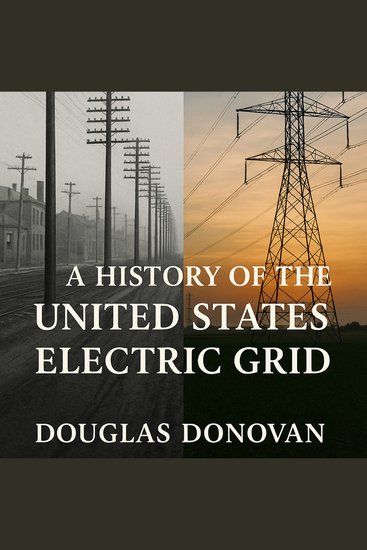
  • A History of the United States Electric Grid - cover

    A History of the United States...

    Douglas Donovan

    • 0
    • 0
    • 0
    This audiobook is narrated by an AI Voice.   
    Did you know the device you're holding is powered by a century of innovation, battles, and brilliance? 
    "A History of the United States Electric Grid" uncovers the hidden story behind the infrastructure we take for granted. From Edison's first spark to the complexities of modern energy markets, explore the power struggles, technological leaps, and regulatory clashes that shaped America's electrical backbone. 
    Witness the "War of the Currents" between AC and DC, the rise and fall of utility empires, and the struggle to bring electricity to rural America. Discover the dark side of deregulation, the Enron scandal, and the ongoing quest to build a grid that's reliable, affordable, and sustainable. 
    But the story doesn't end there. As climate change and new technologies challenge the grid's very existence, can we learn from the past to power a brighter future? 
    Plug into the past to understand the future.
    Ver libro
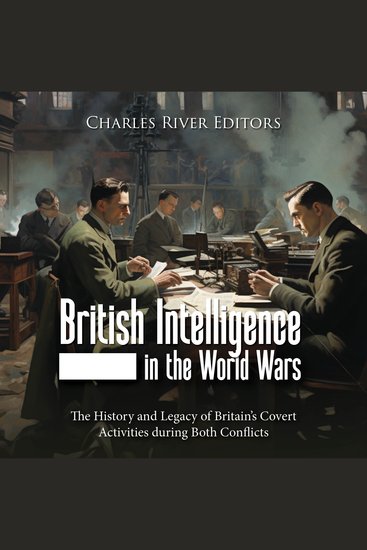
  • British Intelligence in the World Wars: The History and Legacy of Britain’s Covert Activities during Both Conflicts - cover

    British Intelligence in the...

    Editors Charles River

    • 0
    • 0
    • 0
    Many members of British society viewed war as a sport, a lethal one admittedly, but one played by gentlemen in the spirit of amateurism and fair play as it had been throughout the British Empire in the preceding decades. The bloody stalemate on the Western Front caught them unprepared for the dark arts of covert warfare which would be needed to avert defeat, gain the initiative, win the war and, ultimately, shape the peace. Those operations would witness the evolution of an ad hoc coalition of stakeholders from the military, the political elite, academics, technical experts, various kinds of industry, the media, and even the artistic community, all of which came together to wage a variety of forms of covert warfare. Many of the programs were technically successful, and in some cases, they undoubtedly saved lives and shortened the war.  
    	Given the nature of war, many operations and many technologies have to be covert in order to be successful, and that imposes limits on democratic oversight, but in the case of the First World War, the boundaries of what was acceptable under the bounds of morality and the laws of war were repeatedly challenged. 
    	World War II was also a conflict in which modern covert operations first hit their stride. From the jungles of Burma to the streets of Paris, spies, saboteurs, and commandos carried out missions built on secrecy and cunning. Precise, self-contained operations could be as important to the outcome of the war as acts of massive destruction, whether it involved targeted assassinations, sabotaging key logistics, or counterintelligence to break up the enemy’s own rings. At the time, most of these operations were hidden from the public since that was the only way they could be successfully carried out, but in the years since, stories about various missions have emerged. They paint a picture of incredible courage and ingenuity, whether in war zones, enemy territory, or far from the front lines.
    Ver libro