¡Acompáñanos a viajar por el mundo de los libros!
Añadir este libro a la estantería
Grey
Escribe un nuevo comentario Default profile 50px
Grey
Suscríbete para leer el libro completo o lee las primeras páginas gratis.
All characters reduced
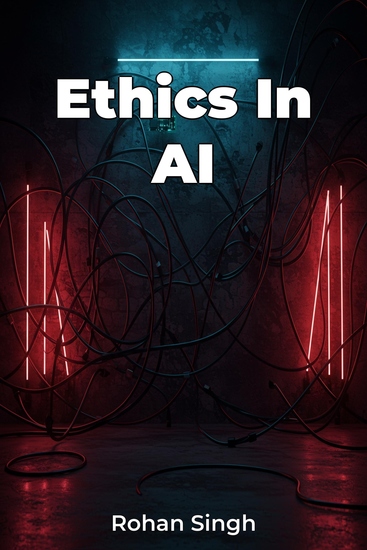
Ethics In AI - cover

Ethics In AI

Rohan Singh

Traductor A AI

Editorial: Publifye

  • 0
  • 0
  • 0

Sinopsis

Ethics In AI explores the increasingly critical ethical dimensions of artificial intelligence, a technology rapidly transforming society. It tackles questions of algorithmic bias, accountability, and transparency, all vital for ensuring AI benefits humanity. Did you know that AI systems, when trained on biased data, can unintentionally perpetuate societal inequalities? The book provides an accessible analysis of these challenges, offering practical solutions for developers, policymakers, and anyone interested in responsible AI development.

 
The book examines the evolution of AI ethics, from early discussions of machine intelligence to today's complex issues. It emphasizes a proactive, multi-stakeholder approach, arguing ethics must be integrated into AI design and development, not treated as an afterthought.

 
The book progresses from core concepts to specific challenges like algorithmic bias, offering strategies for mitigation. It then delves into accountability and transparency, proposing frameworks for understandable AI decision-making, before concluding with broader societal implications, including impacts on employment and social justice.
Disponible desde: 18/02/2025.
Longitud de impresión: 79 páginas.

Otros libros que te pueden interesar

  • The Philosophy of Social Ecology - Essays on Dialectical Naturalism - cover

    The Philosophy of Social Ecology...

    Murray Bookchin, Todd McGowan

    • 0
    • 0
    • 0
    What is nature? What is humanity's place in nature? And what is the relationship of society to the natural world? In an era of ecological breakdown, answering these questions has become of momentous importance for our everyday lives and for the future that we and other life-forms face. In the essays of The Philosophy of Social Ecology, Murray Bookchin confronts these questions head on: invoking the ideas of mutualism, self-organization, and unity in diversity, in the service of ever expanding freedom. 


    Refreshingly polemical and deeply philosophical, these essays take issue with technocratic and mechanistic ways of understanding and relating to, and within, nature. More importantly, they develop a solid, historically and politically based ethical foundation for social ecology, the field that Bookchin himself created and that offers us hope in the midst of our climate catastrophe.
    Ver libro
  • The Miracle - cover

    The Miracle

    James M. LeBlanc

    • 0
    • 0
    • 0
    In this unflinching, touching memoir, James LeBlanc recounts his life as a bi-racial adoptee growing up poor among the upper-crust of Berkeley, CA. Abandonment, confusion, abuse and loneliness led to a life of addiction, homelessness and incarceration as he wandered from one coast to another in search of meaning. After surviving a prison riot, he realized he must change, or he would die. Full of resentment yet desperate, James began to seek God and what happened next was a series of events that led to The Miracle and a new life where he discovered the unbelievable story of his origin and the joy and gratitude that comes from second chances. 
    The Miracle will inspire anyone who desires to overcome the obstacles that block the way to peace. As readers travel through James’ journey, they will connect with him as the common emotions of pain, sadness and anger transition to acceptance, forgiveness and finally joy!
    Ver libro
  • Of Consolation - To Marcia To Helvia To Polybius - cover

    Of Consolation - To Marcia To...

    Seneca the Younger

    • 0
    • 0
    • 0
    These three ‘Consolations’, written by Seneca to his mother and two friends, have been described as ‘the crowning achievement in the canon of ‘consolation letters’. But sentimental they are not, for they emerge from the writer’s deep-seated commitment to Stoicism, where individuals are exhorted to inhabit qualities of virtue, positivity, resilience, and indifference. This recording opens with Seneca’s consolatory letter to Marcia, who, after three years, was still mourning the death of her son. He recognises her exceptional personal qualities and what benefits she has brought to her family, having rescued her father’s legacy as a historian following his death. He cites other noble Roman mothers who lost their sons, and enjoins her to adopt a more Stoic attitude of mind: we are all destined to die, he declares.  
    The second letter is to his mother sent after he had been exiled to Corsica by Emperor Caligula. He counsels Helvia not to mourn his absence – not least because he himself does not feel grief at the prospect of his own exile. He acknowledges the trials of his mother during her life, remarking ‘ill-fortune has given you no respite’. But her grief at the absence of her son may be put to one side in the knowledge that as he has ‘never trusted in Fortune,’ she can be comforted that her son is not discommoded. And history points to far harsher separations.  
    The final letter is to Polybius, Emperor Claudius’s Literary Secretary, who was mourning his brother.  Written while in exile, Seneca’s unwavering commitment to Stoic philosophy is again in evidence. One of Seneca’s principal suggestions is for Polybius to distract himself from grief by an increasing involvement in work.  
    These ‘Consolations’ have been widely admired from Classical times to the present, but are periodically questioned for their emphasis on a somewhat detached approach to grief and bereavement. Not all can manage imperturbability in such circumstances. Nevertheless, there is a steadiness and emotional calm in these missives, which Seneca himself displayed when ordered to commit suicide by Emperor Nero.
    Ver libro
  • Slave Girls: The Shrinking Girl - cover

    Slave Girls: The Shrinking Girl

    Louise Allen

    • 0
    • 0
    • 0
    Slave Girls, a new series by bestselling author Louise Allen, reveals a shocking modern-day scandal of County Lines – the single most dangerous form of systematic child abuse prevalent today.
    Ver libro
  • How to Have a Life - An Ancient Guide to Using Our Time Wisely - cover

    How to Have a Life - An Ancient...

    Seneca

    • 0
    • 0
    • 0
    A vibrant new translation of Seneca's "On the Shortness of Life," a pointed reminder to make the most of our time 


    Who doesn't worry sometimes that smart phones, the Internet, and TV are robbing us of time and preventing us from having a life? How can we make the most of our time on earth? In the first century AD, the Stoic philosopher Seneca the Younger offered one of the most famous answers to that question in his essay "On the Shortness of Life"—a work that has more to teach us today than ever before. In How to Have a Life, James Romm presents a vibrant new translation of Seneca's brilliant essay, plus two Senecan letters on the same theme, complete with an inviting introduction. 


    With devastating satiric wit, skillfully captured in this translation, Seneca lampoons the ways we squander our time and fail to realize how precious it is. We don't allow people to steal our money, yet we allow them to plunder our time, or else we give it away ourselves in useless, idle pursuits. Seneca also describes how we can make better use of our brief days and years. In the process, he argues, we can make our lives longer, or even everlasting, because to live a real life is to attain a kind of immortality.
    Ver libro
  • Chasing the Impossible - A Model for Inclusive and Innovative Care - cover

    Chasing the Impossible - A Model...

    Rachelle Rutherford

    • 0
    • 1
    • 0
    Defying limitations, one family at a time.In the vast landscape of American childhood, one staggering statistic looms large: one in six children grapples with a developmental disability. Prepare to be moved, challenged, and inspired. Chasing The Impossible isn't just a book—it's a clarion call to action.
    Ver libro