¡Acompáñanos a viajar por el mundo de los libros!
Añadir este libro a la estantería
Grey
Escribe un nuevo comentario Default profile 50px
Grey
Suscríbete para leer el libro completo o lee las primeras páginas gratis.
All characters reduced
50 Articles The Media Wouldn't Publish - cover

50 Articles The Media Wouldn't Publish

Roger Allam

Editorial: Publishdrive

  • 0
  • 0
  • 0

Sinopsis

The Writings of a Political Prisoner, Rebel, and Climate Truth-Teller
 
For six years, Roger Hallam has written relentless, unfiltered analyses of the climate crisis, civil resistance, and the collapse of our political systems. These are the articles corporate media refused to publish—because they expose the lies of governments, the failures of politics, and the raw truth about what it takes to win.
 
Collected for the first time, 50 Articles The Media Wouldn’t Publish is a firebrand manifesto for those who refuse to look away. From the founding of Extinction Rebellion to the imprisonment of civil resistors, Roger lays out the case for radical nonviolent revolution with the clarity and urgency that have made him one of the most controversial voices in modern activism.
 
Whether you're an organizer, a concerned citizen, or simply searching for answers in an age of ecological and political breakdown, this book will challenge you, move you, and demand that you act.
 
Read it now—before it’s too late.
 
Reviews of Roger's Previous Book, Common Sense for the 21st Century
 
“Brilliant: wise, profound and persuasive. If you want to understand Extinction Rebellion, or how to change the world, read it.”– George Monbiot, columnist at The Guardian, author and activist.
 
“This is not just an argument, it is an instruction manual for ripping through the corruption and complacency that will destroy our planet.”– Paul Mason, author of Clear, Bright Future: A Radical Defense of the Human Being
 
“[Roger] provides a blueprint for people who are sick and tired of the futility of civil discourse in combating the climate catastrophe. We hope this film inspires people to embrace radical tactics and actions that bring about real change. Our very existence depends on it.”– Rooney Mara & Joaquin Phoenix
 
“Is Common Sense for the 21st Century the best hope we’ve got to prevent human extinction? Yes, I think it is.”– Dr Alexandra Jellicoe, environmental engineer and scientist, Monkey Wrench
 
“[Roger] has a lot of integrity and charisma,”– The New Yorker
 
“Hallam… is widely seen as the driving force behind [Extinction Rebellion’s] tactics, [and] recommends that activists emulate past movements like the United States civil rights movement and the Yellow Vests in France.”– The New York Times
 
This book was published and produced by volunteers. Every purchase helps sustain our radical publishing. Buy, read, and share to help build the resistance.
Disponible desde: 10/03/2025.
Longitud de impresión: 252 páginas.

Otros libros que te pueden interesar

  • On Browsing - cover

    On Browsing

    Jason Guriel

    • 0
    • 0
    • 0
    A defense of the dying art of losing an afternoon—and gaining new appreciation—amidst the bins and shelves of bricks-and-mortar shops. 
    Written during the pandemic, when the world was marooned at home and consigned to scrolling screens, On Browsing’s essays chronicle what we’ve lost through online shopping, streaming, and the relentless digitization of culture. The latest in the Field Notes series, On Browsing is an elegy for physical media, a polemic in defense of perusing the world in person, and a love letter to the dying practice of scanning bookshelves, combing CD bins, and losing yourself in the stacks.
    Ver libro
  • Futanari Experiments: Complete (futa on futa futa on female) - cover

    Futanari Experiments: Complete...

    Adrian Adams

    • 1
    • 2
    • 0
    When Brie receives a large, attachable "finger" that enhances sensation, the first thing she does is stick it on her clit. It works as planned and she proceeds to use it and abuse it, losing track of time in the process. Her best friend and co-worker, Erica, visits to investigate why Brie missed work, and Brie shares her new toy with her, allowing Erica to experience penetration as the giver for the first time. 
    The time finally comes to return the "finger," but Brie ends up trading it for a little red pill that creates a sizeable growth between her legs. This thing is the real deal, and Brie knows exactly who she wants to try it with. 
    When Erica begins having trouble keeping her food down, Brie starts to suspect something's up. While she first fears her lover's gotten herself knocked up by someone else, she soon realizes the most likely culprit is actually... herself. 
    Their use of the magical pill will determine the direction of not only their relationship, but their lives. 
    This book contains explicit sex, including use of toys, futa on female, and futa on futa.
    Ver libro
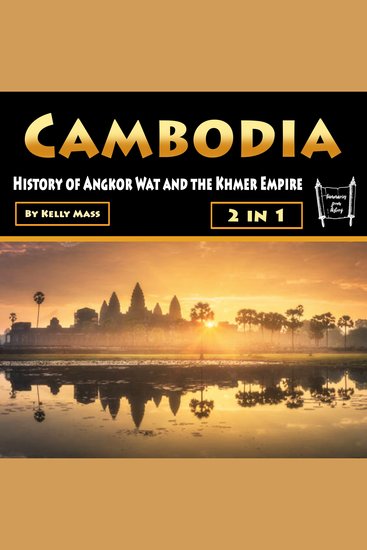
  • Cambodia - History of Angkor Wat and the Khmer Empire (3 in 1) - cover

    Cambodia - History of Angkor Wat...

    Kelly Mass

    • 0
    • 0
    • 0
    Learn more about the history of those countries. The topics addressed will be these: 
    Angkor Wat-- The temple was built as the state temple for the Khmer Empire at the demand of Suryavarman II in the early 12th century in Yaodharapura (, contemporary Angkor), the Khmer Empire's capital. It was constructed in the early 12th century to honor the Hindu god Vishnu, but by the end of the century, it had been changed to a Buddhist temple. 
    Angkor Wat is a fascinating structure, dating back hundreds of years, and it’s impressive how much of it has remained intact. 
    The Khmer Empire--Historians describe Cambodia as the Khmer State or the Angkorian Empire (Khmer:) from the 9th century to the 15th century, when it was a Hindu/Buddhist empire in Southeast Asia. The empire, which developed from the old societies of Funan and Chenla, governed and/or "vassalized" the majority of mainland Southeast Asia and parts of Southern China, covering from the suggestion of the Indochinese Peninsula northward to modern-day Yunnan province in China, and from Vietnam westward to Myanmar. The Khmer Empire was greater at its peak than the Byzantine Empire (Eastern Roman Empire) that existed at the exact same period. 
    The Siamese-- Siam was just a much different name for what's now referred to as Thailand. The Siamese are the people who live there, though they're never ever called as such any longer. 
    Thailand is a fascinating country, with its own culinary arts, culture, history, royalty, infrastructure, and influence on the world. To learn more about these “Thai” people before they were called Thai, when they were Siamese, is to learn about those people’s roots.
    Ver libro
  • Science for a Green New Deal - Connecting Climate Economics and Social Justice - cover

    Science for a Green New Deal -...

    Eric A. Davidson

    • 0
    • 0
    • 0
    Since it was first proposed in the US House of Representatives, the Green New Deal has been hotly debated. The intent was not simply to fight climate change or address a specific environmental concern, but rather to tackle how climate change and other environmental challenges affect the economy, the vulnerable, and social justice—and vice versa. 


    In Science for a Green New Deal, Eric Davidson dissects this legislative resolution. He also shows how green new deal thinking offers a framework for a convergence of the natural sciences, social science, economics, and community engagement to develop holistic policy solutions to the most pressing issues of our day. Davidson weaves the case for linkages among multiple global crises, including a pandemic that has reversed progress on fighting poverty and hunger, an acceleration of climate change, and a renewed awareness of profound social injustices highlighted by the Black Lives Matter movement. 


    Illustrating these points with his personal life experiences as a child growing up in Montana and as a famed researcher leading a large scientific society, Davidson relates these complex challenges to our everyday lives and decision-making. Science for a Green New Deal is a realistic and optimistic look at how we can attain a more sustainable, prosperous, and just future.
    Ver libro
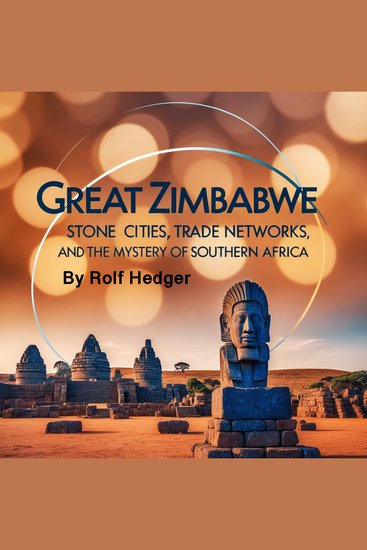
  • Great Zimbabwe - Stone Cities Trade Networks and the Mystery of Southern Africa - cover

    Great Zimbabwe - Stone Cities...

    Rolf Hedger

    • 0
    • 0
    • 0
    The rise of Great Zimbabwe was shaped by geography, economic opportunities, and social organization, allowing it to become one of Africa’s most influential civilizations. Emerging around the 9th century, the settlement developed into a thriving political and economic center by the 11th century, reaching its peak between the 13th and 15th centuries. Its growth was fueled by abundant natural resources, a strategic location, and participation in regional and international trade. 
    The Zimbabwean plateau, with its fertile soil and favorable climate, provided ideal conditions for agriculture. The Shona people, who founded Great Zimbabwe, cultivated sorghum and millet, which sustained the growing population. In addition to farming, cattle herding played a crucial role in the economy. Cattle were a measure of wealth and social status, serving as currency in trade and marriage negotiations. The presence of large herds further reinforced the power of the elite, who controlled access to grazing lands and water sources. 
    Beyond agriculture, Great Zimbabwe’s location made it a key player in long-distance trade. The city was situated between the goldfields of southern Africa and the coastal trade hubs of the Swahili city-states. Gold mining became a major economic activity, with miners extracting the metal from riverbeds and underground deposits. This gold was traded with merchants from Kilwa, Sofala, and other Swahili ports, where it was exchanged for luxury goods such as Persian ceramics, Chinese porcelain, and Indian textiles. The wealth generated from trade allowed Great Zimbabwe to expand, attracting artisans, traders, and skilled laborers.
    Ver libro
  • Genghis Khan - Life Death and Resurrection - cover

    Genghis Khan - Life Death and...

    John Man

    • 0
    • 1
    • 0
    “A thrilling account” of the brilliant, ruthless founder of the Mongol Empire (The Guardian). 
     
    Genghis Khan is one of history’s immortals, alive in memory as a scourge, hero, military genius and demigod. To Muslims, Russians, and westerners, he is a murderer of millions, a brutal oppressor. Yet in his homeland of Mongolia he is the revered father of the nation, and the Chinese honor him as the founder of a dynasty. In his so-called Mausoleum in Inner Mongolia, worshippers seek the blessing of his spirit. In a supreme paradox, the world’s most ruthless conqueror has become a force for peace and reconciliation. 
     
    As a teenager, Genghis was a fugitive, hiding from enemies on a remote mountainside. Yet he went on to found the world’s greatest land empire and change the course of world history. Brilliant and original as well as ruthless, he ruled an empire twice the size of Rome’s until his death in 1227 placed all at risk. To secure his conquests and then extend them, his heirs kept his death a secret—and secrecy has surrounded him ever since. His undiscovered grave, with its imagined treasures, remains the subject of intrigue and speculation. 
     
    This is more than just a gripping account of Genghis’ rise and conquests. John Man uses firsthand experiences in China and Mongolia to reveal the khan’s enduring influence. He has traveled the length of the empire, and he spotlights the tension between Mongols and Chinese, who both claim Genghis’ spirit. He is the first writer to explore the hidden valley where Genghis is believed to have died, and one of the few westerners to climb the mountain where he was likely buried. 
     
    This stunning narrative paints a vivid picture of the man himself, the places where he lived and fought, and the passions that surround him still. For in legend, ritual, and intense controversy, Genghis lives on. 
     
    “[An] engrossing book.” —Booklist 
     
    “A rattling good read.” —The Independent
    Ver libro