¡Acompáñanos a viajar por el mundo de los libros!
Añadir este libro a la estantería
Grey
Escribe un nuevo comentario Default profile 50px
Grey
Suscríbete para leer el libro completo o lee las primeras páginas gratis.
All characters reduced
Children's Bedtime Stories - cover

Children's Bedtime Stories

Robin Wickens

Editorial: Robin Wickens

  • 0
  • 0
  • 0

Sinopsis

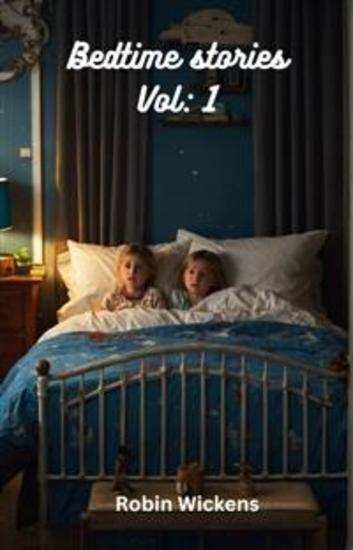
In the enchanting world of **"Children's Bedtime Stories,"** young readers are whisked away on a magical journey filled with whimsical characters and heartwarming adventures. Each story within this delightful collection sparks imagination and wonder, painting vivid scenes that transport children to fantastical realms where anything is possible.

**With tales that stir the soul and captivate the mind**, **"Children's Bedtime Stories"** is the perfect companion for cozy nights and dreams filled with endless possibilities. The charming cast of characters, from fairies and dragons to princesses and clever mice, ensures that every reader finds a hero to admire and a story to love.
Disponible desde: 01/07/2024.


Otros libros que te pueden interesar

  • Scenes of Clerical Life - cover

    Scenes of Clerical Life

    George Eliot

    • 0
    • 0
    • 0
    Three novellas that brilliantly portray English country and clergy life at the turn of the nineteenth century from the author of Middlemarch.   Initially appearing in Blackwood’s Magazine, this trio of linked stories comprises George Eliot’s first published work. Together they form a portrait of small-town life in Midlands, England, where changes are affecting both society at large and religious beliefs and institutions.   In “The Sad Fortunes of Reverend Amos Barton,” the clergyman struggles to raise funds for church repairs and perform his parochial duties, while a target of gossip—both good and bad. Meanwhile, few in Shepperton can find fault with his shy and hardworking wife, who cares for their six children, stretching Barton’s meager salary—and herself—to the limit.   Set before the arrival of Amos Barton, “Mr. Gilfil’s Love Story” features well-liked parish priest Maynard Gifil, who is known for smoking long pipes and preaching short sermons. Shockingly tumultuous events lead up to his marriage—including a love triangle, deception, and a murder plot.   An argument over religious doctrine splits the market town of Milby into two factions in “Janet’s Repentance.” With the arrival of Reverend Tryan, a rumor spreads that Evangelicalism has invaded the parish, angering local lawyer Robert Dempster. But his long-suffering wife finds in Tryan a kindred spirit, leading her to embark on a new life.  “The exquisite truth and delicacy, both of the humour and the pathos of those stories, I have never seen the like of.” —Charles Dickens “A first-rate novel, and its author takes rank at once among the masters of the art.” —The Times
    Ver libro
  • Whispers Between Strangers - Romantic Encounters That Leave a Mark - cover

    Whispers Between Strangers -...

    Sarah Jones

    • 0
    • 0
    • 0
    A collection of steamy, emotionally charged short stories where connection comes quickly — and lingers long after.
     
    They meet by chance. A lost dog. A rainstorm. A missed turn on a mountain trail. Brief moments — but they echo.
     
    "Whispers Between Strangers" is a thoughtfully crafted collection of short stories exploring those fleeting but unforgettable encounters that shift something inside us. Each story holds a pulse of tension and tenderness — a quiet breath before a kiss, a hand held too long, a parting without a name.
     
    This is romance for those who crave emotion over explicitness, and presence over permanence. An audiobook for thoughtful hearts, midnight listeners, and those who believe that sometimes the shortest stories leave the deepest marks.
    Ver libro
  • One Last Brushstroke Before Sobriety - cover

    One Last Brushstroke Before...

    Mike DeFrench

    • 0
    • 0
    • 0
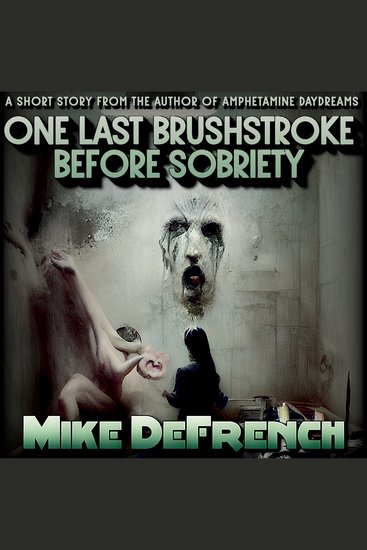
    Joseph isn't a painter. He's a junkie. 
    Well...he was getting clean. Was clean, for a while. But then he started seeing it... 
    An abomination that threatens all life on Earth. 
    And only he can stop it, by painting.
    Ver libro
  • The Eye of the Camera - From their pens to your ears genius in every story - cover

    The Eye of the Camera - From...

    Fred M. White

    • 0
    • 0
    • 0
    Richard Bernard Heldmann was born on 12th October 1857, in St Johns Wood, North London.  
    By his early 20’s Heldmann began publishing fiction for the myriad magazine publications that had sprung up and were eager for good well-written content.  
    In October 1882, Heldmann was promoted to co-editor of Union Jack, a popular magazine, but his association with the publication ended suddenly in June 1883.  It appears Heldman was prone to issuing forged cheques to finance his lifestyle.  In April 1884 he was sentenced to 18 months hard labour. 
    In order to be well away from the scandal and the damage that this had caused to his reputation Heldmann adopted a pseudonym on his release from jail.  Shortly thereafter the name ‘Richard Marsh’ began to appear in the literary periodicals.  The use of his mother’s maiden name as part of it seems both a release and a lifeline. 
    A stroke of very good fortune arrived with his novel ‘The Beetle’ published in 1897.  This would turn out to be his greatest commercial success and added some much-needed gravitas to his literary reputation.   
    Marsh was a prolific writer and wrote almost 80 volumes of fiction as well as many short stories, across many genres from horror and crime to romance and humour.   His unusual characters, plotting devices and other literary developments have identified his legacy as one of the best British writers of his time.   
    Richard Marsh died from heart disease in Haywards Heath in Sussex on 9th August 1915.  He was 57.
    Ver libro
  • Gooseberries - From their pens to your ears genius in every story - cover

    Gooseberries - From their pens...

    Anton Chekhov

    • 0
    • 0
    • 0
    Anton Pavlovich Chekhov was born on 29th January 1860 in Taganrog, on the south coast of Russia.  
    His family life was difficult; his father was strict and over-bearing but his mother was a passionate story-teller, a subject Chekhov warmed to. As he later said; ‘our talents we got from our father, but our soul from our mother’.  
    At school Chekhov was distinctly average. At 16 his father mis-managed his finances and was declared bankrupt. His family fled to Moscow. Chekhov remained and eked out a living by various means, including writing and selling short sketches to newspapers, to finish his schooling. That completed and with a scholarship to Moscow University obtained he rejoined his family. 
    He was able to help support them by selling satirical sketches and vignettes of Russian lifestyles and gradually obtained further commissions. In 1884, he qualified as a physician and, although it earned him little, he often treated the poor for free, he was fond of saying ‘Medicine is my lawful wife, and literature is my mistress.’ 
    His own health was now an issue as he began to cough up blood, a symptom of tuberculosis.  Despite this his writing success enabled him to move the family into more comfortable accommodation.  
    Chekhov wrote over 500 short stories which included many, many classics including ‘The Kiss’ and ‘The Lady with a Dog’.  His collection ‘At Dusk’ won him the coveted Pushkin Prize when was only 26.  
    He was also a major playwright beginning with the huge success of ‘Ivanov’ in 1887.   
    In 1892 Chekhov bought a country estate north of Moscow. Here his medical skills and money helped the peasants tackle outbreaks of cholera and bouts of famine. He also built three schools, a fire station and a clinic.  It left him with less time for writing but the interactions with real people gained him detailed knowledge about the peasantry and their living conditions for his stories.  
    His most famous work, ‘The Seagull’ was received disastrously at its premiere in St Petersburg. It was later restaged in Moscow to highlight its psychological aspects and was a huge success. It led to ‘Uncle Vanya’, ‘The Three Sisters’ and ‘The Cherry Orchard’.  
    Chekhov suffered a major lung hemorrhage in 1897 while visiting Moscow. A formal diagnosis confirmed tuberculosis and the doctors ordered changes to his lifestyle.  
    Despite a dread of weddings the elusive literary bachelor quietly married the actress Olga Knipper, whom he had met at rehearsals for ‘The Seagull’, on 25th May 1901. 
    By May 1904 with his tuberculosis worsening and death imminent he set off for the German town of Badenweiler writing cheerful, witty letters to his family and assuring them his health was improving.  
    On 15th July 1904 Anton Chekhov died at Badenweiler.  He was 44.
    Ver libro
  • The Elk - cover

    The Elk

    Hector Hugh Monro

    • 0
    • 0
    • 0
    "The Elk" by Saki is a short story that revolves around the character of Mrs. Thropplestance, a wealthy and domineering old woman known for her obstinacy and disdain for others. Living in the county of Woldshire, she is notorious for her harsh treatment of those around her, including her servants and tenants. 
    The narrative unfolds as Mrs. Thropplestance decides to host a grand dinner party, intending to impress her guests with a lavish display of wealth and power. However, her plans are thwarted when she becomes embroiled in a confrontation with a local poacher who has been hunting on her land. The poacher's defiance and the ensuing chaos lead to unexpected consequences, ultimately challenging Mrs. Thropplestance's authority.
    Ver libro