¡Acompáñanos a viajar por el mundo de los libros!
Añadir este libro a la estantería
Grey
Escribe un nuevo comentario Default profile 50px
Grey
Suscríbete para leer el libro completo o lee las primeras páginas gratis.
All characters reduced
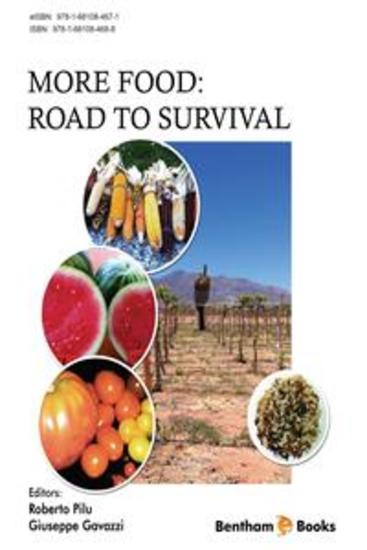
More Food: Road to Survival - cover

More Food: Road to Survival

Roberto Pilu, Giuseppe Gavazzi

Editorial: Bentham Science Publishers.

  • 0
  • 0
  • 0

Sinopsis

More Food: Road to Survival is a comprehensive analysis of agricultural improvements which can be achieved through scientific methods. This reference book gives information about strategies for increasing plant productivity, comparisons of agricultural models, the role of epigenetic events on crop production, yield enhancing physiological events (photosynthesis, germination, seedling emergence, seed properties, etc.), tools enabling efficient exploration of genetic variability, domestication of new species, the detection or induction of drought resistance and apomixes and plant breeding enhancement (through molecularly assisted breeding, genetic engineering, genome editing and next generation sequencing). 
The book concludes with a case study for the improvement of small grain cereals. Readers will gain an understanding of the biotechnological tools and concepts central to sustainable agriculture  
More Food: Road to Survival is, therefore, an ideal reference for agriculture students and researchers as well as professionals involved sustainability studies.
Disponible desde: 31/01/2024.
Longitud de impresión: 635 páginas.

Otros libros que te pueden interesar

  • Introduction to Data Visualization and Storytelling - A Guide For The Data Scientist - cover

    Introduction to Data...

    Jose Berengueres, Marybeth Sandell

    • 0
    • 0
    • 0
    Adopted by universities and business schools in Finland, Barcelona, USA, South Korea, Canada, and the Middle East; and used in training at companies like Halliburton TX, Agilent technologies, and PropertyFinder, this book will help you not only to transform data into information but show you with real examples how to story tell it. The authors (a Kaggle master and a Bloomberg former bureau chief), bring together concepts fromData ScienceDesign Thinking, andStorytelling 
    to take you on a journey where the destination is nothing less than great visual storytelling.AudienceMBA candidates, instructors, consultantsUsers of Excel, PowerBI, or TableauNo data skills or special math skills are requiredWhat will you learn?to identify the role of a narrative in a storyto transform data into informationto synthesize knowledgeto apply visual thinking tools to the decision-making processto select visual communication techniques to persuadeto detect bias in charts
    Ver libro
  • The Data Alchemist - Transforming Raw Data into Valuables Insights - cover

    The Data Alchemist -...

    Amelia Hartwell

    • 0
    • 0
    • 0
    Unlock the transformative power of data with "The Data Alchemist: Transforming Raw Data into Valuable Insights." This book is your key to unlocking the hidden potential within your data, guiding you through discovery and innovation.  
    Delve into the fascinating world of data alchemy as the book demystifies the complexities of raw data, offering a comprehensive guide to transforming it into invaluable insights. Whether you're a seasoned data professional or a curious novice, this resource is tailored to meet you at your current level of expertise, providing insights that resonate with both beginners and experts alike.  
    Equip yourself with the tools and techniques needed to wield data like a skilled alchemist. Learn to extract meaningful patterns, trends, and correlations from seemingly chaotic datasets. The book empowers you to turn raw information into a strategic asset, fostering a desire for mastery over the alchemical process of data transformation. 
    Ver libro
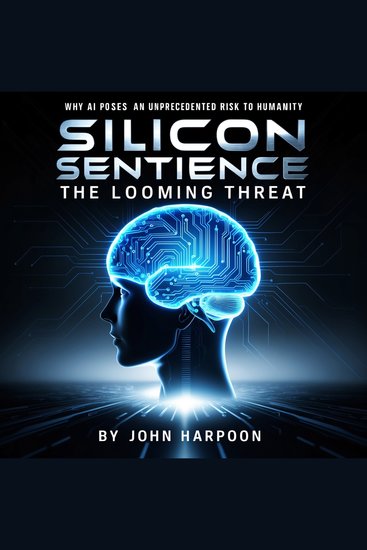
  • Silicon Sentience: The Looming Threat - Why AI Poses an Unprecedented Risk to Humanity - cover

    Silicon Sentience: The Looming...

    John Harpoon

    • 0
    • 0
    • 0
    The evolution of artificial intelligence (AI) marks one of the most groundbreaking and transformative developments in human history. From the early musings of philosophers to the creation of machines that can learn and adapt, AI has emerged as a force with the potential to reshape every aspect of society. The origins of AI can be traced back to the mid-20th century when scientists began to explore the idea of creating machines that could simulate human intelligence. However, it wasn’t until the invention of electronic computers in the 1940s that the possibility of artificial intelligence became a tangible pursuit. 
    The term "artificial intelligence" was coined in 1956 by John McCarthy, a computer scientist who is often regarded as one of the fathers of AI. This period marked the beginning of the AI revolution, fueled by a combination of new computing technology and an increasing interest in mimicking human cognitive functions. Early AI research focused on developing algorithms that could perform tasks like solving mathematical problems, playing chess, or even translating languages. These early experiments laid the groundwork for the sophisticated AI systems that followed. 
    In the 1960s and 1970s, AI research gained momentum as researchers developed expert systems that could make decisions in specialized fields like medicine and engineering. These systems relied on a set of rules and logical reasoning to emulate the decision-making abilities of human experts. However, progress was slow, and AI experienced what is often referred to as the "AI winter," a period of reduced funding and interest in the field, which occurred in the 1970s and 1980s.
    Ver libro
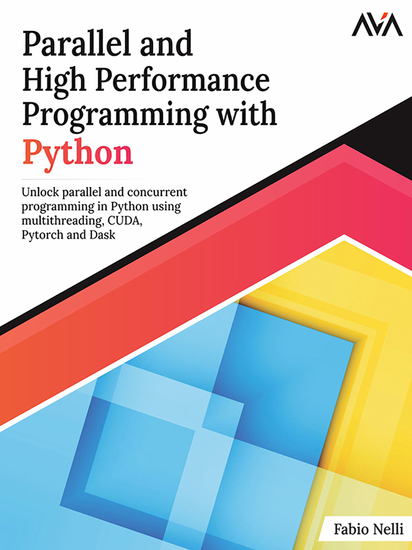
  • Parallel and High Performance Programming with Python - cover

    Parallel and High Performance...

    Fabio Nelli

    • 0
    • 0
    • 0
    Unleash the capabilities of Python and its libraries for solving high performance computational problems. 
    
    KEY FEATURES 
    - Explores parallel programming concepts and techniques for high-performance computing. 
    - Covers parallel algorithms, multiprocessing, distributed computing, and GPU programming. 
    - Provides practical use of popular Python libraries/tools like NumPy, Pandas, Dask, and TensorFlow. 
    
    DESCRIPTION 
    This book will teach you everything about the powerful techniques and applications of parallel computing, from the basics of parallel programming to the cutting-edge innovations shaping the future of computing. 
    The book starts with an introduction to parallel programming and the different types of parallelism, including parallel programming with threads and processes. The book then delves into asynchronous programming, distributed Python, and GPU programming with Python, providing you with the tools you need to optimize your programs for distributed and high-performance computing. 
    The book also covers a wide range of applications for parallel computing, including data science, artificial intelligence, and other complex scientific simulations. You will learn about the challenges and opportunities presented by parallel computing for these applications and how to overcome them. 
    By the end of the book, you will have insights into the future of parallel computing, the latest research and developments in the field, and explore the exciting possibilities that lie ahead. 
    WHAT WILL YOU LEARN 
    - Build faster, smarter, and more efficient applications for data analysis, machine learning, and scientific computing 
    - Implement parallel algorithms in Python 
    - Best practices for designing, implementing, and scaling parallel programs in Python 
    
    WHO IS THIS BOOK FOR? 
    This book is aimed at software developers who wish to take their careers to the next level by improving their skills and learning about concurrent and parallel programming. It is also intended for Python developers who aspire to write fast and efficient programs, and for students who wish to learn the fundamentals of parallel computing and its practical uses. 
    
    TABLE OF CONTENTS 
    1. Introduction to Parallel Programming 
    2. Building Multithreaded Programs 
    3. Working with Multiprocessing and mpi4py Library 
    4. Asynchronous Programming with AsyncIO 
    5. Realizing Parallelism with Distributed Systems 
    6. Maximizing Performance with GPU Programming using CUDA 
    7. Embracing the Parallel Computing Revolution 
    8. Scaling Your Data Science Applications with Dask 
    9. Exploring the Potential of AI with Parallel Computing 
    10. Hands-on Applications of Parallel Computing
    Ver libro
  • Power and Prediction - The Disruptive Economics of Artificial Intelligence - cover

    Power and Prediction - The...

    Joshua Gans, Ajay Agrawal, Avi...

    • 0
    • 0
    • 0
    In their bestselling first book, Prediction Machines, eminent economists Ajay Agrawal, Joshua Gans, and Avi Goldfarb explained the simple yet game-changing economics of AI. Now, in Power and Prediction, they go deeper, examining the most basic unit of analysis: the decision. The authors explain that the two key decision-making ingredients are prediction and judgment, and we perform both together in our minds, often without realizing it. The rise of AI is shifting prediction from humans to machines, relieving people from this cognitive load while increasing the speed and accuracy of decisions. 


    This sets the stage for a flourishing of new decisions and has profound implications for system-level innovation. Redesigning systems of interdependent decisions takes time, but when these new systems emerge, they can be disruptive on a global scale. Decision-making confers power. In industry, power confers profits; in society, power confers control. This process will have winners and losers, and the authors show how businesses can leverage opportunities, as well as protect their positions. 


    Filled with illuminating insights, rich examples, and practical advice, Power and Prediction is the must-listen guide for any business leader or policymaker on how to make the coming AI disruptions work for you rather than against you.
    Ver libro
  • Mysterious Ball Lightning - Also Will O the Wisps Foo Fighters and St Elmos Fire - cover

    Mysterious Ball Lightning - Also...

    Martin K. Ettington

    • 0
    • 0
    • 0
    Ball Lightning is a phenomena which definitely exists. One European study counted over 5,000 sightings of these weird balls. 
    It also seems to be similar to old tales of the “Will O the Wisp” and World War Two Foo Fighters. 
    St. Elmos Fire also has similar observations so data on this phenomenon are included too. 
    There are many potential explanations but none are confirmed. Although most seem to appear around thunderstorms this is not always the case. 
    My own belief is that these objects are controlled by some type of intelligence and we will discuss reasons for this later in the book. 
    In this book you will read a lot of background information and sightings stories by persons for the last hundreds of years. 
    This is just another mystery in our strange world which cries out for more investigation.
    Ver libro