Junte-se a nós em uma viagem ao mundo dos livros!
Adicionar este livro à prateleira
Grey
Deixe um novo comentário Default profile 50px
Grey
Assine para ler o livro completo ou leia as primeiras páginas de graça!
All characters reduced
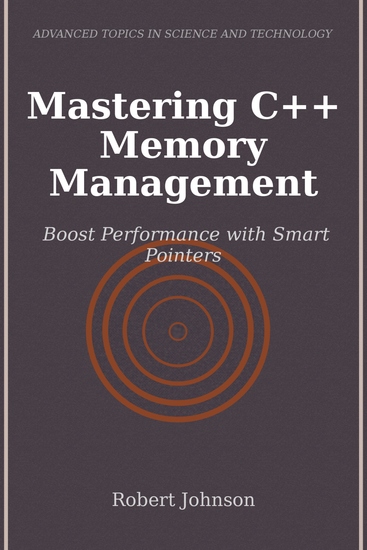
Mastering C++ Memory Management - Boost Performance with Smart Pointers - cover
LER

Mastering C++ Memory Management - Boost Performance with Smart Pointers

Roberta Johnson

Editora: HiTeX Press

  • 0
  • 0
  • 0

Sinopse

"Mastering C++ Memory Management: Boost Performance with Smart Pointers" is an essential guide for developers seeking to enhance their proficiency in C++ and optimize their applications' performance and safety. This book delves deeply into C++'s memory management paradigms, offering readers a thorough understanding of both traditional techniques and modern advancements like smart pointers. With an emphasis on clarity and practical guidance, it equips developers with the knowledge to manage resources effectively, mitigate common pitfalls, and harness the full potential of C++.The book systematically explores key topics, including memory allocation, ownership models, and the intricacies of smart pointers such as `unique_ptr`, `shared_ptr`, and `weak_ptr`. It also addresses advanced topics like multithreaded memory management, debugging, and performance optimization. Enhanced by real-world examples and case studies, this comprehensive resource is designed to build a strong foundation for beginners while providing in-depth insights for experienced programmers. By understanding and applying the strategies detailed in this book, developers can craft efficient, reliable, and high-performance applications, tailored to meet the demands of modern computing environments.
Disponível desde: 24/10/2024.
Comprimento de impressão: 417 páginas.

Outros livros que poderiam interessá-lo

  • Edge Computing for Beginners - Simple Guide to Industry Applications and Future Trends - cover

    Edge Computing for Beginners -...

    Saimon Carrie

    • 0
    • 0
    • 0
    Embark on a journey into the cutting-edge world of edge computing with this comprehensive guide. "Edge Computing: Simple Guide to Industry Applications and Future Trends" offers a deep dive into the revolutionary paradigm shift transforming the landscape of computing. 
    In Chapter 1, readers explore a myriad of industry applications and case studies, discovering how edge computing is reshaping healthcare, manufacturing, smart cities, and retail. From remote patient monitoring to predictive maintenance and personalized shopping experiences, learn how edge computing is driving innovation and efficiency across diverse sectors. 
    Chapter 2 takes readers on a journey into the future, exploring emerging trends and technologies shaping the evolution of edge computing. Dive into the integration of edge computing and IoT, the automation of edge workflows, and the critical importance of edge security. Prepare to be fascinated by the exploration of edge computing's role in space, from satellite operations to Mars exploration. 
    In Chapter 3, readers are equipped with the tools and resources to embark on their own edge computing journey. Learn how to build your edge computing lab, engage in hands-on projects, and discover valuable learning resources. Join the vibrant edge computing community through conferences, meetups, and hackathons, and become part of the forefront of innovation in this dynamic field. 
    "Edge Computing: Simple Guide to Industry Applications and Future Trends. Part 2" concludes with reflections on the future of edge computing, inviting readers to embrace the opportunities and challenges ahead.  
     
    Ver livro
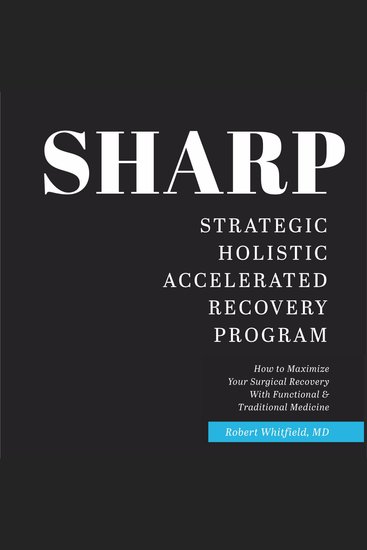
  • SHARP-- Strategic Holistic Accelerated Recovery Program - How To Maximize Your Surgical Recovery With Functional & Traditional Medicine - cover

    SHARP-- Strategic Holistic...

    Dr. Robert Whitfield

    • 0
    • 0
    • 0
    Ready to revolutionize your surgical recovery?Discover the SHARP™ Method, the cutting-edge approach to speeding up recovery after surgery.Dr. Rob, a leading plastic surgeon known for his expertise in breast explant surgery, presents his innovative SHARP™ Method. This comprehensive guide is designed to help patients maximize their recovery from any surgical procedure by reducing chronic inflammation and boosting the immune system.In this book, you will:- Understand the importance of genetic profiling and how it can guide your recovery.- Learn how to combat environmental toxins that hinder healing.- Discover dietary strategies to support faster recovery and optimal health.- Explore the connection between gut health and immune function.- Find out how hormonal balance impacts recovery and well-being.The SHARP™ Method provides a step-by-step plan to prepare your body before surgery and enhance recovery. It offers practical advice on using functional medicine and supplements to support healing.Transform your approach to recovery and embrace a holistic strategy that supports both your body and mind.
    Ver livro
  • The Anatomy of Deception - Conspiracy Theories Distrust and Public Health in America - cover

    The Anatomy of Deception -...

    Sara E. Gorman

    • 0
    • 0
    • 0
    In the aftermath of the COVID-19 pandemic, trust in the healthcare system seems to be at an all-time low. Conspiracy theories are now mainstream, and distrust of government health agencies is common among private citizens. Yet many of those same individuals still profess trust in their doctors. What, then, is driving the general mistrust in medicine, and how can the public's faith be restored? 


    The Anatomy of Deception investigates the cause behind this seeming uptick in distrust by tracing the unexpected connection between medical mistrust and the move toward far right ideology in the United States. Drawing on personal qualitative research and interviews, health writer and expert Sara Gorman challenges traditional concepts of medical mistrust and argues that the loss of institutional trust in American health care signals a larger breakdown in democracy as a whole. In six short chapters, Gorman advances the idea of medical mistrust not as a byproduct of personal or historical abuses but as a direct result of bias, miscommunication, and lack of access that has slowly eroded trust in the public health system over time. She argues that we can build back trust in medicine through investments in health equity as a first step towards healing the schisms present in modern American society.
    Ver livro
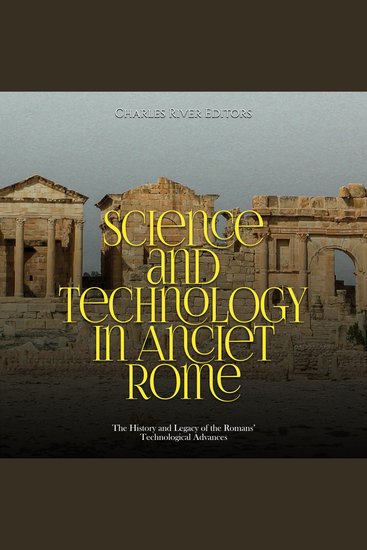
  • Science and Technology in Ancient Rome: The History and Legacy of the Romans’ Technological Advances - cover

    Science and Technology in...

    Editors Charles River

    • 0
    • 0
    • 0
    The modern world has the ancient Romans to thank for the origins of many modern technologies, conveniences, and ideas, from running water, baths, and republican style government to roads. Similarly, by the 3rd century BCE, the Romans were prodigious monument builders, so much so that the memory of the great Roman Republic and the Roman Empire continues to exist within a cityscape of stone. Rome’s public spaces were filled with statues, arches, temples, and many other varieties of monumental images, and each of these structures had its own civic or religious function. At the same time, most were embedded with stories, messages, and symbolism so that they also tended to function as propaganda. These monuments allowed the leading citizens of Rome, especially its emperors, to sculpt their own self-image and embed themselves and their most memorable deeds into the very structure of the Roman city.  
    	While some of the most famous examples, like the Colosseum and Pantheon, remain striking testaments to Roman engineering and technology, many of the scientific advances the Romans ushered into the world were smaller in scope but not necessarily any less important. Indeed, the Roman Empire was not just one of the most technologically advanced civilizations within the ancient world but also proportionately one of the most prolific throughout all history. A substantial number of these innovations were lost following the eventual fall of the Western Roman Empire in 476 and the subsequent centuries of decline of the Byzantine Empire starting in the early 7th century, but rediscoveries of their advancements began during the later Middle Ages and the beginning of the Modern Era (c. 1400s). Some of their ideas and designs are only now being improved upon thanks to newer, far more advanced modern technologies.  
    Ver livro
  • Challenge of the Stallions - The Legend of Cloud and the Wild Horses of the Rockies - cover

    Challenge of the Stallions - The...

    Ginger Kathrens

    • 0
    • 0
    • 0
    An extraordinary view of the wild horse bands in the Rockies' Pryor Mountains like you've never seen before, Wild Stallions of the Rockies chronicles the life of the leader stallion, Cloud (1995-2016). This remarkable account details his reign among the wild horse herds in the Rockies, as well as both his immediate family band and rival bands that occupy the same region on the Montana-Wyoming border. You'll see the predators, both human and animal, that challenge the stallions' survival, plus the fighting between bands for power, family, and territory. Phenomenal photography gives you an up close and personal look at the feeding, foaling, and freedom of these wild horses, and interactive QR codes grant you access to exclusive and stunning video from its companion PBS Nature documentary series, Cloud: Challenge of the Stallions. This fascinating standalone book that emphasizes the mission of saving and preserving the wild horse bands in the Rocky Mountains is unlike any other Cloud book available. One-of-a-kind and truly special, Wild Stallions of the Rockies is an absolute must-have for anyone passionate about these stunning wild animals.
    Ver livro
  • Product Owner Training - Agile Product Ownership with Scrum - cover

    Product Owner Training - Agile...

    Jimmy Mathew

    • 0
    • 0
    • 0
    Detailed training for Product Owner Role in Agile software development with Scrum. This book discusses different responsibilities and activities performed by product Owners, a quick discussion on Product Owner skills and a detailed discussion on different techniques used by Product Owners in managing requirements during Agile software development using Scrum. 
    This covers all major aspects of managing requirements in agile software development using Scrum framework. Learn how to create and maintain user stories, user story mapping, breaking, ordering etc. How Prescribed events and activities in scrum processes these requirements. 
    This is for anyone who wish to learn about “Product Ownership” in Agile software development. This course is helpful for anyone who is playing the role of product owner in agile software development or anyone who wish to become a product owner in agile software development using Scrum framework. 
    The course starts with topics on Agile software development and Scrum framework. Then it discusses the Product Owner role, activities and skills. 
    Then there is a detailed discussion on managing requirements, which is one of the main responsibilities of a Product Owner. This includes topics like, writing User Stories, User Story Mapping, Methods for splitting and ordering User Stories, Release planning, etc. 
    In the last module there is a discussion on Product Owner role during prescribed events in Scrum. 
    Updated as per the latest Scrum Guide. We have updated the course content as per the changes made in the latest version of the scrum Guide(TM)
    Ver livro