¡Acompáñanos a viajar por el mundo de los libros!
Añadir este libro a la estantería
Grey
Escribe un nuevo comentario Default profile 50px
Grey
Suscríbete para leer el libro completo o lee las primeras páginas gratis.
All characters reduced
The Complete Works of Robert Louis Stevenson (Illustrated Edition) - Enriched edition Novels Short Stories Poems Plays Memoirs Travel Sketches Letters and Essays - cover

The Complete Works of Robert Louis Stevenson (Illustrated Edition) - Enriched edition Novels Short Stories Poems Plays Memoirs Travel Sketches Letters and Essays

Robert Louis Stevenson

Editorial: Musaicum Books

  • 0
  • 0
  • 0

Sinopsis

The Complete Works of Robert Louis Stevenson (Illustrated Edition) offers readers a comprehensive collection of Stevenson's literary masterpieces, including Treasure Island, Dr. Jekyll and Mr. Hyde, and Kidnapped. Stevenson's unique blend of adventure, mystery, and psychological depth is on full display in this anthology, making it a must-have for fans of classic literature. The Illustrated Edition adds another layer of richness to the reading experience, with stunning visuals that bring Stevenson's vivid descriptions to life. Robert Louis Stevenson, a Scottish novelist and travel writer, was known for his keen exploration of themes such as duality of human nature and moral ambiguity. His writings were greatly influenced by his travels and personal experiences, giving his work a sense of authenticity and depth that continues to resonate with readers today. Stevenson's ability to craft complex characters and gripping narratives sets him apart as a prominent figure in English literature. I highly recommend The Complete Works of Robert Louis Stevenson to anyone seeking a captivating literary journey filled with adventure, intrigue, and profound insights into the human condition. This anthology showcases the range and brilliance of Stevenson's storytelling, making it a timeless addition to any bookshelf.

In this enriched edition, we have carefully created added value for your reading experience:
- A comprehensive Introduction outlines these selected works' unifying features, themes, or stylistic evolutions.
- The Author Biography highlights personal milestones and literary influences that shape the entire body of writing.
- A Historical Context section situates the works in their broader era—social currents, cultural trends, and key events that underpin their creation.
- A concise Synopsis (Selection) offers an accessible overview of the included texts, helping readers navigate plotlines and main ideas without revealing critical twists.
- A unified Analysis examines recurring motifs and stylistic hallmarks across the collection, tying the stories together while spotlighting the different work's strengths.
- Reflection questions inspire deeper contemplation of the author's overarching message, inviting readers to draw connections among different texts and relate them to modern contexts.
- Lastly, our hand‐picked Memorable Quotes distill pivotal lines and turning points, serving as touchstones for the collection's central themes.
Disponible desde: 07/08/2017.
Longitud de impresión: 10600 páginas.

Otros libros que te pueden interesar

  • The Little Girl Who Could Not Cry - cover

    The Little Girl Who Could Not Cry

    Lidia Maksymowicz, Paolo Luigi...

    • 0
    • 0
    • 0
    The No. 1 international bestseller, with a foreword written by His Holiness Pope Francis, who made headlines in 2021 when he kissed Lidia's Auschwitz identification tattoo.The unforgettable, moving true story of the little girl who survived Auschwitz's 'Angel of Death', Dr Mengele. Lidia was just three years old when she arrived in Auschwitz-Birkenau with her mother, a member of the partisan resistance from Belarus. The bewildered little girl was picked out by Dr Josef Mengele for his sadistic experiments and sent to the infamous children’s block, where every day was a fight for survival. In eighteen months of hell she came close to death more than once.Her mother, who risked her life to visit Lidia, gave her strength. But when the camp was liberated, her mother was gone, presumed dead. Lidia, by now deeply traumatised, was adopted by a Polish woman. But then, in 1962, she discovered that her birth parents were still alive in the USSR, and Lidia was faced with an agonising choice . . .Lidia’s extraordinary story has touched hearts around the world, and she has made it her mission to bear witness to the Holocaust so that the truth may never be forgotten. This is a powerful and ultimately hopeful account by a remarkable woman who refuses to hate those who hurt her. She says, ‘Hate only brings more hate. Love, on the other hand, has the power to redeem.’'Unforgettable' - Daily MailThe Little Girl Who Could Not Cry is also published in paperback as A Little Girl in Auschwitz.
    Ver libro
  • Radio Head Gal - a memoir of hearing loss and self-worth - cover

    Radio Head Gal - a memoir of...

    Rebecca Knill

    • 0
    • 0
    • 0
    “I never wanted to be hearing. I said this out loud in my TED talk, and the audience went bug-eyed, struggling to process this heresy. How could anyone not want to be hearing? I wasn’t anti-hearing. I just felt my life would be simpler if everyone else were deaf.” So begins the compelling story of acclaimed TED speaker Rebecca Knill as she guides us through a life shaped by hearing loss. Throughout, Knill offers eye-opening insights into disability and celebrates the power of technology to level the playing field.A provocative memoir, Radio Head Gal challenges the notion that a deaf existence is inferior, advocating instead for hearing loss to be recognized as an aspect of physical diversity similar to race or gender identity. The memoir delves into themes of adaptation, discrimination, faith, mother/daughter dysfunction, and the quest for belonging in a world that remains largely inaccessible to the d/Deaf.Growing up before accommodation laws or smart technology, Knill reflects on her life pre- and post-cochlear implant ― a surgical procedure in which computer chips replaced her sense of hearing, cyborg-style ― and the birth of her alter ego, Radio Head Gal. The book's subject is timely: hearing loss now affects 1 in 5 young people, a 30% increase since the 1990s. By 2050, hearing loss is expected to swell to 1 in 4 across all age groups worldwide. As younger generations face this reality, technological innovation must follow.With humor and insight, Knill explores themes of self-worth, communication, and the pivotal role technology plays in promoting inclusion. Recognized as a Top 25 Talk of 2020 by the TED Editors,  Radio Head Gal is a vital resource to support those with hearing loss, providing intimate revelations and enlightening perspectives that cut through emotional barriers. Dive into this empowering narrative that challenges perceptions and advocates for an inclusive, technology-driven future, regardless of ability differences.
    Ver libro
  • Home is Never the Same - A Family's Strong Spiritual Connections with the Place Where They Grew Up - cover

    Home is Never the Same - A...

    Larry Ray Hardin

    • 0
    • 0
    • 0
    Home is Never the Same centers largely around the Fifties, Sixties, and Seventies. It is about my heritage, hard work, and simple living with our struggling poor family and my connections with nature and God. It is a true account of my parents, brothers, sisters, relatives, and friends growing up on Big Plum Creek Road, surrounded by the rural farming areas of Kentucky. As a young boy, I searched for the spirit of God while wandering in the woods and walking along the edges of the creeks. I was at peace with nature. But one day, I had to leave Big Plum Creek Road and follow a different path.
    Ver libro
  • The Secret Doctrine of The Rosicrucians - cover

    The Secret Doctrine of The...

    Magus Incognito

    • 0
    • 0
    • 0
    A must have book for all those interested in the truth about the Rosicrucians. Many false claims are debunked. Writing as Magus Incognitio William Walker Atkinson  explores the Seven Aphorism of the Rosicrucian doctrine.These traditions emphasize the pursuit of spiritual enlightenment and personal transformation through the understanding of hidden truths and the transmutation of the self.  He describes the path of the Rosicrucian initiate: a journey of self-discovery, spiritual development, and the attainment of higher states of consciousness.
    Ver libro
  • A Dead Woman's Secret - From their pens to your ears genius in every story - cover

    A Dead Woman's Secret - From...

    Guy de Maupassant

    • 0
    • 0
    • 0
    Henri René Albert Guy de Maupassant was born on August 5th, 1850 near Dieppe in France.  
    Maupassant’s early life was badly torn when at age 11 (his younger brother Hervé was then five) his mother, Laure, a headstrong and independent-minded woman, risked social disgrace in order to obtain a legal separation from her husband. 
    After the separation, Laure kept custody of her two boys. With the father now forcibly absent, Laure became the most influential and important figure in the young boy's life.   
    Maupassant’s education was such that he rebelled against religion and other societal norms but a developing friendship with Gustave Flaubert began to turn his mind towards creativity and writing. 
    After graduation he volunteered for the Franco-Prussian war. With its end he moved to Paris to work as a clerk in the Navy Department.  Gustave Flaubert now took him under his wing.  Acting as a literary guardian to him, he guided the eager Maupassant to debuts in journalism and literature.  For Maupassant these were exciting times and the awakening of his creative talents and ambitions. 
    In 1880 he published what is considered his first great work, ‘Boule de Suif’, (translated as as ‘Dumpling’, ‘Butterball’, ‘Ball of Fat’, or ‘Ball of Lard’) which met with a success that was both instant and overwhelming.  Flaubert at once acknowledged that it was ‘a masterpiece that will endure.’ Maupassant had used his talents and experiences in the war to create something unique.  
    This decade from 1880 to 1891 was to be the most pivotal of his career.  With an audience now made available by the success of ‘Boule de Suif’ Maupassant organised himself to work methodically and relentlessly to produce between two and four volumes of work a year.  The melding of his talents and business sense and the continual hunger of sources for his works made him wealthy. 
    In his later years he developed a desire for solitude, an obsession for self-preservation, and a fear of death as well as a paranoia of persecution caused by the syphilis he had contracted in his youth.  
    On January 2nd, 1892, Maupassant tried to commit suicide by cutting his throat.  Unsuccessful he was committed to the private asylum of Esprit Blanche at Passy, in Paris.  It was here on July 6th, 1893 that Henri René Albert Guy de Maupassant died at the age of only 42.
    Ver libro
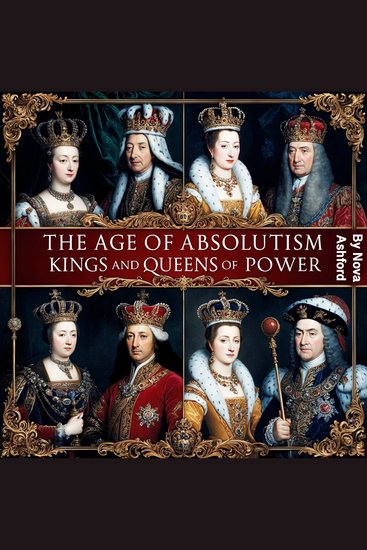
  • The Age of Absolutism - Kings and Queens of Power - cover

    The Age of Absolutism - Kings...

    Nova Ashford

    • 0
    • 0
    • 0
    The Age of Absolutism was a period in European history marked by the rise of powerful monarchs who sought to centralize authority and rule without interference. Spanning from the late 16th century to the early 19th century, this era saw kings and queens across Europe consolidate power, diminishing the influence of nobles, clergy, and representative bodies. At the heart of absolutism was the belief in the divine right of kings, the idea that monarchs were chosen by God and therefore answerable only to Him. This belief not only justified their rule but also placed them above challenge, reinforcing their ability to govern with near-unlimited power. 
    The roots of absolutism can be traced back to the political turmoil of the late medieval period. Feudalism had weakened, and as centralized states emerged, rulers sought to strengthen their authority. The Protestant Reformation further contributed to this shift, as religious conflicts created instability. Monarchs capitalized on these crises by presenting themselves as the ultimate unifying force within their realms. By controlling the military, bureaucracy, and economy, they ensured that no other institution could rival their power. 
    One of the most famous examples of an absolute monarch was Louis XIV of France, known as the "Sun King." His reign (1643–1715) epitomized absolutism. Louis XIV built the extravagant Palace of Versailles, a symbol of his dominance, and controlled every aspect of government. His declaration, "L'État, c'est moi" (I am the state), reflected his belief in total sovereignty. Similarly, Peter the Great of Russia modernized and expanded his empire, using absolute power to transform Russia into a formidable European force. Other rulers, like Philip II of Spain, Frederick the Great of Prussia, and Maria Theresa of Austria, also embraced absolutist policies to strengthen their nations.
    Ver libro