Junte-se a nós em uma viagem ao mundo dos livros!
Adicionar este livro à prateleira
Grey
Deixe um novo comentário Default profile 50px
Grey
Assine para ler o livro completo ou leia as primeiras páginas de graça!
All characters reduced
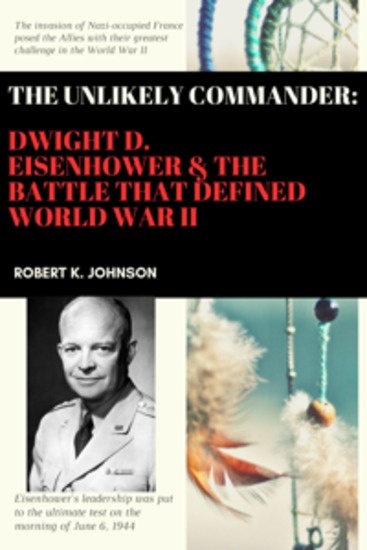
The Unlikely Commander - Dwight D Eisenhower and the Battle that Defined World War II - cover
LER

The Unlikely Commander - Dwight D Eisenhower and the Battle that Defined World War II

Robert A. Johnson

Editora: BookRix

  • 0
  • 0
  • 0

Sinopse

This book is not just a military history, it is a story about overcoming adversity, mastering strategy, and becoming an effective leader under the weight of responsibility. At the end of reading this book, you will walk away with a deeper appreciation for Eisenhower’s role in history and fresh perspectives on leadership. By blending vivid storytelling with rich historical analysis, this book offers a front-row seat to the most decisive moments of Eisenhower's life. See how an "unlikely" leader became one of the most consequential figures of the 20th century. Key TakeawaysEye-Opening Leadership Lessons: Discover how Eisenhower united forces, managed crises, and earned the trust of world leaders.Historical Insight with Modern Relevance: Understand how D-Day shaped Eisenhower's legacy and why his philosophy on leadership continues to resonate.Masterful Storytelling: Feel the weight of Eisenhower’s decisions as he navigates the perils of war, builds alliances, and cements his place in history. If you want to be inspired, informed, and equipped with lessons in leadership, diplomacy, and strategy, this is the book for you.
Disponível desde: 13/12/2024.


Outros livros que poderiam interessá-lo

  • Common Sense - cover

    Common Sense

    Thomas Paine

    • 0
    • 0
    • 0
    Common Sense was a pamphlet written by Thomas Paine in 1775-1776 advocating independence from Great Britain to people in the 13 Colonies. Writing in clear and persuasive prose, Paine marshaled moral and political arguments to encourage common people in the Colonies to fight for egalitarian government. It was published anonymously on January 10, 1776, at the beginning of the American Revolution, and became an immediate sensation.  
    It was sold and distributed widely and read aloud at taverns and meeting places. In proportion to the population of the colonies at that time (2.5 million), it had the largest sale and circulation of any book published in American history. As of 2006, it remains the all-time best-selling American title, and is still in print today.  
    Common Sense made public a persuasive and impassioned case for independence, which before the pamphlet had not yet been given serious intellectual consideration. Paine connected independence with common dissenting Protestant beliefs as a means to present a distinctly American political identity, structuring "Common Sense" as if it were a sermon. Historian Gordon S. Wood described "Common Sense" as "the most incendiary and popular pamphlet of the entire revolutionary era".
    Ver livro
  • 3rd Floor Flowers Poetry for PTSD A Collective Project for Trauma Survivors - A fundraiser for Mental Health Initiatives - cover

    3rd Floor Flowers Poetry for...

    Melinda Barss

    • 0
    • 0
    • 0
    3rd Floor Flowers: Poetry for PTSD is a powerful global healing initiative created to support trauma survivors through the art of poetry. Curated by Melinda Barss of Healing Light Press, this anthology features heartfelt and transformative poems and artwork composed by those who have journeyed through the depths of PTSD and come out stronger. 
    This collection is more than just a book—it's a fundraiser for mental health awareness and a tribute to the strength of the human spirit. Each poem serves as a beacon of light for those still in darkness, offering comfort, hope, and healing through words. 
    Whether you are a survivor, a supporter, or simply someone seeking inspiration, this book is a compassionate companion on the path to emotional and spiritual recovery. 
    PTSD healing, trauma recovery, mental health poetry, 3rd Floor Flowers, Melinda Barss, Healing Light Press, fundraiser for mental health, spiritual healing poetry, poetry for PTSD, global mental health project, trauma-informed poetry, healing initiative, PTSD support, expressive writing, healing through poetry 
    #PoetryForPTSD 
    #MentalHealthMatters 
    #TraumaHealing 
    #HealingThroughWords 
    #3rdFloorFlowers 
    #HealingLightPress 
    #MelindaBarss 
    #MentalHealthAwareness 
    #PTSDRecovery 
    #SpiritualHealing 
    #GlobalHealingProject 
    #MentalHealthFundraiser 
    #HealingPoetry 
    #PoetryTherapy 
    #VoicesOfSurvivors
    Ver livro
  • Extortion 17’s Why - An Analysis of Narratives by Alan Howell Parrot - cover

    Extortion 17’s Why - An Analysis...

    Align Kaizen, Alan Hallow...

    • 0
    • 0
    • 0
    On August 6, 2011, a tragic event unfolded when Extortion 17, a Chinook helicopter, was shot down, resulting in the loss of 30 American servicemen, including 17 Navy SEALs from the legendary SEAL Team 6. It marked the largest loss of life during the War on Terror, a war America was told started because of Osama bin Laden and 9/11. 
    In Alan Parrot's narratives, an oral history captured by Nick Noe, he puts tragic events, including 9/11, Benghazi, and Extortion 17, into perspective. Alan, an Arabist, spent much of his life with royalty in the Middle East and learned about such national tragedies through observation, conversations, and omission. He explains how diplomatic immunity played a role in 9/11 and details the weapons transfer that resulted in the tragedy in Benghazi.  
    Behind these heart-wrenching incidents lies a web of secrecy and deception. Startling revelations have come to light, thanks to the evidence shared with the grief-stricken Gold Star families during the debrief. Astonishingly, it appears that Extortion 17 was not a random act of war, but rather a meticulously orchestrated setup. The threads of this conspiracy can be traced back to the historic Osama bin Laden raid, a mere three months prior, and thus 9/11. 
    Within the pages of this gripping book, you will embark on an extraordinary journey of discovery. Delve into the enigmatic concept of diya, the key that unlocks the truth behind Extortion 17. Unveiling secrets known to only a privileged few, Extortion 17's Why illuminates the darkest corners of a clandestine world. 
    Prepare to be captivated by a tale that challenges your perception of reality and sheds light on the shadows. Are you ready to unravel the mysteries and uncover the untold story of Extortion 17?
    Ver livro
  • 1914: The History and Legacy of World War I’s First Year - cover

    1914: The History and Legacy of...

    Editors Charles River

    • 0
    • 0
    • 0
    Needless to say, the First World War came at an unfortunate time for those who would fight in it. After an initial period of relatively rapid maneuver during which the German forces pushing through Belgium and the French and British forces attempting to stymie them made an endless series of abortive flanking movements that extended the lines to the sea, a stalemate naturally tended to develop. The infamous trench lines soon snaked across the French and Belgian countryside, creating an essentially futile static slaughterhouse whose sinister memory remains to this day. 
    If trench warfare was an inevitability during the war, it is only because the events leading up to the First Battle of the Marne were quite different. The armies at the beginning of the war moved quickly through the land, but the First Battle of the Marne devolved into a bloody pitched battle that led to the construction of trenches after the Germans retreated, blocked in their pursuit of Paris. When the aftermath disintegrated into a war between trenches, some Germans thought they had the upper hand since they were occupying French territory, but with fewer soldiers than the combined Allied nations and fewer resources and supplies, it was possibly only a matter of time before they were ultimately defeated. The commander of the German armies, General Helmuth von Moltke, allegedly said to Kaiser Wilhelm II immediately after the First Battle of the Marne, "Your Majesty, we have lost the war." Winston Churchill himself would later reference that anecdote, writing, “Whether General von Moltke actually said to the Emperor, ‘Majesty, we have lost the war,’ we do not know. We know anyhow that with a prescience greater in political than in military affairs, he wrote to his wife on the night of the 9th, ‘Things have not gone well. The fighting east of Paris has not gone in our favour, and we shall have to pay for the damage we have done.’"
    Ver livro
  • How to Eat - An Ancient Guide for Healthy Living - cover

    How to Eat - An Ancient Guide...

    Abigail Reno

    • 0
    • 0
    • 0
    Today, we're stuffed with dietary recommendations from every direction. Social media, advertising, food packaging, diet books, doctors—all have advice on what, how much, and when to eat. This would have been no surprise to ancient Greeks and Romans. Their doctors were intensely interested in food, offered highly prescriptive dietary advice, and developed detailed systems to categorize foods and their health effects. How to Eat is a delectable anthology of Greco-Roman writings on how to eat, exercise, sleep, bathe, and manage your sex life for optimal health. It also gathers ancient opinions on specific foods of all sorts, from how to deploy onions to cure baldness and cabbage to get sober to whether lentils are healthy and why arugula increases your sex drive. 


    With lively new translations by Claire Bubb, How to Eat features voices from medicine, philosophy, natural history, agriculture, and cooking, including Hippocrates, Pliny the Elder, Galen, Seneca, Plutarch, and Cato. 


    While medicine and science have obviously changed enormously since the classical world, and some Greco-Roman beliefs about diet now appear hilariously off the mark, How to Eat reveals that much of their advice still resonates—and all of it is fascinating.
    Ver livro
  • The Missing Piece - cover

    The Missing Piece

    Julie Legg

    • 0
    • 0
    • 0
    Everything you need to know about recognising and diagnosing ADHD in women, and how to live a full and fulfilling life after 
      
    When Julie Legg was diagnosed with ADHD at age 52, suddenly her life made sense. Bringing together her own experience along with research studies and personal stories from other Kiwi women with ADHD, this book is a go-to reference no matter where you are in your journey. 
    It covers the different presentations of ADHD, understanding how the brain works, why girls are underdiagnosed, traits and triggers, the value of an assessment, choosing (or not) medication, freeing yourself from shame, and tips for living and thriving with ADHD. 
    Dispelling myths and opening a lid on the real experiences of the one-in-twenty women who have found their own missing piece, The Missing Piece is an informative and empowering guide to knowing and loving yourself.
    Ver livro