Junte-se a nós em uma viagem ao mundo dos livros!
Adicionar este livro à prateleira
Grey
Deixe um novo comentário Default profile 50px
Grey
Assine para ler o livro completo ou leia as primeiras páginas de graça!
All characters reduced
Pharo Essentials - Live Programming with Smalltalk for Dynamic Applications - cover
LER

Pharo Essentials - Live Programming with Smalltalk for Dynamic Applications

Robert Johanson

Editora: HiTeX Press

  • 0
  • 0
  • 0

Sinopse

"Pharo Essentials: Live Programming with Smalltalk for Dynamic Applications" serves as a comprehensive guide for developers eager to harness the power of Pharo, an evolution of the pioneering Smalltalk programming language. This book expertly navigates the unique features of Pharo, from its interactive live programming environment to its robust object-oriented foundations, providing readers with both the foundational knowledge and advanced techniques necessary to excel in dynamic application development. With a focus on practicality, each chapter meticulously covers essential topics such as setting up the Pharo environment, mastering collections and iteration, and leveraging sophisticated debugging and version control strategies.Enriched with real-world case studies, the book demonstrates Pharo’s versatility across diverse domains, including educational platforms, enterprise solutions, and innovative research prototypes. Readers will gain insights into Pharo's capabilities through successful implementation examples and learn best practices to avoid common pitfalls. Furthermore, the book explores future directions in Pharo development, offering a forward-looking perspective on integrating emerging technologies and expanding community contributions. Whether you're an experienced programmer or new to this vibrant ecosystem, "Pharo Essentials" provides the tools and insights to thrive in the world of dynamic, live programming.
Disponível desde: 21/10/2024.
Comprimento de impressão: 420 páginas.

Outros livros que poderiam interessá-lo

  • Beginners guide to email marketing - cover

    Beginners guide to email marketing

    Asger Svendsen

    • 0
    • 0
    • 0
    Beginner's Guide to Email Marketing is your ultimate audio companion for mastering the art and science of email marketing. Whether you're a small business owner, a budding entrepreneur, or a marketing professional looking to expand your skillset, this comprehensive guide will take you from novice to email marketing pro. 
    Narrated in a friendly, conversational tone, this audiobook breaks down complex concepts into easy-to-understand lessons. You'll start by learning how to build a robust email list, the foundation of any successful email marketing strategy. From there, you'll discover the secrets to crafting the perfect welcome email that sets the tone for your future communications. 
    As you progress, you'll explore the various types of email campaigns and learn when to use each for maximum impact. You'll master the art of writing subject lines that grab attention and boost open rates, and design emails that not only look great but also drive conversions. 
    The audiobook delves into advanced topics like personalization and segmentation, showing you how to deliver the right message to the right person at the right time. You'll also gain insights into crucial email marketing metrics, learning how to measure and improve your campaign performance. 
    Finally, you'll navigate the important world of spam filters and legal considerations, ensuring your email marketing efforts are both effective and compliant with current regulations. 
    Each chapter is packed with practical tips and actionable strategies you can implement immediately. Whether you're commuting, working out, or relaxing at home, this audiobook makes learning email marketing easy and convenient. 
    By the end of "Beginner's Guide to Email Marketing," you'll have the knowledge and confidence to create, execute, and optimize email marketing campaigns that engage your audience and drive results for your business. Start your journey to email marketing success today!
    Ver livro
  • Water Harvesting 101 - Learn How to Conserve Scarce Water and Put It To Work - cover

    Water Harvesting 101 - Learn How...

    Martha Jean Retallick

    • 0
    • 0
    • 0
    Water Harvesting 101 introduces you to: 
    Passive Water Harvesting: This is the act of sculpting your land with basins, berms, and drainage swales. The goal? To channel rainwater toward plants and away from structures – like your house. Passive water-harvesting earthworks eliminate the need for landscape irrigation connected to municipal water systems. In arid regions, that spells substantial cost savings. 
    Active Water Harvesting: Want fresh garden produce when it’s 105 degrees out? And it hasn’t rained in six weeks? At my place, the 1,500-gallon rainwater harvesting cistern makes year ‘round gardening possible. And, on wash day, I don’t let the wastewater go down the drain. Instead, I use a greywater harvesting system that effortlessly diverts that wastewater from the laundry to my four fruit trees.
    Ver livro
  • Kanban for Beginners - cover

    Kanban for Beginners

    Jim D Johnston

    • 0
    • 0
    • 0
    Improve workflow efficiency, visualize work clearly, and deliver results faster with one of the simplest yet most powerful Agile methods. 
    Kanban for Beginners is a practical and easy-to-understand guide to the Kanban method, designed for professionals, students, team leaders, and anyone looking to improve productivity and work management. This book explains how Kanban helps teams visualize tasks, limit work in progress, and continuously improve processes without unnecessary complexity. 
    Whether used in software development, business operations, marketing, or personal productivity, Kanban provides a flexible system for managing work effectively and reducing bottlenecks. 
    Inside, you will discover:The fundamentals of Kanban and its core principlesHow to create and use Kanban boards effectivelyUnderstanding workflows and visual task managementWork-in-progress (WIP) limits and why they matterIdentifying bottlenecks and improving efficiencyContinuous improvement and incremental changeMetrics such as lead time, cycle time, and throughputIntegrating Kanban with Agile and Lean practicesDigital and physical Kanban tools and setupsReal-world examples for teams and individuals 
    Kanban for Beginners provides the essential knowledge and practical tools to help you stay organized, productive, and in control of your workflow.
    Ver livro
  • Body Am I - The New Science of Self-Consciousness - cover

    Body Am I - The New Science of...

    Moheb Costandi

    • 0
    • 0
    • 0
    The body is central to our sense of identity. Bodily awareness, says scientist-writer Moheb Costandi, is key to self-consciousness. In Body Am I, Costandi examines how the brain perceives the body, how that perception translates into our conscious experience of the body, and how that experience contributes to our sense of self. Along the way, he explores what can happen when the mechanisms of bodily awareness are disturbed, leading to such phenomena as phantom limbs, alien hands, and amputee fetishes. 


    Costandi explains that the brain generates maps and models of the body that guide how we perceive and use it, and that these maps and models are repeatedly modified and reconstructed. Drawing on recent bodily awareness research, the new science of self-consciousness, and historical milestones in neurology, he describes a range of psychiatric and neurological disorders that result when body and brain are out of sync, including not only the well-known phantom limb syndrome but also phantom breast and phantom penis syndromes; body integrity identity disorder, which compels a person to disown and then amputate a healthy arm or leg; and such eating disorders as anorexia. 


    Wide-ranging and meticulously researched, Body Am I offers new insight into self-consciousness by describing it in terms of bodily awareness.
    Ver livro
  • Hearing Tasting Touching - Understanding the World Through Our Senses - cover

    Hearing Tasting Touching -...

    Rolf Nelson

    • 0
    • 0
    • 0
    Western Curriculum Course #1212300 Title: Hearing, Tasting, Touching: Understanding the World Through Our Senses Author: Professor Rolf Nelson, Wheaton College Program Description: Our sensory systems give us a rich and detailed experience of the world. They are something that we are intimately familiar with - we use them every minute of our waking lives - yet surprisingly enough, we often take them for granted. It is true that we rely on our senses for knowing all about the external world, yet they are even more than that. Our senses are essential to who we are; they are part and parcel of every thought and emotion that we can express. Many are familiar with the commonly known senses - sight, hearing, taste, smell, and touch. But most do know realize that humans have other senses beyond these. This is not, however, a spooky " sixth sense" of extrasensory perception. But humans do have a different kind of sixth sense. We also have a seventh sense, and it can be debated that we have even more. These additional senses are in fact specialized systems to detect other aspects of the world that we rarely consider, though they are an important part of our everyday life. Throughout the animal kingdom, there are examples of organisms that have developed the ability to sense what is necessary in the ecological niche that they find themselves in. Bats, and independently, many marine mammals like dolphins, have developed the ability to use sound to navigate their environments. Bees, ants, and some fish see light far beyond what humans are capable of perceiving. Many aquatic animals can sense electrical currents. And an increasing number of animals are being added to the list of those who can take advantage of the earth' s magnetic fields to navigate over long distances. Although humans have a broad range of sensory experience, it really is just a tiny fraction of what is out there. This series intriguing series of lectures takes a wide survey of the world of the senses beyond vision, exploring how our senses and our brain enable us to hear, smell, touch, taste, balance, and otherwise perceive the world around us. Lecture Titles: Lecture 1: An Introduction To the Senses Lecture 2: Sound and Hearing Lecture 3: A Larger World of Sound: Navigating the World with Echolocation Lecture 4: Chemical Senses, Part 1: Taste Lecture 5: Chemical Senses, Part 2: Smell Lecture 6: Touch Lecture 7: Beyond the Basics: Balance and Synesthesia Lecture 8: Strange Senses: Electricity, Magnetism, and Others About Professor Nelson: Rolf Nelson is an Associate Professor of psychology and neuroscience at Wheaton College in Norton, Mass., where he teaches courses in perception, cognition, learning and memory, and consciousness. Nelson received his PhD in psychology from the University of California, Berkeley, where he received an Outstanding Graduate Student Instructor award for his teaching. He earned his BA from Macalester College in St. Paul, in his home state of Minnesota. Nelson is a member of both the Psychonomic Society and the Vision Sciences Society, and often presents his research at their annual meetings. He has published numerous research articles on topics within visual perception, including visual orientation and the sense of upright (inspired by the Mystery Spot near Santa Cruz, Calif.), figure-ground organization, the perception of negative space, and attention. He has received media attention for his published work on video games and cognition. Nelson currently resides in Providence, R.I., with his wife and two children.
    Ver livro

  • The Priest and the Pigeon - cover

    The Priest and the Pigeon

    Bob Corwin

    • 0
    • 0
    • 0
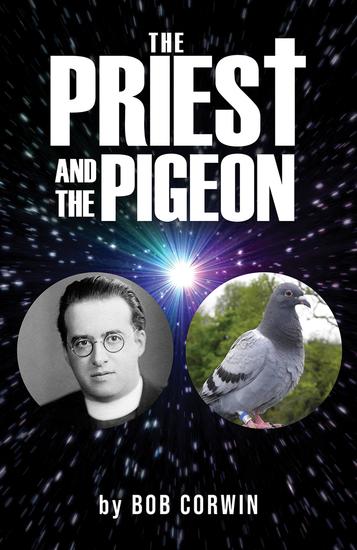
    At the end of the 19th century one of the most eminent scientists of the day in effect declared, "We know everything now; the rest is just measurement…," but he didn't know how the sun worked or what was inside an atom or how old the universe was.
    
    Many scientists at the time were content to simply say, "God did it."
    
    Strangely enough, around 25 years or so later, a Catholic priest didn't think that was a good enough answer. He met with Albert Einstein to discuss a hypothesis he'd developed using Einstein's own Theory of Relativity to show how the universe might have a beginning. Sadly, Albert was not impressed at the time and said so.
    
    In the years that followed, the priest was largely forgotten. In 1964, after the forced resettlement of a couple of pigeons from a borrowed piece of equipment, two surprised engineers received one of the oddest Nobel Prize nominations ever.
    
    The priest is not the only character whom history almost forgot. There's the woman who gave us a way to measure interstellar distances and the woman who showed us what the sun is actually made of. Neither of them received a Nobel Prize.
    
    Today we know how the sun works, what's inside an atom and how old the universe is.
    
    How? And what on earth do the Dambusters have to do with it?
    Ver livro