Junte-se a nós em uma viagem ao mundo dos livros!
Adicionar este livro à prateleira
Grey
Deixe um novo comentário Default profile 50px
Grey
Assine para ler o livro completo ou leia as primeiras páginas de graça!
All characters reduced
The Coward - cover
LER

The Coward

Robert Hugh Benson

Editora: DigiCat

  • 0
  • 0
  • 0

Sinopse

In "The Coward," Robert Hugh Benson intricately explores the themes of courage and moral conflict through the lens of a protagonist who grapples with societal expectations and personal fears. The narrative unfolds with a poignant psychological depth, marked by Benson's adept use of introspective dialogue and vivid imagery. Set against the backdrop of early 20th-century societal norms, the novel critically examines the dichotomy between public persona and private truth, challenging the very essence of what it means to be brave. Robert Hugh Benson, a notable figure of the early 1900s, was deeply influenced by his Anglican upbringing and later conversion to Roman Catholicism, experiences that often permeated his literary works. His background as a priest and his interactions with contemporaneous social issues inform the moral dilemmas faced by his characters. Benson's keen perception of human frailty is evident, rendering "The Coward" both a personal and a universal narrative that reflects the complexities of faith and identity. I highly recommend "The Coward" for readers seeking a profound exploration of fear and integrity. Benson's compelling storytelling and masterful character development invite readers to reflect on their own values, making this novel an essential read for those interested in moral philosophy and the human condition.
Disponível desde: 16/08/2022.
Comprimento de impressão: 242 páginas.
Outros livros que poderiam interessá-lo

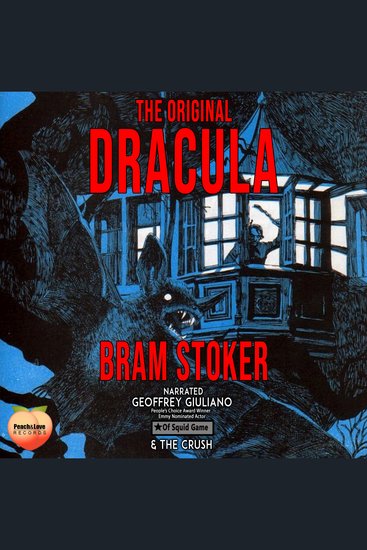
  • The Original Dracula - cover

    The Original Dracula

    Bram Stoker

    • 0
    • 0
    • 0
    Dracula is a novel by Bram Stoker, published in 1897. As an epistolary novel, the narrative is related through letters, diary entries, and newspaper articles. It has no single protagonist but opens with solicitor Jonathan Harker taking a business trip to stay at the castle of a Transylvanian nobleman, Count Dracula. Harker escapes the castle after discovering that Dracula is a vampire, and the Count moves to England and plagues the seaside town of Whitby. A small group, led by Abraham Van Helsing, hunt Dracula and, in the end, kill him. 
     
    Dracula was mostly written in the 1890s. Stoker produced over a hundred pages of notes for the novel, drawing extensively from Transylvanian folklore and history. Some scholars have suggested that the character of Dracula was inspired by historical figures like the Wallachian prince Vlad the Impaler or the countess Elizabeth Báthory, but there is widespread disagreement. Stoker's notes mention neither figure. He found the name Dracula in Whitby's public library while holidaying there, picking it because he thought it meant devil in Romanian.
    Ver livro
  • Swann's Way - cover

    Swann's Way

    Marcel Proust

    • 0
    • 0
    • 0
    "Swann's Way" is the first volume of Marcel Proust's seminal work, "In Search of Lost Time" (À la recherche du temps perdu), originally published in 1913. It introduces readers to the themes that Proust explores throughout the series: involuntary memory, love, art, and the interplay between perception and reality. The novel is known for its intricate sentences and detailed descriptions that capture the essence of experience. The narrative weaves through the memories of the narrator, including the famous madeleine episode, which becomes a symbol for the unexpected resurgence of past memories.
    Ver livro
  • A Country Doctor - The plight of a doctor to save a sick boy meets many osbstacles - cover

    A Country Doctor - The plight of...

    Franz Kafka

    • 0
    • 0
    • 0
    Franz Kafka was born on 3rd July 1883 in Prague, then in Bohemia, the eldest of 6, into a middle-class Jewish family. 
     
    Life for the young Kafka and his passion for literature was often made an ordeal by his over-bearing and domineering entrepreneur of a father.   
     
    In 1889 Kafka was sent to the Deutsche Knabenschule, an elementary school in Prague. His father would only allow him to be educated in German-speaking schools and even went so far as to limit visits to the synagogue to four a year. 
     
    In 1901 he graduated from the classics-oriented Altstädter Gymnasium. Kafka did well there and across a large range of subjects.  He now enrolled at the Charles Ferdinand University, to study chemistry, but quickly switched to law for which he obtained his degree in June 1906 and then performed the mandatory year of unpaid service as clerk at the civil and criminal courts. 
     
    A job at an Italian insurance company left him little time to write and after a year he took another job with the Worker's Accident Insurance Institute for the Kingdom of Bohemia where he stayed until ill health led to his resignation in 1922. 
     
    Although he saw work as a means to pay the bills and to allow him time to write, he received several promotions and was noted as a good employee. 
     
    By 1917 Kafka was suffering from tuberculosis, which required frequent periods of convalescence. Interspersed with this, were several intense affairs before he settled in Berlin with Dora Diamant, a 25-year-old kindergarten teacher who herself having left the ghetto now influenced Kafka's interest in the book of Jewish law, the Talmud. 
     
    Kafka’s on-going health was littered with problems. Apart from TB there were several other ailments, including migraines, insomnia, boils, depression, all usually brought on by excessive stresses and strains. He attempted to counteract all of this by naturopathic treatments, a vegetarian diet and consuming large quantities of unpasteurized milk. 
     
    His tuberculosis still worsened. He returned to Prague, where he died on 3rd June 1924. He was 40. 
     
    His literary works are few in number but towering in influence.  His masterpieces include ‘The Trial’, ‘The Metamorphosis’ as well as a number of short stories which reveal facets of humankind that truthfully could only be born from Kafka’s brain and pen.
    Ver livro
  • The Great God Pan - cover

    The Great God Pan

    Arthur Machen

    • 0
    • 0
    • 0
    "I saw the Great God Pan."
    
    In a remote house in the Welsh hills, a scientist named Dr. Raymond performs a radical brain surgery on a young woman named Mary. His goal: to open her mind's eye to the spiritual world—to see "the Great God Pan." The experiment succeeds, but at a catastrophic cost. Years later, a series of inexplicable suicides among the London elite begins to trace back to a mysterious, radiant, and terrifying woman named Helen Vaughan.
    
    The Dawn of Cosmic Horror: Long before Lovecraft, Arthur Machen explored the idea that our reality is merely a veil covering a vast, indifferent, and monstrous truth. The Great God Pan is a masterpiece of atmosphere and suggestion, utilizing a fragmented narrative of letters and chance encounters to build a sense of impending doom. It is a story where the ancient, pagan past bleeds into the sophisticated drawing rooms of Victorian London.
    
    A Landmark of Weird Fiction: This novella shocked Victorian audiences with its themes of forbidden knowledge and biological horror. Its influence can be felt in everything from The Exorcist to modern folk horror. Machen's prose is lush, decadent, and deeply unsettling, making it an essential read for anyone who believes that the most terrifying monsters are the ones we cannot fully perceive.
    
    Some secrets are meant to remain hidden. Purchase "The Great God Pan" today and experience the birth of modern horror.
    Ver livro
  • Lord Peter Wimsey Collection The: Books 1-5 - cover

    Lord Peter Wimsey Collection...

    Dorothy L. Sayers

    • 0
    • 0
    • 0
    Explore the brilliant and captivating mysteries of Lord Peter Wimsey, one of literature's most iconic detectives, in this collection of Dorothy L. Sayers' first five novels. With wit, intellect, and a flair for solving crimes, Wimsey navigates through high society and dark secrets in these classic tales.Included in this Collection:Book 1 - Whose Body? Track 1-13Lord Peter Wimsey investigates the appearance of a naked body in a bathtub, while a prominent financier goes missing. With his sharp mind and keen observational skills, Wimsey untangles a web of deception to uncover the truth behind these perplexing events.Book 2 - Clouds of Witness. Track 14-33When Lord Peter's brother, the Duke of Denver, is accused of murder, Wimsey steps in to prove his innocence. Set against the backdrop of English aristocracy, this case delves into family secrets and unexpected twists.Book 3 - Unnatural Death. Track 34-57A seemingly natural death sparks Wimsey's suspicion, leading to an investigation of greed and foul play. With sharp deductions, Wimsey exposes the dark motives behind a quiet murder in a rural setting.Book 4- Lord Peter Views the Body. Track 58-73A collection of short stories featuring Lord Peter Wimsey solving a variety of intricate cases, from missing heirlooms to puzzling murders. Each tale showcases Wimsey's wit and ingenuity.Book 5 - The Unpleasantness at the Bellona Club. Track 74-97Lord Peter is called upon to investigate the mysterious death of General Fentiman at his club. As Wimsey uncovers long-hidden family rivalries, the case turns into a complex and thrilling pursuit of justice.
    Ver livro
  • The Pickwick Papers - cover

    The Pickwick Papers

    Charles Dickens

    • 0
    • 0
    • 0
    The Pickwick Papers was Charles Dickens' first novel. Because of his success with Sketches by Boz published in 1836 Dickens was asked by the publisher Chapman & Hall to supply descriptions to explain a series of comic "cockney sporting plates" by illustrator Robert Seymour,[and to connect them into a novel. The book became Britain's first real publishing phenomenon, with bootleg copies, theatrical performances, Sam Weller joke books, and other merchandise. On its cultural impact, Nicholas Dames in The Atlantic writes, “Literature” is not a big enough category for Pickwick. It defined its own, a new one that we have learned to call “entertainment.” Published in 19 issues over 20 months, the success of The Pickwick Papers popularized serialised fiction and cliffhanger endings. 
     
    Seymour's widow claimed the idea for the novel was originally her husband's, but Dickens strenuously denied any specific input in his preface to the 1867 edition: "Mr. Seymour never originated or suggested an incident, a phrase, or a word, to be found in the book." 
     
    Charles Dickens was an English writer and social critic. He created some of the world's best-known fictional characters and is regarded by many as the greatest novelist of the Victorian era. His works enjoyed unprecedented popularity during his lifetime and, by the 20th century, critics and scholars had recognized him as a literary genius. His novels and short stories are widely read today.
    Ver livro