Junte-se a nós em uma viagem ao mundo dos livros!
Adicionar este livro à prateleira
Grey
Deixe um novo comentário Default profile 50px
Grey
Assine para ler o livro completo ou leia as primeiras páginas de graça!
All characters reduced
The Works of Robert G Ingersoll (Vol 1-12) - Complete Edition - cover
LER

The Works of Robert G Ingersoll (Vol 1-12) - Complete Edition

Robert Green Ingersoll

Editora: Good Press

  • 0
  • 0
  • 0

Sinopse

In 'The Works of Robert G. Ingersoll (Vol. 1-12)', Ingersoll presents a comprehensive array of his lectures, essays, and writings that champion rational thought, secularism, and humanism. His eloquent prose defies the conventions of his time, employing a fervent oratory style that engages the reader through wit and passionate reasoning. The collection covers a spectrum of topics, including religion, ethics, politics, and science, reflecting the intellectual climate of the late 19th century, where skepticism towards traditional beliefs gained momentum amid the burgeoning ideas of the Enlightenment and the rise of modern science. Robert Green Ingersoll, often referred to as the 'Great Agnostic,' was a prominent orator, lawyer, and political figure whose advocacy for free thought, civil liberties, and separation of church and state positioned him as a key voice of his era. His background in law and his exposure to the socio-political upheavals of the post-Civil War United States greatly influenced his ideas, which he articulated with passionate conviction through his extensive writings and public speaking engagements. This monumental compilation is essential for readers interested in the foundations of modern freethought and secular philosophy. Ingersoll's incisive critiques and engaging rhetoric not only challenge dogmatic beliefs but also inspire critical thinking, making this work a vital addition to any library of political thought and philosophy.
Disponível desde: 12/12/2023.
Comprimento de impressão: 3703 páginas.

Outros livros que poderiam interessá-lo

  • Salty - Lessons on Eating Drinking and Living from Revolutionary Women - cover

    Salty - Lessons on Eating...

    Alissa Wilkinson

    • 0
    • 0
    • 0
    If you could have a dinner party with anyone dead or alive, who would it be? 


    That's the question film critic and food writer Alissa Wilkinson answered as she gathered a hypothetical table of women who challenged norms and defied conventional wisdom. 


    Ella Baker, Alice B. Toklas, Hannah Arendt, Octavia Butler, Agnes Varda, Elizabeth David, Edna Lewis, Maya Angelou, Laurie Colwin: these smart, engaging, revolutionary, and creative twentieth-century women were all profoundly influenced by their own relationships to food, drink, and other elements of sustenance. 


    In Salty, Wilkinson explores the ways food managed to root these women into their various callings. For some, it was cultivating perseverance in the face of hardship. For others, it was nurturing a freedom to act, even in the face of opposition, toward justice and equality. For others, it was an examination of what it means to be human with all its desire, heartbreak, sacrifice, isolation, and liberty. 


    Salty is Alissa Wilkinson's invitation to you. Join these sharp, empowered, and often subversive women and discover how to live with courage, agency, grace, smarts, snark, saltiness, and sometimes feasting—even in uncertain times.
    Ver livro
  • Learn to Win Arguments - cover

    Learn to Win Arguments

    Keith Bankston

    • 0
    • 0
    • 0
    Learn to Win Arguments: The Ultimate Guide on How to Master the Art of Persuasion to Win Arguments and Sway PeopleDo you find yourself struggling to make your point heard in conversations and debates? Do you often feel that your arguments fall on deaf ears, no matter how well thought out they are? If so, you are not alone. Many people struggle with effectively communicating their ideas and persuading others to see things their way. However, the good news is that these skills can be learned and honed with practice.In this audiobook, we will explore the art of persuasion and the key principles of critical thinking and logic. You will learn how to identify different types of arguments, gather evidence, develop a persuasive case, and deliver it effectively. We will also cover advanced argumentation techniques and the ethics of argumentation, helping you to become a confident and persuasive communicator.This audiobook will cover the following topics:- Understanding the Art of Persuasion- The Basics of Critical Thinking and Logic- The Importance of Effective Argumentation- Deductive and Inductive Reasoning, Valid and Invalid Arguments, Strong and Weak Arguments, and Emotional vs. - -- - - Logical Arguments- Gathering Evidence and Developing a Strategy- Building a Strong Case, and Delivering Your Argument- Using Persuasive Language and Tone- Responding to Counter Arguments- Advanced Argumentation Techniques- Ethics in Argumentation- And Many MoreWhether you are a student, professional, or simply someone who wants to improve their ability to win arguments, this audiobook is for you. To learn more, scroll up and click “add to cart” now!
    Ver livro
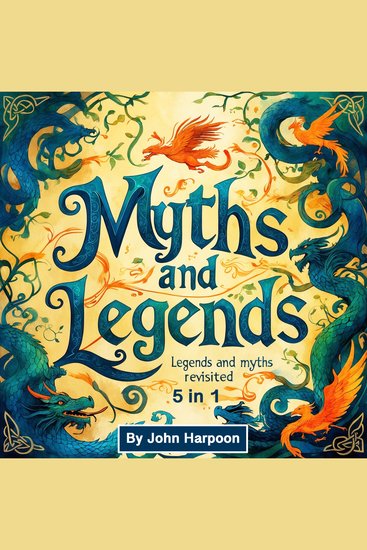
  • Myths and Legends - Legends and Myths Revisited (5 in 1) - cover

    Myths and Legends - Legends and...

    John Harpoon

    • 0
    • 0
    • 0
    This book consists of five titles. It's a discounted bundle. Enjoy the following books: 
    - Davy Jones' Metropolis: Exploring the Submerged Haven of Lost Corsairs 
    - Metropolises in Myth: Resurrecting Nine Fabled Urban Centers from Antiquity's Shadows 
    - The Kraken: Myth or Reality? Investigating the Legend of the Sea Monster 
    - The Swift Conquest: Unraveling Hitler's Rapid Domination of Europe 
    - The Great Escape from the Inescapable Prison: The Astonishing True Tale of Courage and Cunning
    Ver livro
  • American Revolution for Kids The: A Captivating Guide to the United States War of Independence - cover

    American Revolution for Kids...

    Captivating History

    • 0
    • 0
    • 0
    Did you know the American Revolution changed how Britain treated the rest of its colonies? 
    The American Revolution was fought between the Thirteen Colonies and the British Empire. Although most thought the British would win, the colonists overthrew British rule and established their own country. Other people realized the ideals of the American Revolution could be applied to their societies. They also wanted liberty and justice for all. 
    For years, scholars have studied individuals or specific events of the American Revolution. They focused on revolutionaries like Alexander Hamilton or events like the Battle of Lexington and Concord. But the American Revolution was more than just a few people and battles. It was filled with world-changing ideas. 
    It's time to step back into history and learn about the American Revolution. In this new and captivating book, you’ll discover what made the American Revolution so special and how it still influences us today. 
    Here are some of the questions you will uncover within the pages of this book:Was the Boston Tea Party really a party?How was Abigail Adams a revolutionary?Why did the first English colony vanish?Who started the Boston massacre?Why didn’t King George III want to let the American colonies go?Where was the Battle of Bunker Hill fought?How did the Sons of Liberty help the revolution?Was the revolution fought because of slavery?Why were the colonists so angry about taxes?When did the French join the revolution?Why did the colonists create the phrase “no taxation without representation?” 
    Scroll up and click the “add to cart” button to learn more about the history of the American Revolution!
    Ver livro
  • The Road to VA Compensation Benefits - cover

    The Road to VA Compensation...

    Matthew Hill

    • 0
    • 0
    • 0
    Are you a US veteran ready to finally get the disability compensation benefits you deserve? 
      
    This guide is a must-read for anyone who has filed or will file a VA disability claim. It's full of vital information that can help you avoid common mistakes and set yourself up for success. This includes acronyms, terms, and tools to guide you through the confusing VA claim process so you can receive your benefits in a timely manner. 
      
    The VA Claim process may take years. Make sure you're prepared to file your claim correctly the first time.
    Ver livro
  • Western Allies’ Procurement of Nazi Germany’s Technology The: The History of British and American Operations to Capture Nazi Scientists and Equipment - cover

    Western Allies’ Procurement of...

    Editors Charles River

    • 0
    • 0
    • 0
    After the last shots of World War II were fired and the process of rebuilding Germany and Europe began, the Western Allies and the Soviet Union each tried to obtain the services of the Third Reich's leading scientists, especially those involved in rocketry, missile technology, and aerospace research. Naturally, this was a delicate affair due to the fact many of the German scientists were not only active Nazis but had helped the Nazi war machine terrorize the world. At the same time, by the late war period, the Anglo-American Allies formed a clear picture of the Soviet state. Though forced to ally with the USSR's dictator, Josef Stalin, the West came to understand Communist Russia represented yet another hungry totalitarian power, and thus a very real threat to an independent Europe. British Prime Minister Winston Churchill realized the menacing character of the Soviets from the Katyn Forest Massacre of Polish army officers, if not before, while the Americans only gradually shed a naïve assumption of continued Russian friendliness after the war. 
    The result was the American-led “Operation Paperclip” on the Western side, which resulted in German scientists putting their expertise at the disposal of the U.S. and other NATO members. Operation Paperclip aimed not only to obtain the benefits of German scientific advances for the United States but also to deny them to the potentially hostile Soviets. 
    The Western approach, however self-interested, typically met with voluntary compliance on the German scientists' parts. In contrast, the Soviet answer to Paperclip, Operation Osoaviakhim, used the implied threat of imprisonment, torture, and death, the characteristic tools of Stalinist Russia, to coerce assistance from German scientists and engineers following the war. These men yielded rich dividends to the Soviet state in terms of achieving at least temporary technical parity with the USSR's western rivals.
    Ver livro