¡Acompáñanos a viajar por el mundo de los libros!
Añadir este libro a la estantería
Grey
Escribe un nuevo comentario Default profile 50px
Grey
Suscríbete para leer el libro completo o lee las primeras páginas gratis.
All characters reduced
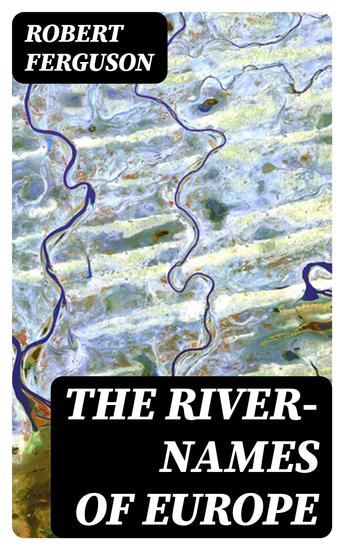
The River-Names of Europe - cover

The River-Names of Europe

Robert Ferguson

Editorial: DigiCat

  • 0
  • 0
  • 0

Sinopsis

In "The River-Names of Europe," Robert Ferguson embarks on a profound exploration of the etymology and cultural significance of European river names. This meticulously researched work intertwines linguistics, geography, and history, presenting river names as vital narratives of human civilization. Employing a lyrical, yet scholarly style, Ferguson invites readers to consider how these names reveal the interconnectedness of landscapes and societies, reflecting historical movements and cultural exchanges that have shaped Europe over centuries. The book is steeped in the rich tradition of toponymic studies, offering unique insights into how rivers have not only inspired names but also influenced the very fabric of European identity. Robert Ferguson, a renowned linguist and historian, has dedicated much of his scholarly career to the study of language and its interaction with culture. His passion for etymology and geography is deeply rooted in his academic background and personal travels through Europe, where he developed a keen interest in how place-names encapsulate the stories of their landscapes. Ferguson's ability to weave complex linguistic concepts into an engaging narrative demonstrates his commitment to making scholarly work accessible to a broader audience. "The River-Names of Europe" is a must-read for anyone intrigued by the interplay between language and geography, offering a fresh perspective on the significance of place-names in shaping cultural heritage. Scholars, students, and armchair adventurers alike will find Ferguson's keen insights and eloquent prose illuminating, making this book an invaluable addition to the library of anyone passionate about European history and linguistics.
Disponible desde: 16/09/2022.
Longitud de impresión: 89 páginas.

Otros libros que te pueden interesar

  • पाशुपत सम्प्रदाय का उद्भव एवं विकास (Pashupat Sampraday Ka Udvab Evam Vikas) - cover

    पाशुपत सम्प्रदाय का उद्भव एवं...

    Dr. Satendra Kumar Mishra

    • 0
    • 0
    • 0
    Pashupat religion under Shaivism was adorned as the oldest sect. The emergence of Pashupat religion was virtually between sixth and fifth century BC. Its creative foundation was primarily confined to the existence of tradition as a result of traditional exchange. Firstly, the concept of Vedic Rudra-Pashupati and the rituals located in its sanctum gave the philosophical foundation of the Pashupat-sect. The influence of the non-Aryan tradition is visible on the upper sides of Pashupat-Dharma. In the third place, in the seventh-century CE, the Muni-Shravan-ideology created that atmosphere, which resulted in the origin of Pashupat-Sampradaya. The Tapasic tradition is the highest belief in the Pashupat sect, its main reason being the influence of the Muni-Shramana ideology. Hence the presentation of this conclusion seems to be justified that the Pashupat-Sampradaya was acclaimed as a byproduct of the devotional and ascetic aspect of the religious revolution that took place in the seventh century AD.
    Ver libro
  • Ancient Egypt: 500 Interesting Facts About Egyptian History - cover

    Ancient Egypt: 500 Interesting...

    Ahoy Publications

    • 0
    • 0
    • 0
    Discover the mysteries of ancient Egypt with five hundred fascinating facts! 
    Are you ready to explore and uncover the secrets of one of the most fascinating civilizations in history? With 500 Interesting Facts About Ancient Egypt, you’ll get a comprehensive overview of this ancient land, its culture, and some incredible stories. From Predynastic times to Alexander the Great’s arrival, discover all that made up life in ancient Egypt. 
    Learn about the people’s religion, pyramids, writing system, and government structures. Dive into details on art and architecture or music and dance. Find out how farming shaped everyday life or what happened when death arrived. This book provides an easy-to-navigate guide through many essential aspects from over five thousand years ago. 
    Here is just a taste of what awaits inside:Uncover why Upper and Lower Egypt were unifiedExplore the pyramids and tombsGet acquainted with hieroglyphsLearn about pharaohs and their rise to powerDiscover the fascinating art and architecture of ancient EgyptUnveil the ancient mysteries of religion and festivalsAnalyze social structures, clothing, and appearanceAnd much more! 
    Are you ready to open a time capsule into one of the oldest known cultures? 500 Interesting Facts About Ancient Egypt is your perfect guide for an exciting tour through history. Get ready for a journey back in time. Click on the “add to cart” button now!
    Ver libro
  • Living with Purpose - A Teen's Guide to Values - cover

    Living with Purpose - A Teen's...

    Anthony Marc

    • 0
    • 0
    • 0
    "Living with Purpose: A Teen's Guide to Values" by Anthony Marc helps teens navigate adolescence using Acceptance and Commitment Therapy (ACT). It teaches: 
    - Acceptance: Embrace feelings. 
    - Mindfulness: Stay present. 
    - Values-Based Living: Act on core values. 
    The book provides strategies for managing negative emotions and includes practical exercises like journaling and reflection. Written with real-life examples, it empowers teens to make value-based choices, promoting personal growth and resilience. This guide offers validation, practical advice, and long-term skills, fostering a positive approach to mental health and well-being.
    Ver libro
  • Edward I: A Captivating Guide to the Life and Death of the Hammer of the Scots and His Impact on the History of England - cover

    Edward I: A Captivating Guide to...

    Captivating History

    • 0
    • 0
    • 0
    Who was King Edward I of England? And why should we learn about him? 
    King Edward I was the first of three Edwards who reigned in perfect succession. He was one of the most important kings in English history, but he was also one of the most controversial. This was the king who subdued Wales and fought Scotland to a standstill for much of his reign. He battled leading Scottish figures that are recognizable to even novice history students. Both William Wallace and Robert the Bruce butted heads with this English ruler.  
    Edward engaged in harsh crackdowns, yet he also confirmed the statutes of the Magna Carta and helped strengthen ties to parliament. Edward often behaved as an absolutist dictator with a penchant for reform. He has been described as a “great and terrible” king, whose equal parts of greatness and terribleness can easily be seen throughout his tenure as an English monarch.  
    In this book, you will learn about:Edward’s early days as prince and the impact of his childhoodThe Welsh revolts and Edward’s eventual conquest of WalesEdward’s Holy Land CrusadeScotland’s crisis of succession and Edward’s long war with the ScotsThe rise of William Wallace and Robert the BruceEdward’s final days as kingAnd much more! 
    Scroll up and click the “add to cart” button to learn more about King Edward I of England!
    Ver libro
  • First Nation - History and Facts about Eskimo Sioux and Pawnee Tribes - cover

    First Nation - History and Facts...

    Kelly Mass

    • 0
    • 0
    • 0
    The following 3 books are contained in this audiobook: 
    1: The Inuit (consisting of Alaskan Iupiat, Greenlandic Inuit, and Canadian Inuit) and the Yupik (or Yuit) of eastern Siberia and Alaska are described as Eskimo or Eskimos. The Aleut, who live on the Aleutian Islands, are a comparable 3rd group that's usually omitted from the categorization of Eskimo. The 3 groups have a current typical forefather and speak Eskimo-- Aleut languages, which relate. 
    The development of Europeans marks the start of Alaskan Indians' contemporary history. Russians cruising from Siberia in the eighteenth century were the first to make contact, which was uncommon for The USA and Canada. Traders from the east, mainly from The U.S.A. and Canada's eastern towns, didn't come in the area till the 19th century. Christian missionaries were not active in Alaska till the 20th century in some circumstances. 
    2: The Pawnee are a Central Plains Indian people that used to live in Nebraska and Kansas, yet now call Oklahoma home. They are now called the Pawnee Country of Oklahoma, and its head offices are at Pawnee, Oklahoma. Their Pawnee language belongs to the Caddoan family, and they're called Chatiks si chatiks, or "Men of Men." 
    The Pawnee used to live in earth lodge towns near the Loup, Republican Politician, and South Platte rivers. Throughout the year, the Pawnee people economy turned between producing crops and buffalo searching. 
    3: The Sioux, also called the Oceti Sakowin are a North American people of Native American tribe and First Countries tribes. The contemporary Sioux are split into 2 significant groups based upon language: Dakota and Lakota; they're called together as the Ohéthi akówi ("7 Council Fires"). The term "Sioux" is an exonym stemmed from a French transliteration of the Ojibwe term "Nadouessioux," and can apply to any ethnic group or language dialect within the Great Sioux Country.
    Ver libro
  • Above Life's Turmoil - Rise Above the Madness and Find Inner Peace in a World of Chaos - cover

    Above Life's Turmoil - Rise...

    James Allen

    • 0
    • 0
    • 0
    James Allen (1864–1912) was a man who lived his philosophy. Forced to leave school at 15 after his father's murder, he worked in manual labor jobs before dedicating his life to writing and spiritual inquiry. Despite his lack of formal education, he authored nearly twenty books, with As a Man Thinketh becoming his most famous. Above Life's Turmoil was written during the height of his literary career and reflects his deep synthesis of Christian, Buddhist, and Stoic thought, offering a pragmatic path to peace during the tumultuous Industrial Age—a message that resonates even more powerfully today. 
    In an era of relentless noise and external pursuit, James Allen’s Above Life’s Turmoil offers a timeless sanctuary for the soul. This profound work, penned in 1910, is more than a book; it is a practical philosophy for living. Allen, a British philosophical writer who rose from poverty and personal tragedy to become a quiet pioneer of the self-help movement, argues that while chaos is an inevitable part of life, peace is an internal creation. He guides the reader to rise above adversity not by changing the world, but by mastering the self. 
    Through a series of insightful essays, Allen reveals how the cultivation of pure thoughts, compassionate actions, and a disciplined mind is the only true path to unshakable happiness. He explores the immutable law of cause and effect in one’s inner life, demonstrating how we shape our destiny with every thought. This is not a promise of wealth or fame, but of something far greater: enduring serenity, self-conquest, and a harmonious existence. For anyone feeling overwhelmed by the storms of modern life, this classic text remains an essential guide to finding calm, clarity, and purpose within.
    Ver libro