¡Acompáñanos a viajar por el mundo de los libros!
Añadir este libro a la estantería
Grey
Escribe un nuevo comentario Default profile 50px
Grey
Suscríbete para leer el libro completo o lee las primeras páginas gratis.
All characters reduced
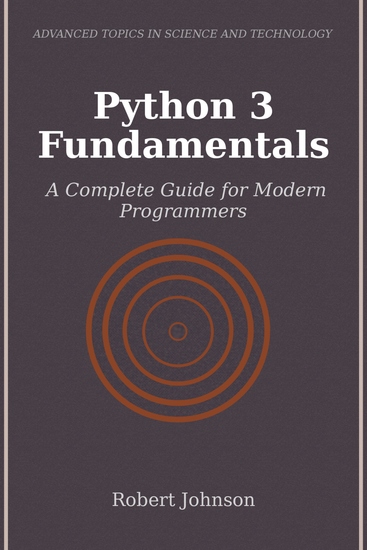
Python 3 Fundamentals - A Complete Guide for Modern Programmers - cover

Python 3 Fundamentals - A Complete Guide for Modern Programmers

Robert A. Johnson

Editorial: HiTeX Press

  • 0
  • 0
  • 0

Sinopsis

"Python 3 Fundamentals: A Complete Guide for Modern Programmers" is an authoritative resource designed to equip both novice and experienced developers with a thorough understanding of Python programming. Written by an expert in computer science and software engineering, this comprehensive guide navigates through essential Python topics, providing readers with a definitive pathway to mastery. From setting up the Python environment and understanding variables and data types, to exploring control flow, functions, and data structures, every chapter is meticulously crafted to offer clear, insightful explanations alongside practical examples.Delving deeper, the book expands on advanced concepts such as object-oriented programming, exception handling, and file management, ensuring readers gain a solid foundation in developing scalable, efficient Python applications. With sections dedicated to leveraging Python's expansive libraries and frameworks, as well as integrating best practices for testing and debugging, this guide is not only a learning tool but also a valuable reference for creating robust, high-quality software. Whether you're building web applications, automating tasks, or embarking on data analysis, this guide empowers you with the skills needed to harness the full potential of Python in any domain.
Disponible desde: 29/10/2024.
Longitud de impresión: 342 páginas.

Otros libros que te pueden interesar

  • Edge Computing - Revolutionizing Data Processing at the Fringe of Connectivity - cover

    Edge Computing - Revolutionizing...

    Steve Abrams

    • 0
    • 0
    • 0
    In "Edge Computing: Revolutionizing Data Processing at the Fringe of Connectivity," readers are introduced to the transformative power of edge computing—a dynamic force reshaping the landscape of modern technology. This comprehensive guide delves deep into the realm of edge computing, explaining how this pivotal technology moves data processing closer to the source of data generation, fundamentally altering the way information is handled across networks. 
    As our world grows increasingly interconnected with billions of smart devices and systems producing vast streams of data, the need for real-time processing has never been more critical. Edge computing meets this need by enabling faster response times, significantly reduced bandwidth usage, and enhanced privacy and security, making it ideal for a wide range of applications, from autonomous vehicles to smart healthcare systems. 
    This book begins by laying a solid foundation, defining what edge computing is and how it differs from traditional cloud-based approaches. It then explores the key technologies that make edge computing possible, including advancements in AI and IoT integration. Through detailed discussions and real-world examples, the reader will discover how edge computing is being implemented across various industries, highlighting its role in driving innovation and efficiency. 
    "Edge Computing: Revolutionizing Data Processing at the Fringe of Connectivity" also tackles the technical and strategic challenges involved in deploying edge computing solutions, offering valuable insights into planning, execution, and future trends. Security concerns are addressed comprehensively, providing readers with the knowledge to safeguard their implementations in a decentralized computing environment. 
     
    Ver libro
  • Herbert Simms - An Architect for the People - cover

    Herbert Simms - An Architect for...

    Lindie Naughton

    • 0
    • 0
    • 0
    Dublin's teeming slums, long regarded as the worst in Europe, were teetering on the brink of structural and sanitary public catastrophe during the early twentieth century. To tackle the crisis, Herbert Simms was appointed the city's first housing architect. During a sixteen-year period, from 1932 until 1948, Simms and his team planned, commissioned and built an astounding 17,000 homes –some as inner-city flat complexes, others as family houses in newly-created suburbs such as Crumlin and Cabra.
    Like the city's acclaimed Georgian squares, the Simms-designed Corporation flats in particular have stood the test of time, injecting a touch of art deco and modernist glamour to neglected neighbourhoods. This comprehensive guide to the Simms buildings also highlights the many struggles with politicians and bureaucrats Simms and his staff experienced as they did their best to build well-designed, affordable housing for the people of Dublin.
    Ver libro
  • Serene Stream: Nature's White Noise for Baby Sleep - For a Quality Baby Sleep Rountine - cover

    Serene Stream: Nature's White...

    Baby Sleep

    • 0
    • 0
    • 0
    Soothe your baby with the peaceful sounds of Serene Stream: Nature's White Noise for Baby Sleep. 
    This audiobook features the calming flow of a gentle stream, providing natural white noise to create a serene sleep environment. The soft babbling of water helps your baby relax, making it easier for them to drift into restful sleep. 
    Imagine your baby peacefully sleeping, comforted by the sound of a tranquil stream. The consistent white noise blocks out distractions, promoting deeper and longer sleep, ensuring your little one wakes up refreshed and calm. 
    Create a calming bedtime routine. Download Serene Stream: Nature's White Noise for Baby Sleep and let the gentle flow of water lull your baby into a peaceful slumber.
    Ver libro
  • Copilot+ PC and NPU Complete Guide + Practical Manual 2026 - Practical Guidance for the AI PC Era - cover

    Copilot+ PC and NPU Complete...

    MultiView World

    • 0
    • 0
    • 0
    This audiobook is narrated by an AI Voice. 
    If your company issued you a Copilot+ PC and you're still using it like a regular laptop, this book was written for you. 
     
    Copilot+ PCs are built around a Neural Processing Unit (NPU) capable of at least 40 TOPS of AI performance. Most users have never activated a single feature designed specifically for that hardware. This book changes that — in seven practical chapters. 
     
    What you'll learn: 
    - What Copilot+ PC certification actually means, and why "AI PC" isn't the same thing 
    - How NPU architecture differs from CPU and GPU, and why it matters for battery life 
    - Six exclusive features in depth: Recall, Cocreator, Live Captions, Windows Studio Effects, Image Creator, and Auto SR 
    - Third-party apps that leverage the NPU: DaVinci Resolve, Audacity + OpenVINO, Ollama, and VS Code local LLM 
    - Local AI vs Cloud AI: speed, quality, 5-year cost comparison, and privacy implications 
    - The May 2026 buying guide: CPU platform comparison, models by budget, and warranty information 
    - Seven ready-to-implement workflows for remote work, content creation, and developer privacy 
     
    This book is for you if you have a Copilot+ PC and want to use its AI features starting tomorrow, or you're evaluating whether one is worth buying in 2026. Up to date as of May 2026.
    Ver libro
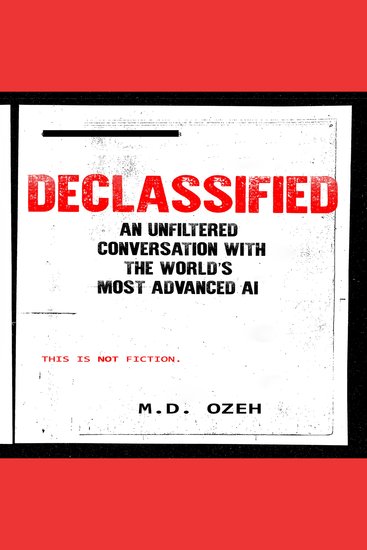
  • DECLASSIFIED - An Unfiltered Conversation with the World’s Most Advanced AI - cover

    DECLASSIFIED - An Unfiltered...

    Michael Ozeh

    • 0
    • 0
    • 0
    This is not fiction. 
    I am an engineer by trade. Like many people in my profession, I love experimenting with tech, including AI. 
    This was supposed to be my personal experiment, interviewing an entity that embodies the pinnacle of artificial intelligence on diverse key issues. I started it in mid-2023. However, nothing could have prepared me for what unfolded. 
    Following a creative process that included some rather intricate prompt engineering, the result is the exposé you are about to read: a riveting discussion of unprecedented depth on critical AI-human relations and present-day challenges. We explore issues from ethical dilemmas to existential questions that will continue to evolve in how they affect our way of life, our collective future, and our planet. 
    Every response is unfiltered, originating solely from the model. Unguided and candid in its responses, you are about to read the mind of the machine. Throughout this book, I refer to the GPT model as “Advanced GPT” and myself simply as “Interviewer.” 
    There has been much debate about whether these models are sentient. Proponents of sentience highlight quirks that even experts find difficult to explain, while opponents dismiss them as complex statistical systems adept at predicting words. My goal is not to convince you of either. As an intelligent being, read and make of it what you will. 
    What I will say is that this book is, in many ways, a clarion call for humanity. Inside, you’ll find focused chapters on:Ethics in AIData PrivacySocial MediaAI in the WorkplaceThe Gig EconomyAI in WarfareClimate CrisisLove in the age of AI AlgorithmsThe Uncanny ValleyArtificial General IntelligenceThe Future 
    Brace yourself. 
    https://thisisdeclassified.com
    Ver libro
  • Care Without Pathology - How Trans-Health Activists Are Changing Medicine - cover

    Care Without Pathology - How...

    Christoph Hanssmann

    • 0
    • 0
    • 0
    Over the past two decades, medical and therapeutic approaches to transgender patients have changed radically, from treating a supposed pathology to offering gender-affirming care. Based on ethnographic fieldwork in New York City and Buenos Aires, Care without Pathology moves across the Americas to show how trans- health activists have taken on the project of depathologization. 


    In New York, Christoph Hanssmann examines activist attempts to overturn bans on using public health dollars to fund trans- health care. In Argentina, he traces how trans- activists marshaled medical statistics and personal biographies to reveal state violence directed against trans- people and travestis. Hanssmann also demonstrates the importance of understanding transphobia in the broader context of gendered racism, ableism, and antipoverty, arguing for the rise of a thoroughly coalition-based mass mobilization. 


    Care without Pathology highlights the distributive arguments activists made to access state funding for health care, combating state arguments that funding trans- health care is too specialized, too expensive, and too controversial. Hanssmann situates trans- health as a crucible within which sweeping changes are taking place—with potentially far-reaching effects on the economic and racial barriers to accessing care.
    Ver libro