Junte-se a nós em uma viagem ao mundo dos livros!
Adicionar este livro à prateleira
Grey
Deixe um novo comentário Default profile 50px
Grey
Assine para ler o livro completo ou leia as primeiras páginas de graça!
All characters reduced
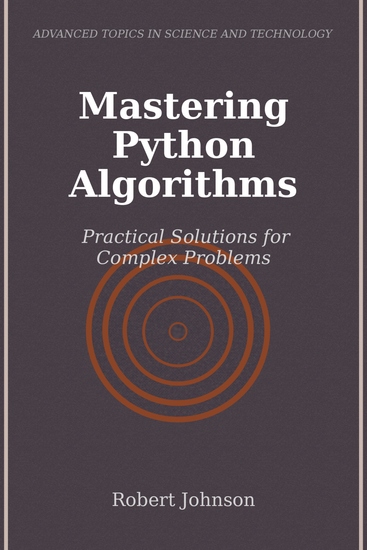
Mastering Python Algorithms - Practical Solutions for Complex Problems - cover
LER

Mastering Python Algorithms - Practical Solutions for Complex Problems

Robert A. Johnson

Editora: HiTeX Press

  • 0
  • 0
  • 0

Sinopse

"Mastering Python Algorithms: Practical Solutions for Complex Problems" is an essential guide for anyone eager to delve into the world of algorithmic design and implementation using Python. Structured to cater to various levels of learners, this book meticulously covers foundational principles and advanced algorithmic techniques. Whether you're a student, a developer, or a data scientist, you'll find the blend of theoretical insights and hands-on Python applications both enriching and practical.Spanning key areas from sorting and searching algorithms to the intricacies of graph theory and dynamic programming, the book provides in-depth explanations paired with Python code examples. It also delves into contemporary machine learning approaches and optimization methods, all while introducing readers to the nuances of Python’s advanced features that can significantly enhance algorithmic efficiency.By combining clear narrative with expert exploration of Python's rich ecosystem, "Mastering Python Algorithms" ensures readers are well-equipped to tackle diverse computational challenges with confidence. The emphasis on both performance analysis and implementation strategies guarantees that upon completion, readers will not only grasp complex algorithmic concepts but also be able to apply them effectively in real-world situations.
Disponível desde: 26/10/2024.
Comprimento de impressão: 326 páginas.
Outros livros que poderiam interessá-lo

  • Managing Anxiety: A Step-by-Step Guide to Calming the Storm - Transform Your Experience of Anxiety from Panic to Peace and Confidence with a 30-Day Daily Meditation Program for Anxiety Relief - cover

    Managing Anxiety: A Step-by-Step...

    Sandeep Verma

    • 0
    • 0
    • 0
    Anxiety disorders are prevalent mental health issues. While everyone encounters stress and anxiety at some point, triggers vary from person to person. Some may experience anxiety in social situations, while others may feel it when faced with heights. The scale of anxiety differs as well, with some perceiving it as a background worry and others experiencing intense and unsettling emotions, such as continuous fear and panic attacks. 
    Regardless of the type or intensity of anxiety disorder, this course aims to help individuals create mental clarity and peace by distancing themselves from anxiety. The long-term goal is to change the perspective and experience of anxiety rather than trying to eliminate it entirely. Anxiety is a natural emotion inherent in all healthy human beings. While it serves a purpose in certain situations, it becomes problematic when it interferes with daily life and becomes destructive. 
    Overwhelming anxiety hinders our ability to manage day-to-day activities, leading to muscle tension, shortness of breath, rapid heartbeat, and other physical symptoms. We often try to avoid triggering situations. Not only does anxiety impact our own well-being, but it also affects the people around us, including friends and family. 
    This course emphasizes shifting and mastering our relationship with anxiety, rather than attempting to eradicate it. By becoming at ease with anxiety and accepting its presence when it arises, we can avoid getting entangled in it or trying to suppress it.
    Ver livro
  • The Secret of Creation - cover

    The Secret of Creation

    Walter Russell

    • 0
    • 0
    • 0
    The Secret of Creation, a profound exploration of universal laws, human potential, and the divine essence that permeates all of creation. Russell presents his unique insights into the nature of light, energy, and consciousness, offering practical wisdom on how to achieve balance, unlock creativity, and align with the rhythms of the universe. 
    This work represents the culmination of a lifetime of discovery, where science and spirituality converge to reveal the hidden truths of existence. Through his teachings, Russell invites listeners to transcend the limitations of materialism and embrace their divine potential as co-creators in the universe. 
    Prepare to journey beyond the boundaries of conventional thought and into a realm where imagination, balance, and universal law guide the path to enlightenment and self-mastery. Let this work serve as a reminder of the infinite possibilities within you and the divine light that illuminates all creation.
    Ver livro
  • IoT Programming - Building Smart Connected Systems From Conceptualization and Prototyping to Deployment and Integration - cover

    IoT Programming - Building Smart...

    Mark Jackson

    • 0
    • 0
    • 0
    In an increasingly interconnected world, the Internet of Things (IoT) represents the frontier of technology, where everyday objects are becoming smart and interconnected. "IoT Programming: Building Smart, Connected Systems" is your comprehensive guide to mastering the intricacies of IoT development, from conceptualization and prototyping to deployment and integration. 
    From Concept to Reality: Explore the fundamental concepts of IoT, understanding how devices, sensors, and actuators communicate and interact within IoT ecosystems. Gain insights into the evolution of IoT technologies and their transformative potential across industries. 
    Hands-On Learning: Dive into practical examples using popular IoT hardware platforms like Arduino, Raspberry Pi, and ESP8266. Learn to develop applications that collect, process, and analyze real-time data, leveraging both cloud-based and edge computing solutions. 
    Security and Scalability: Navigate the complexities of IoT security, implementing best practices to safeguard devices and data against evolving threats. Discover strategies for scaling IoT solutions and integrating them seamlessly into existing infrastructures. 
    Future-Proof Your Skills: Stay ahead with insights into emerging trends such as 5G connectivity and edge computing, and explore the integration of AI and machine learning in IoT applications. Understand the ethical considerations and societal impacts of IoT technologies shaping our digital future. 
     
    Ver livro
  • Ecology - Understanding Ecosystems and the Interconnectedness of Life - cover

    Ecology - Understanding...

    Jeron Iris

    • 0
    • 0
    • 0
    Ecology is the branch of biology that deals with the relationships between living organisms and their interactions with their environment. This scientific discipline explores how organisms coexist within ecosystems, interact with one another, and adapt to their surroundings. The study of ecology is vital because it provides insight into the functioning of natural systems and the impact human activities have on the environment. It emphasizes the interdependence of all life forms, from microscopic bacteria to the largest animals, and underscores the intricate balance necessary for sustaining life on Earth. 
    At its core, ecology is concerned with understanding the distribution and abundance of organisms, as well as the processes that shape these patterns. It is a multidisciplinary field that draws from biology, geography, geology, chemistry, and physics. Ecologists examine how factors such as climate, geography, and natural resources influence the diversity of life in different habitats. They also study the effects of human intervention, such as deforestation, pollution, and climate change, on ecosystems.
    Ver livro
  • Salmonella - A Comprehensive Guide to the Microbial Menace - cover

    Salmonella - A Comprehensive...

    Lilly Richardsen

    • 0
    • 0
    • 0
    Salmonella is a genus of bacteria that plays a major role in human and animal health, causing a wide range of infections with varying degrees of severity. It is responsible for one of the most common foodborne illnesses worldwide, with millions of people affected each year. While many may associate Salmonella solely with food poisoning, it is much more complex, comprising over 2,500 serotypes, each with its own specific characteristics and virulence factors. 
    The discovery of Salmonella dates back to the late 19th century, when Theobald Smith, working under the guidance of American bacteriologist Daniel Elmer Salmon, first identified the bacterium. Since then, much has been learned about its biology, transmission, and impact on public health. Originally, the genus was named after Salmon, though today it is classified under the family Enterobacteriaceae, sharing common traits with other enteric bacteria. Despite the significant advances in understanding Salmonella, new challenges continue to emerge, particularly in the form of antibiotic resistance and emerging serotypes with more aggressive characteristics. 
    Salmonella infections are typically categorized into two main types: gastrointestinal infections and systemic infections. The most common manifestation is gastroenteritis, which presents with symptoms such as diarrhea, fever, nausea, and abdominal cramps. These symptoms usually develop within 6 to 72 hours after exposure to the bacteria. Though often self-limiting, severe cases can lead to dehydration and, in rare instances, death. On the other hand, systemic infections like typhoid fever can cause more severe illness, potentially leading to complications such as intestinal perforation, septic shock, or organ failure. Typhoid fever remains a major health issue in many developing countries, while gastrointestinal Salmonella infections are more frequently encountered in industrialized nations.
    Ver livro
  • Cosmic Construction - Contemplating the Repercussions of an Interstellar Megaproject - cover

    Cosmic Construction -...

    John Harpoon

    • 0
    • 0
    • 0
    The concept of interstellar megaprojects has long captured the imagination of visionaries and scientists alike. Initially, these ideas resided in the realm of science fiction, where vast space-faring civilizations would design and build monumental structures to harness the power of stars or travel across galaxies. As our understanding of space and technology has advanced, these once-fantastical ideas are slowly becoming more tangible. The vision behind cosmic construction is rooted in the ambition to secure humanity’s future by expanding our reach beyond Earth. By tapping into the immense resources of outer space and mastering the ability to construct in environments beyond our planet, we could ensure the longevity of civilization, address resource shortages, and even explore the potential for life beyond our solar system. 
    To fully appreciate the significance of cosmic construction, it’s essential to understand its historical context. From the early dreams of space exploration in the 20th century to the pioneering missions that landed humans on the Moon and sent robotic probes to distant planets, each milestone has contributed to the growing belief that humanity can and should venture beyond Earth. In parallel, speculative ideas like the construction of space elevators, O'Neill cylinders, and Dyson spheres began to emerge, pushing the boundaries of what was thought possible in space development. These ideas, once considered purely theoretical, now inspire ongoing research and technological development aimed at making such megastructures a reality.
    Ver livro