Junte-se a nós em uma viagem ao mundo dos livros!
Adicionar este livro à prateleira
Grey
Deixe um novo comentário Default profile 50px
Grey
Assine para ler o livro completo ou leia as primeiras páginas de graça!
All characters reduced
Mastering Amazon Redshift - Scalable Cloud Data Warehousing - cover
LER

Mastering Amazon Redshift - Scalable Cloud Data Warehousing

Robert A. Johnson

Editora: HiTeX Press

  • 0
  • 0
  • 0

Sinopse

"Mastering Amazon Redshift: Scalable Cloud Data Warehousing" is an authoritative guide designed for beginners and experienced professionals alike, seeking to harness the full potential of Amazon's leading data warehousing solution. As businesses increasingly rely on robust, scalable data analytics, Redshift stands out with its high-performance capabilities, seamless integration with AWS services, and cost-effectiveness. This book provides a structured, in-depth exploration of Amazon Redshift, covering core concepts from setup and architecture to performance optimization and security best practices.The book begins by establishing a solid foundation in data warehousing principles and Redshift's unique architecture, guiding readers through efficient data modeling and schema design to maximize query performance. It then delves into the practicalities of loading and analyzing large datasets, integrating Redshift with a host of AWS services to extend functionality, and maintaining optimal cluster operations through robust monitoring and maintenance strategies. By offering clear insights into managing security and compliance, as well as innovative integration techniques, this book equips you with the knowledge and tools required to drive data-driven decisions within your organization. Whether you are setting up Redshift for the first time or seeking to refine and expand an existing deployment, this comprehensive resource is your ultimate companion in mastering Amazon Redshift.
Disponível desde: 07/01/2025.
Comprimento de impressão: 300 páginas.
Outros livros que poderiam interessá-lo

  • The Body is Your AVATAR - Your Health AI Co-Pilot - cover

    The Body is Your AVATAR - Your...

    AF Awareness Framework

    • 0
    • 0
    • 0
    Your body is not failing you — it's asking for your attention. 
    A gentle guide to your body — with AI as your co-pilot  
    Learn how to listen before it has to shout. 
    The Body Is Your AVATAR is for the kind of tired that doesn't have a name. 
    Not a medical textbook. 
    Not a health overhaul. 
    A steady, practical guide to listening to your body — and responding with clarity instead of fear. 
    Using a simple but powerful metaphor — you are the driver, your body is the avatar — this book helps you shift from fighting your body to working with it 
    You'll learn how to:Understand your body's signals — fatigue, stress, sleep issues, and low energyRead and track lab results calmly, without panic or medical overwhelmBuild simple daily rituals that restore energy and steadinessUse AI (GPT) as a health co-pilot to organize data, spot patterns, and ask better questions — without replacing your doctorCreate a long-term health mindset based on prevention, rhythm, and self-respect 
    This book is especially for you if you:Feel "mostly fine" but not fully wellAre tired of reacting instead of preventingWant clarity and support without overwhelmCarry responsibility — for children, parents, work, or everyone but yourself 
    Quiet, human, and deeply reassuring, The Body Is Your AVATAR helps you rebuild trust — in your body, your signals, and your ability to care for yourself with steadiness and confidence. 
    You don't need to optimize your body. 
    You don't need to control it. 
    You need a guide. 
    You need a co-pilot. 
    And you need to start listening — now. 
    Begin the conversation. Take the driver's seat.
    Ver livro
  • Megalodon The: The History and Legacy of the World’s Largest Prehistoric Predator - cover

    Megalodon The: The History and...

    Editors Charles River

    • 0
    • 0
    • 0
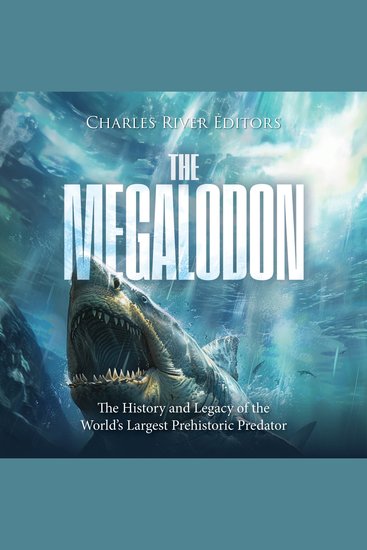
    As scary as the shark in Jaws is, the extinct megalodon had teeth three times the length of those found within the jaws of a great white shark, so a human would only have been a small snack. In fact, the megalodon was capable of swallowing a small car. Known to scientists as Otodus megalodon or Carcharocles megalodon (otodus meaning “tooth shaped like an ear”; carcharocles meaning “well known for jaggedness”; and megalodon meaning “big tooth”), this predator lived approximately 23–3.6 million years ago), from the early Miocene Epoch to the early Pliocene Epoch. The genus name Otodus and the family name Otodontidae are now the most commonly used, but scientific literature remains full of the older designation, and many of the shark experts regard the new family designation as flawed.  
    	For many years, megalodon was thought to be more closely related to the great white shark (Carcharodon carcharias), and though both are still part of the order Lamniformes, the two species now reside in different families: Lamnidae and Otodontidae (megalodon). Either way, while great white sharks can reach sizes of 20 feet long and nearly 2.5 tons in weight, the average megalodon was twice as big, and some of them may have been about three times as big. The sheer size allowed it to target prey as big as whales, and the massive jaw allowed it to simply tear through any kind of body with no regard for the prey’s most vulnerable spots.  
    	While all of that seems to be beyond dispute, almost everything else about the history of the megalodon is up for debate, from its origins to its extinction.  The Megalodon: The History and Legacy of the World’s Largest Prehistoric Predator covers that expansive history in detail, from what is known to what remains most mysterious.
    Ver livro
  • The Death of Materialism - A Skeptic's Journey from Materialism to Panpsychism - cover

    The Death of Materialism - A...

    David Michael Gibbs

    • 0
    • 0
    • 0
    What if everything you were taught about reality was wrong? 
    Emergency physician David Michael Gibbs was a die-hard materialist — until a single remote-viewing experiment shattered his worldview. 
    In The Death of Materialism, Gibbs maps four anomalies materialism can't explain: quantum observer effects, the hard problem of consciousness, replicable psi, and intention's power over biology. 
    From NDEs during flat EEGs to quantum coherence in plants, the data point to one conclusion: consciousness is fundamental, matter its shadow. 
    The universe isn't a machine that grew minds. It's a conscious field looking at itself through us. 
    Are you ready to question the ground beneath your feet?
    Ver livro
  • Finding Meaning in Wine - A US Blend - cover

    Finding Meaning in Wine - A US...

    Michael Sinowitz

    • 0
    • 0
    • 0
    This book examines controversies in American wine culture and how those controversies intersect with and illuminate current academic and cultural debates about the environment and about interpretation. 


    With a specific focus on the United States of America, the methods that we use to discuss literature and other art are applied to wine-making and wine culture. The book explores the debates about how to evaluate wine and the problems inherent in numerical scoring as well as evaluative tasting notes, whether winemakers can be artists, the discourse in wine culture involving natural wine and biodynamic farming, as well as how people judge what makes a wine great. These interpretative commitments illuminate an underlying metaphysics and allegiance to a culture of reason or feeling. The discussions engage with a broad range of writers and thinkers, such as Roland Barthes, Susan Sontag, Louis Menand, Michael Pollan, Greg Garrard, John Guillory, Amitov Ghosh, Pierre Bourdieu, and Barbara Herrnstein-Smith. The book draws upon not only a number of texts produced by wine critics, wine writers, literary critics, and theorists but also extensive interviews with wine writers and multiple California winemakers. These interviews contribute to a unique reflection on wine and meaning.
    Ver livro
  • Resetting the Alarm - PTSD The Nervous System and The Role of Stellate Ganglion Block - cover

    Resetting the Alarm - PTSD The...

    Dr Murli Krishna

    • 0
    • 0
    • 0
    Post-traumatic stress disorder (PTSD) is not a sign of weakness. It is a real condition rooted in how the nervous system responds to threat, trauma, and prolonged stress. 
    This audiobook offers a clear, compassionate, and evidence-informed explanation of PTSD through the lens of nervous system physiology. Designed for individuals with PTSD, their loved ones, clinicians, veterans, first responders, and anyone seeking understanding, it explains why symptoms such as hyperarousal, intrusive memories, emotional numbing, sleep disturbance, and physical tension can persist long after the original trauma has passed. 
    Drawing on clinical experience and current scientific understanding, the audiobook explores how trauma can lead to persistent activation of the body’s stress response system. These symptoms are described as real, involuntary, and biologically driven — protective in origin, not signs of personal failure or psychological weakness. 
    Current management approaches are discussed, including trauma-focused psychological therapies, medication, lifestyle strategies, and emerging biological interventions aimed at calming the nervous system. One such intervention explored is the stellate ganglion block (SGB), a targeted procedure acting on the sympathetic nervous system that has shown promising results in some individuals with PTSD, particularly in reducing hyperarousal, sleep disruption, and anxiety symptoms. 
    SGB is presented cautiously and responsibly — as a potential adjunct, not a cure. Responses vary between individuals, long-term data are still evolving, and recovery from PTSD is often gradual, non-linear, and multi-faceted. The aim of this audiobook is to reduce shame, provide clarity, set realistic expectations, and support informed conversations with healthcare providers. 
    This audiobook is for educational purposes only and does not replace personalised medical or psychological assessment or treatment.
    Ver livro
  • Under the Radiant Hill - Life and the Land in the Remotest Highlands - cover

    Under the Radiant Hill - Life...

    Robin Noble

    • 0
    • 0
    • 0
    The northern parish of Assynt boasts some of the most spectacular scenery in Britain. The mountains of Quinag and Suilven dominate a very varied landscape with wild, white hills inland and a complex, intricate moorland to the west. Here, rocky crags, boggy flows, innumerable lochs and burns, stretch to a coast of equal variety with long fjords, high cliffs and sandy beaches. Close to many of the crofting townships are dense areas of native woodland.
    In this book, Robin Noble, who has been intimately involved with this corner of the north-west Highlands of Scotland his whole life, celebrates its rugged beauty and shares many intimate encounters with the resident wildlife – including, golden eagles, otters, badgers and pine martens – which surrounded his cottage in its wooded glen under the 'long mountain' of Quinag.
    Assynt is also well known for its important role in the history of community land ownership, and Robin describes too his deep involvement with those who live there. He learned much from the old generation of shepherds and crofters whom he got to know in the 1960s, as well as from their children and incomers in later decades, and shared with them the challenges of living in a remote, fragile community.
    Ver livro