Junte-se a nós em uma viagem ao mundo dos livros!
Adicionar este livro à prateleira
Grey
Deixe um novo comentário Default profile 50px
Grey
Assine para ler o livro completo ou leia as primeiras páginas de graça!
All characters reduced
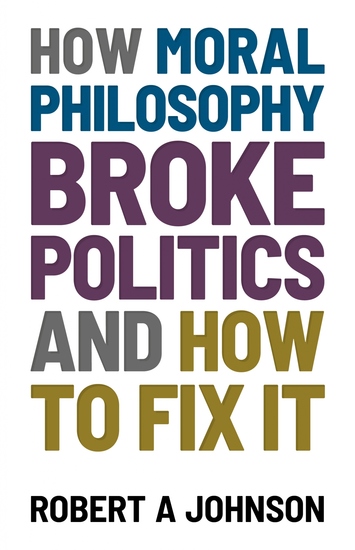
How Moral Philosophy Broke Politics - And How To Fix It - cover
LER

How Moral Philosophy Broke Politics - And How To Fix It

Robert A. Johnson

Editora: Publishdrive

  • 0
  • 0
  • 0

Sinopse

We live in a remarkable world: science and technology has shifted our understanding of what's possible and transformed our lives. Rain dances and sun worshipping have been replaced by quantum computers, speed-of-light rockets, and our ever-closer inching towards genuine artificial intelligence.
But somehow, more and more of us are feeling hopeless; we are still ruled by political systems that haven't hugely changed since they fell into place hundreds, arguably thousands, of years ago. The part of our society that makes decisions on everything from our health to our work is almost completely dysfunctional.
Politicians aren't held to account by truth, aren't striving for shared visions of human thriving, and are allowed to mix and mash their policies based upon sound bites and media furores rather than actually progressing humankind. All the while having to focus on short-term goals rather than sustainable ideas.
How Moral Philosophy Broke Politics argues that a rational, evidence-based framework for ethics can be developed, by drawing all of our moral opinions back to three basic principles that underlie all of our concerns. By doing this we can rationally judge and weigh new policies and decisions in a way which is accountable and, whilst still debatable, much easier to find consensus on.
If we were to accept this new framework then we would be much better off not just in politics, but in all those areas of life which politics affects. The world has changed unrecognisably in the last thousand years, whilst politics hasn't changed much at all. We need to start using reason to develop it into something useful.
Disponível desde: 04/02/2022.
Comprimento de impressão: 236 páginas.
Outros livros que poderiam interessá-lo

  • COGNITIVE BIASES - Does Reality Exist? Don't believe anything - cover

    COGNITIVE BIASES - Does Reality...

    Kai L. Wood

    • 0
    • 0
    • 0
    Discover the importance of cognitive biases in a polarized world! 
    Dive into the fascinating world of cognitive biases through this clear, direct and simple book. A book that will allow you to understand how cognitive biases affect us in an increasingly polarized and complex world. Through different examples and studies, you will be able, in an easy and accessible way, to learn the importance of developing critical thinking in the face of increasingly biased information, so as not to fall into extremism or manipulation.Develop critical and efficient thinking.Learn about the importance of information.Develop skills to identify manipulated and biased information.Develop a new way of looking at life. 
    A must-have book for those seeking critical and efficient thinking. 
    READ THIS BOOK NOW AND DON'T BE FOOLED ANYMORE!
    Ver livro
  • Restless Spirits - cover

    Restless Spirits

    ELISA J WILKINSON

    • 0
    • 0
    • 0
    Restless Spirits is a fascinating and compelling read by well-known ghost-hunter Elisa Wilkinson, author of Seeing is Believing. Recounting specific hauntings and numerous ghostly occurrences around Britain, this is the culmination of years of personal research and details crucial elements of the locations visited and the skeletal apparitions to unexplainable faces and plasmatic orbs seen there.This is a must read for the paranormal community, but the psychic phenomena detailed within will open a reader’s eyes up to the realities of the spirit world, effectively proving that ghosts do exist and are part of our daily lives. This book is sure to have you flicking pages long after bedtime…
    Ver livro
  • Glory and Decay - The Roman Empire through the Ages - cover

    Glory and Decay - The Roman...

    Rogan Fish

    • 0
    • 0
    • 0
    The story of Rome’s rise is one of ambition, resilience, and conquest. What began as a small settlement along the Tiber River grew into one of the most powerful empires in history. Rome’s transformation from a monarchy to a republic and eventually into a sprawling empire was shaped by its military prowess, political strategies, and influential leaders. 
    Rome’s early history is rooted in legend. According to myth, the city was founded in 753 BCE by Romulus, who, after a dispute, killed his twin brother Remus. While this tale is shrouded in mystery, archaeological evidence suggests that settlements on the Palatine Hill date back much earlier. Initially ruled by kings, Rome transitioned to a republic in 509 BCE after the overthrow of the last Etruscan monarch, Tarquin the Proud. This shift established a new political system that placed power in the hands of elected officials, most notably the Senate and the consuls. 
    The Republic’s success was largely due to its military strength. The Roman legions were highly disciplined and adaptable, allowing Rome to expand its influence across the Italian Peninsula. Through a combination of warfare and strategic alliances, Rome defeated neighboring city-states and incorporated them into its growing domain. One of its defining moments came during the Punic Wars against Carthage (264–146 BCE), where figures like Scipio Africanus led Rome to decisive victories, securing its dominance over the Mediterranean.
    Ver livro
  • The Republic (Hero Classics) - cover

    The Republic (Hero Classics)

    Plato

    • 0
    • 0
    • 0
    Part of the Hero Classics series 
    “I am the wisest man alive, for I know one thing, and that is that I know nothing.” 
    The Republic, a pioneering work of political philosophy, is a dialogue that does not feature Plato directly as at the heart is Socrates – his teacher. Even though the conversations between Socrates and Athenians as well as foreigners take place thousands of years ago, the questions Plato addresses in the volume are far from archaic. Should men and women have equal rights? Should rulers be responsible for the well-being of their citizens and the healthcare system in general? Is it ever acceptable to lie, especially if it is a so-called ‘noble lie’? And of course, how far can we stretch social mobility? Although many of Plato’s ideas are utopian and will be regarded as immensely positive aspirations by contemporary society, some conclusions drawn by the thinker might arouse our questioning or even disdain. In particular, Plato argues that censorship can underpin the citizens’ goodness and orderly life of the whole community – an affirmation that is unlikely to be embraced by modern-day democracies. 
    Because the philosopher prefers to construct an imaginary city in order to regard his ideas, his political ruminations can be read with a pragmatic mind but also for its artistic richness and literary thrill as Plato does not shy away from metaphors and allegories. The text is one of the most studied and referenced after the Bible and akin to the Holy text it does not have to be read in a single sitting but rather carefully revised and meditated upon to grasp its nuances and their applicability to our modern lives. It is an insight into the history of human civilization and the functionings of an individual within society – the read that is likely to be worthwhile for an advanced bibliophile and casual reader alike. 
    The Hero Classics series:MeditationsThe ProphetA Room of One’s OwnIncidents in the Life of a Slave GirlThe Art of WarThe Life of Charlotte BronteThe RepublicThe PrinceNarrative of the Life of Frederick Douglass, an American SlaveUtopia
    Ver livro
  • Parents of the World Unite! - How to Save Our Schools from the Left's Radical Agenda - cover

    Parents of the World Unite! -...

    Ian Prior

    • 0
    • 0
    • 0
    This essential playbook reveals the winning strategies for successfully fighting a radical woke agenda in your kids’ schools. Ian Prior is one of the most articulate and successful parent-activists in the United States. Armed with 12 inspiring battle-tested rules and revealing stories about sparring with self-righteous Woke neighbors (the “Chardonnay Antifa”), Ian shares secrets about what fellow parents can do in their own school districts to stop the Left's dark vision from taking root.   Get ready to laugh. This is not a boring education book. With real world lessons and funny anecdotes readers can connect with, Ian explains how families can win the battle to stop divisive and dangerous concepts rooted in critical race theory and other dangerous left-wing ideologies from spreading to their schools. He convincingly makes the case that the Left envisions a public education system in America where children are no longer the responsibility of their parents but rather mere wards of the state.   You’ll be shocked and amused by the outrageous stories in Ian’s suburban county that unexpectedly became ground zero for the parents’ rights movement. This sign-of-the times book helpfully explains the confusing and infuriating cultural moment we find ourselves in.Parents of the World, Unite! is an indispensable book for American families who believe they should be able to raise their children without government interference in their moral, religious, and ethical choices -- and are ready to join a revolution of parents.
    Ver livro
  • Lady Jane Grey and the Succession Crisis of 1553 - A Tudor Quick Studies Book on the Nine Day's Queen - cover

    Lady Jane Grey and the...

    Heather Teysko

    • 0
    • 0
    • 0
    This course explores the dramatic events of the 1553 Succession Crisis, a pivotal moment in Tudor history. It begins with Edward VI’s declining health and the controversial "Devise for the Succession," leading to Lady Jane Grey's nine-day reign. You’ll follow Mary I’s determined campaign to reclaim the throne, examine the trials and executions of key figures, and understand the broader impact on the Tudor dynasty. The course also delves into the complex religious and political dynamics of the era, highlighting lessons about legitimacy, power, and governance.
    Ver livro