¡Acompáñanos a viajar por el mundo de los libros!
Añadir este libro a la estantería
Grey
Escribe un nuevo comentario Default profile 50px
Grey
Suscríbete para leer el libro completo o lee las primeras páginas gratis.
All characters reduced
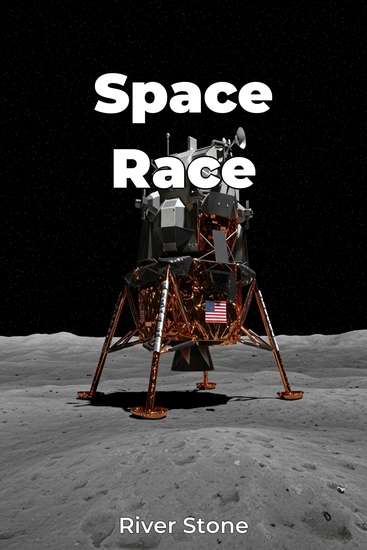
Space Race - cover

Space Race

River Stone

Traductor A AI

Editorial: Publifye

  • 0
  • 0
  • 0

Sinopsis

"Space Race" explores the intense mid-20th century competition between the United States and the Soviet Union to achieve dominance in space exploration during the Cold War. Driven by political ambition and the desire to demonstrate ideological superiority, this era saw rapid technological advancements.

 
One intriguing fact is that the launch of Sputnik by the Soviet Union in 1957 caught the United States off guard, spurring a massive increase in funding for scientific research and development. Another key insight is how the Apollo Moon Landing became a symbol of American ingenuity and technological prowess, marking a pivotal moment in this geopolitical struggle.

 
The book examines the political, social, and technological factors that fueled the Space Race, detailing key events from Sputnik to the Apollo missions. It highlights how these advancements, driven by Cold War rivalry, continue to shape our world through satellite technology and various applications.

 
The book's approach balances historical accuracy with accessible language, making it valuable for readers seeking a deeper understanding of the historical context of space exploration. It progresses by first establishing the Cold War political landscape, then chronologically detailing milestones and breakthroughs, and concluding with a review of the long-term impacts and legacies.
Disponible desde: 06/03/2025.
Longitud de impresión: 65 páginas.
Otros libros que te pueden interesar

  • Trail of Tears - The Cruel Forced Displacement of 60000 American Natives - cover

    Trail of Tears - The Cruel...

    Kelly Mass

    • 0
    • 0
    • 0
    The Trail of Tears was a harrowing series of forced relocations that took place between 1830 and 1850, impacting approximately 60,000 American Indians from the so-called "Five Civilized Tribes." These tribes, which included the Cherokee, Muscogee (Creek), Seminole, Chickasaw, and Choctaw nations, were driven from their ancestral lands in the Southeastern United States to designated areas west of the Mississippi River, an event orchestrated by the United States government. The forced removal was the culmination of a decades-long process of ethnic cleansing that occurred gradually, as tribes were stripped of their homelands, cultural identities, and livelihoods. Alongside them, thousands of African American slaves owned by these tribes were also relocated, compounding the tragedy. 
    The Indian Removal Act, passed in 1830, paved the way for the systematic relocation of these tribes. It was during this period that the Cherokee removal in 1838—often considered the most infamous and final forced relocation east of the Mississippi—occurred. This event was largely triggered by the discovery of gold in Dahlonega, Georgia, in 1828, which sparked the Georgia Gold Rush. The prospect of wealth led state officials and settlers to covet Cherokee land, ultimately resulting in the forced march to the newly designated "Indian Territory" in what is now Oklahoma.
    Ver libro
  • Summary of Miranda Devine's Laptop from Hell - cover

    Summary of Miranda Devine's...

    Falcon Press

    • 0
    • 0
    • 0
    Buy now to get the main key ideas from Miranda Devine's Laptop from Hell 
      
    Joe Biden announced his candidacy for the 2020 presidential election, and two weeks later, his son Hunter left his laptop at a repair shop and never came back. In Laptop from Hell (2021), Miranda Devine exposes the contents of the abandoned laptop. Hunter’s life was falling apart in the spring of 2019. His brother Beau had died, he was deep into his crack addiction, and the money he had made from his shady business dealings abroad was inaccessible. Joe always claimed that he was not aware of any of Hunter’s business ventures, but Devine asserts that this has been proven untrue by the shocking contents of the laptop.
    Ver libro
  • Space Trek - cover

    Space Trek

    Raphael Terra

    • 0
    • 0
    • 0
    This audiobook has been recorded using Text to speech (TTS). 
     
    For decades we have all grown up watching science fiction movies and TV shows. And we have all dreamed of going where no man has gone before. That time is here and now. We are on the very edge of a new era in humanity. Within the next few years mankind will be not only journeying to other planets, we will be inhabiting them. Our ultra-high technology robots are even now walking upon the surface of Mars, sending back information and preparing the ground for our coming. 
     
    This is not science fiction. This is science fact. And just as before in the history of humanity, the process is being led by several unique, intelligent and talented individuals such as Elon Musk. 
     
    Rocket ships take off vertically and return to Earth vertically. Humans are shuttled to the International Space Station as if they're travelling from New York to Los Angeles. Supersonic space craft fly mankind around the globe virtually in space, just to make things faster. 
     
    But what does the future hold for us? We cannot maintain peace on Earth. How can we do so in space? NASA, SpaceX and Virgin are not the only ones with eyes upon the stars. Russia and especially China, also have desires in that direction. 
     
    The race for space is on and all bets are off.
    Ver libro
  • 1984 Nomination Acceptance Address - cover

    1984 Nomination Acceptance Address

    Ronald Reagan

    • 0
    • 0
    • 0
    On August 23, 1984, at the Dallas Convention Center, Reagan accepts the presidential nomination of the Republican party. Reagan reminds Democrats of the high inflation and interest rates when he took office in 1980 and claims Democrats “never met a tax they didn't like or hike.”  
    In 1981 “we started a policy of tightening the Federal budget instead of the family budget.” Reagan cites an improved “misery index” (the total of the inflation and unemployment rates) and improved poverty levels.  
    “In the 4 years before we took office, country after country fell under the Soviet yoke. Since January 20th, 1981, not 1 inch of soil has fallen to the Communists.” (long applause)  
    America is “more confident than ever” with “the strongest economic growth” and “the fastest rate of job creation”.  
    We support NATO, Israel, and free Latin American States that “struggle to prevent Communist takeovers fueled massively by the Soviet Union and Cuba.” We rescued “American students on the imprisoned island of Grenada.” 
    We oppose deficits, and support a balanced budget amendment, the line-item veto, tuition tax credits, enterprise zones, and lower taxes. There is no room for anti-Semitism or bigotry in the party of Lincoln. 
    With America at peace, “we’re in the midst of a springtime of hope” and see America as “a shining city on a hill.” We look forward to “the Olympic Games here in the United States” and marvel “at the journey of the Olympic torch” across our country. 
    Audio recording courtesy of the Ronald Reagan Presidential Library.  
    AspenLeafMedia.com
    Ver libro
  • Grunwald and Orsha: The History and Legacy of the Polish–Lithuanian Commonwealth’s Most Decisive Battles - cover

    Grunwald and Orsha: The History...

    Editors Charles River

    • 0
    • 0
    • 0
    Like other secretive groups, the mystery surrounding the Teutonic Knights has helped their legacy endure. While some conspiracy theorists attempt to tie the group to other alleged secret societies like the Illuminati, other groups have tried to assert connections with the Teutonic Knights to bolster their own credentials. Who they were and what they had in their possession continue to be a source of great intrigue even among non-historical circles.  
    While the military orders are now often tied to religion or conspiracy theories, they did once wield great power and influence in Europe, and their actions had consequences centuries after they had reached their peak. This was made clear in the wake of a major battle fought between German and Russian forces from August 26-30, 1914 during the First World War. It occurred in Masuria, a region of marshes, woodland, and numerous lakes in northern Poland, almost 400,000 men were involved, and it was a decisive victory for the Germans, who annihilated the Russian army. The Germans named the battle after Tannenberg (Polish Stebark), and the battle, though widely fought over 100 miles, did indeed encompass the village, but there was a historical reason for assigning the name to the battle. On July 15, 1410, Tannenberg was the site of another decisive battle between the army of the Germanic Teutonic Order and that of Poland-Lithuania, a battle now commonly referred to as the Battle of Grunwald (after another nearby village).  
    	In 1514, Orsha was a much smaller town, home to a population of no more than 5,000 as part of the Grand Duchy of Lithuania, but on September 8 of that year, the normally quiet and unpretentious town was thrust into the world’s gaze when over 100,000 troops engaged in one of the 16th century’s biggest battles outside the town walls. The battle pitted the forces of the King of Poland and the Grand Duchy of Lithuania against the Grand Duchy of Moscow.
    Ver libro
  • Radiolab: Journey Through The Human Body - cover

    Radiolab: Journey Through The...

    Radiolab

    • 0
    • 0
    • 0
    Radiolab invites you to join us on a scientific journey through the body. Our bodies are so complex that many processes can go unnoticed. In this audiobook, not only do we notice, but we explore how our anatomy has shaped the human experience. These five chapters explore your guts, private parts, womb, butt, and brain. We’ll hear stories from scientists, anthropologists, professors, doctors, mothers, fathers, and storytellers. We answer questions like what organ is a baby's best friend and the mother's worst nightmare, what is the evolutionary reason for our butts, and how does your brain know that you, are you?
    Ver libro