Join us on a literary world trip!
Add this book to bookshelf
Grey
Write a new comment Default profile 50px
Grey
Subscribe to read the full book or read the first pages for free!
All characters reduced
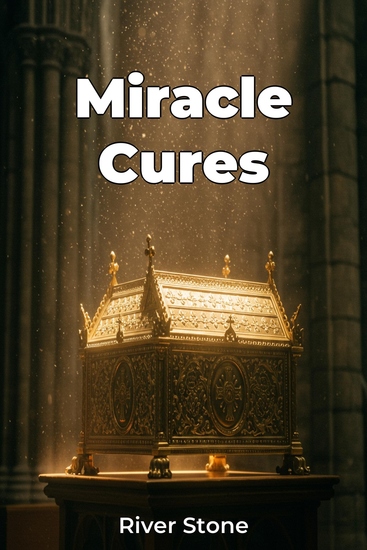
Miracle Cures - cover

Miracle Cures

River Stone

Translator A AI

Publisher: Publifye

  • 0
  • 0
  • 0

Summary

Miracle Cures explores the captivating intersection of faith, medicine, and history through accounts of miraculous healing across diverse religions and cultures. It examines narratives where recovery from illness or injury seemingly defies conventional medical explanations, revealing how these accounts have shaped cultural understanding and spiritual practices. The book highlights the enduring human quest for meaning and hope in the face of suffering, regardless of scientific verification - indicating the profound cultural, social, and psychological power of recurring narratives of miraculous healing events.

 
The book analyzes case studies from ancient texts to contemporary reports, providing historical context, medical plausibility, and cultural significance. It acknowledges the tension between religious explanations for health and disease and the development of modern medicine. Exploring these narratives offers insight into the role of belief in health, healing, and the impact on medical ethics and the placebo effect.

 
The book progresses through an introduction to the concept of miraculous healing, explores case studies, and concludes with an analysis of broader implications.
Available since: 02/27/2025.
Print length: 63 pages.
Other books that might interest you

  • My Blue Book of Grammar for Class 8 - cover

    My Blue Book of Grammar for Class 8

    Meigha Rawat

    • 0
    • 0
    • 0
    A Grammar Series That Uses the Functional Approach 
    
    KEY FEATURES 
    - Functional approach to grammar teaching, using exemplars to illustrate the usage before defining the structure and rules 
    - Vocabulary taught through language-in-use to build the learners’ vocabulary through use rather than memorisation of rules 
    - Contemporary topics to inculcate 21-century skills amongst learners 
    - Use of literature to help learners understand how grammar is used in text 
    - A comprehension section comprising texts from different genres so that learners may relate grammar to different types of works produced in English 
    - Phonics in Grades 1 and 2 to teach the very basis of language 
    - Uniquely stylised illustrations 
    - Activities such as puzzles, crosswords, word grids and games to aid the facilitator in using the concept of ‘flipped classroom’ 
    - Periodic tests to help the learners self-assess the acquisition of concepts 
    - Digital component to cater to a technology-driven classroom 
    
    DESCRIPTION: 
    My Blue Book of Grammar is a course that has been conceptualized and designed keeping in mind the increasingly dynamic role of the English language in today’s world. Especially in our country, where English serves as the lingua franca, a grammar course has to offer not only an exposition of the pedagogy but also the exhibition of the utility of that pedagogy. The aim of a grammar series should be to encourage the development of competency amongst learners, even though their proficiency levels may vary. While the level of exposure to English of all learners may be different, a grammar series should aid in the development of a certain level of confidence amongst the learners, with the end result being that they are able to converse without hesitation in English. 
    
    WHAT WILL YOU LEARN 
    - Understand grammar concepts 
    - Learn how to use different vocabulary concepts taught through language-in-use 
    - Learn 21-century skills 
    - Develop deeper understanding of and appreciation for literature 
    - Have clearer pronunciation through a better understanding of phonics 
    
    WHO THIS BOOK IS FOR: 
    School students of Grades 8 
    
    TABLE OF CONTENTS 
    GRAMMAR 
    1. Sentences: Complex, Compound, Complex–Compound 
    2. Correct and Incorrect Use of Ellipsis 
    3. Articles: a, an, the 
    4. Determiners 
    5. Quantifiers 
    6. Subjunctive 
    7. Verbs Used in Subjunctive 
    8. Parallel Structure 
    9. Dangling Modifier 
    10. Capitalising Titles 
    11. Subject–Verb Agreement with Compound Subjects 
    12. Commas, Semicolons, Colons and Dashes 
    13. Commas with Interrupters and Appositives 
    14. Compound Possessive 
    15. Conjunctive Adverbs 
    Test Paper 1 
    VOCABULARY 
    16. Adjectives: good, better, best, bad, worse, worst 
    17. Adverbs: well, better, best, badly, worse, worst 
    18. Compound Object with I and Me 
    19. Removing Redundancy 
    20. Prefixes: semi–, mid–, en–, em– 
    21. Suffixes: –ence, –ance, –an, –ian 
    22. Using Latin and Greek Roots to Find Out the Meaning of Words 
    23. Using the Thesaurus 
    24. Allusion 
    25. Analogy – Revision 
    26. Finding the Meaning of the Word from the Context 
    27. Formal and Informal Language 
    Test Paper 2 
    WRITING 
    28. Circular 
    29. School Circular 
    30. Writing a Story as a Play 
    31. Story Writing 
    32. Argumentative Essay 
    33. Article for the School Magazine 
    34. Report for the School Newspaper 
    Test Paper 3 
    COMPREHENSION 
    35. Stay Hungry, Stay Foolish 
    36. Hallow-Fair 
    37. Sqay 
    38. Bhikaji Cama 
    Orange Global Olympiad – English Sample Paper
    Show book
  • Educating for a Sustainable Future - Reimagining Learning Equity and Ethics Beyond Capitalism - cover

    Educating for a Sustainable...

    Brian Gibson

    • 0
    • 0
    • 0
    What if education could heal the planet, restore equity, and reimagine what it means to be human? 
    In Educating for a Sustainable Future, Brian Gibson invites readers to embark on a bold intellectual and moral journey—one that redefines learning in the age of climate crisis, social inequality, and economic uncertainty. With clarity, compassion, and vision, Gibson challenges the limitations of capitalist models that have shaped our schools, societies, and sense of purpose. 
    Drawing on critical pedagogy, ecological philosophy, and contemporary ethics, this book examines how education can become a transformative force, cultivating empathy, creativity, and sustainability in every learner. It proposes a radical rethinking of how we teach, what we value, and why we learn. 
    Through thought-provoking analysis and inspiring real-world examples, Gibson shows that true education is not about competing for success, but about co-creating a just, sustainable, and flourishing world. 
    Inside you’ll discover: 
    •	How current education systems perpetuate inequality and ecological harm 
    •	What a post-capitalist framework for learning might look like 
    •	Ways to cultivate ethical, democratic, and environmentally conscious classrooms 
    •	Strategies for aligning education with the values of justice, care, and sustainability 
    Educating for a Sustainable Future is a powerful call to educators, policymakers, and global citizens who believe that a better world begins in the classroom—and that learning itself must evolve if humanity is to thrive.
    Show book
  • Why Stupid People Think They're Smart - The Dunning-Kruger Effect Explained - cover

    Why Stupid People Think They're...

    John Harpoon

    • 0
    • 0
    • 0
    The Dunning-Kruger Effect is a cognitive bias in which people with limited knowledge or ability in a certain area overestimate their competence. It is named after social psychologists David Dunning and Justin Kruger, who first identified the phenomenon in a 1999 study. The effect highlights a curious and often frustrating contradiction: those who are least skilled in a particular domain are often the most confident in their abilities. This psychological phenomenon is not just a theoretical curiosity—it has real-world consequences for individuals and society. 
      
    At the heart of the Dunning-Kruger Effect is the relationship between self-perception and actual competence. It’s common for people to assume that their understanding of a topic or skill is more advanced than it truly is, especially in areas where they have little experience. This overconfidence stems from ignorance: when you don’t know what you don’t know, you are unaware of the gaps in your knowledge. In fact, research suggests that the less a person knows about a subject, the more likely they are to overestimate their abilities in that area. Conversely, those who are highly skilled tend to underestimate their competence, as they are more aware of the complexities and nuances of the field. 
      
    The Dunning-Kruger Effect also underscores the significant role that confidence plays in shaping how we perceive ourselves and others. Confidence is often mistaken for competence, leading people to believe that an individual’s self-assurance is a reflection of their skill or knowledge. However, confidence can be a double-edged sword: while it can motivate people to pursue challenges and opportunities, it can also prevent them from recognizing their own limitations. This creates a dangerous feedback loop where overconfidence leads to poor decisions and missed learning opportunities.
    Show book
  • Chrysalis - Maria Sibylla Merian and the Secrets of Metamorphosis - cover

    Chrysalis - Maria Sibylla Merian...

    Kim Todd

    • 0
    • 0
    • 0
    Before Darwin, before Audubon, there was Maria Sibylla Merian. 
    An artist turned naturalist, Merian was born just 16 years after Galileo proclaimed that the Earth orbited the sun. But at the age of 50, she sailed from Europe to South America on a solo scientific expedition to study insect metamorphosis—an unheard-of journey for any naturalist at that time, much less a woman. 
    When she returned, she produced a book that secured her reputation, only to have it savaged in the 19th century by scientists who disdained the work of “amateurs.” 
    Chrysalis takes us from golden age Amsterdam to the Surinam tropics to modern laboratories where Merian’s insights fuel a new branch of biology. The New Yorker called it a "spellbinding biography." In it, Kim Todd brings to life a 17th century woman whose boldness and vision would still be exceptional today.
    Show book
  • Let It Go - How Forgetting Heals Mind And Soul - cover

    Let It Go - How Forgetting Heals...

    Brian Gibson

    • 0
    • 0
    • 0
    Let It Go: How Forgetting Heals Mind and Soul is a groundbreaking exploration of one of the most overlooked yet powerful tools of emotional well-being: the ability to forget. 
    Blending psychological insight, neuroscience, and emotional depth, this book takes readers on a transformative journey through the science and soul of forgetting. Each chapter unpacks how intentionally and selectively letting go of certain memories can pave the way to healing, clarity, and inner peace.Discover the psychological and emotional rationale for forgetting and how it supports mental resilience.Selective Retrieval of Memory and Think/No-Think. Techniques explore the mechanisms that allow us to shape what we remember and what we choose to leave behind.Gain insight into Control Over Memories, learning to regulate the intrusive thoughts that hold us back.Understand the deep links between memory and mood in Depressive Disorders and how forgetting becomes a vital ally in recovery.Explore how the brain uses Top-Down Control to influence what we recall and how that process can be optimized for healing. 
    Rooted in science yet rich with emotional intelligence, Let It Go provides readers with information, practical frameworks, and empowering strategies. Whether you're seeking to overcome past trauma, manage mental clutter, or simply find peace in the present, this book offers a compassionate, research-backed roadmap to a lighter, freer mind. If you've ever felt trapped by your memories, Let It Go is your invitation to heal—not by holding on, but by learning the art and science of letting go.
    Show book
  • NCE Secrets: Transform Your Exam Success with Unbeatable Strategies - "Elevate your NCE exam success with impactful audio lessons that deliver winning strategies for your best performance!" - cover

    NCE Secrets: Transform Your Exam...

    Rowan Ashworth

    • 0
    • 0
    • 0
    NCE Secrets: Transform Your Exam Success with Unbeatable Strategies 
    Are you aiming to advance your career by mastering counseling skills and conquering the NCE Exam 2024-2025? 
    Looking for a thorough guide that encompasses everything you need to excel in your NCE Exam 2024-2025? 
    Your quest ends here! 
    This guide is your essential companion for enhancing your understanding, honing your skills, and participating in practical exercises. With this resource, you’re set up for success. 
    Updated for the NCE 2024-2025 Exam Structure. 
    Key features of this comprehensive guide: 
    - In-depth insights into the NCE Exam 2024-2025 Certification 
    - Clear explanations of mastering counseling skills 
    - Effective strategies for exam preparation and tackling various types of questions 
    Our guide stands out with its thorough coverage, which is vital for your exam triumph. Concepts are explored in detail rather than briefly touched upon. 
    Please keep in mind that this guide is an independent resource and not affiliated with any official NCE organization. 
    Crafted with a clear layout and straightforward language, our NCE Exam Guide 2024-2025 guarantees smooth transitions between topics. Bid farewell to overwhelming jargon and embrace clear, accurate, and technical content. 
    So, why hesitate? Click the BUY NOW button, secure your guide, and embark on your journey to success in the NCE Exam 2024-2025! 
    Transform your exam success with unbeatable strategies today!
    Show book