¡Acompáñanos a viajar por el mundo de los libros!
Añadir este libro a la estantería
Grey
Escribe un nuevo comentario Default profile 50px
Grey
Suscríbete para leer el libro completo o lee las primeras páginas gratis.
All characters reduced
Battery Powered - The Social Economical and Environmental Impacts of the Lithium Ion Battery - cover

Battery Powered - The Social Economical and Environmental Impacts of the Lithium Ion Battery

Richard Skiba

Editorial: After Midnight Publishing

  • 0
  • 0
  • 0

Sinopsis

In this era of technological advancement and sustainability, an in-depth exploration of lithium-ion batteries unfolds in this book. It covers key aspects such as historical evolution, operational mechanisms, composition, manufacturing processes, applications, challenges, environmental impact, and economic and social implications. The book caters to a diverse audience, including students, researchers, industry professionals, entrepreneurs, policymakers, general readers, maintenance professionals, inventors, innovators, and investors.
Disponible desde: 18/04/2024.
Longitud de impresión: 368 páginas.

Otros libros que te pueden interesar

  • The Man In The Iron Mask - cover

    The Man In The Iron Mask

    Alexandre Dumas

    • 0
    • 0
    • 0
    "The Man in the Iron Mask: An Essay" by Alexandre Dumas delves into the enigmatic historical mystery of the masked prisoner, blending speculation with historical analysis. Dumas examines the legend of a mysterious man imprisoned under an iron mask, exploring theories about his identity and the political intrigue surrounding him. Was he a royal secret, a hidden twin, or merely a victim of absolute power? Through meticulous research and vivid storytelling, Dumas reflects on themes of tyranny, secrecy, and the human cost of monarchy. This essay captures the tension between myth and reality, offering readers a thought-provoking journey into one of history’s most enduring riddles. A compelling mix of history and imagination.
    Ver libro
  • Onigamiising - Seasons of an Ojibwe Year - cover

    Onigamiising - Seasons of an...

    Linda LeGarde Grover

    • 0
    • 0
    • 0
    Long before it came to be known as Duluth, the land at the western tip of Lake Superior was known to the Ojibwe as Onigamiising, "the place of the small portage." There the Ojibwe lived in keeping with the seasons, moving among different camps for hunting and fishing, for cultivating and gathering, for harvesting wild rice and maple sugar. In Onigamiising Linda LeGarde Grover accompanies us through this cycle of the seasons, one year in a lifelong journey on the path to Mino Bimaadiziwin, the living of a good life. 


    In fifty short essays, Grover reflects on the spiritual beliefs and everyday practices that carry the Ojibwe through the year and connect them to this northern land of rugged splendor. As the four seasons unfold—from Ziigwan (Spring) through Niibin and Dagwaagin to the silent, snowy promise of Biboon—the award-winning author writes eloquently of the landscape and the weather, work and play, ceremony and tradition and family ways, from the homey moments shared over meals to the celebrations that mark life's great events. Now a grandmother, a Nokomis, beginning the fourth season of her life, Grover draws on a wealth of stories and knowledge accumulated over the years to evoke the Ojibwe experience of Onigamiising, past and present, for all time.
    Ver libro
  • Recent History - Understanding Current Events and Modern Developments (18 Titles) - cover

    Recent History - Understanding...

    Fredrich Hazelton

    • 0
    • 0
    • 0
    This book contains these 18 titles: 
    Brexit - The United Kingdom’s Historic Exit from the European Union 
    The 2023 Inflation Surge - Economic Impacts, Policy Responses, and the Cost of Living 
    The 2024 Israeli-Palestinian Conflict - Escalations and Peace Efforts in a Longstanding Struggle 
    The Arab Spring - Escalations and Peace Efforts in a Longstanding Struggle 
    The Collapse of the Soviet Union - How the Superpower Disintegrated and the New World Order Emerged 
    The Dakota Access Pipeline Protests - Indigenous Rights and Environmental Concerns in Modern America 
    The Expansion of the European Union - New Member States, Challenges, and the Future of European Integration 
    The Fall of the Berlin Wall - The End of the Cold War and the Reunification of Germany 
    The Hong Kong Protests - The Fight for Democracy and Autonomy in a Changing China 
    The Iran Nuclear Deal - Negotiations, Sanctions, and the Quest for Regional Stability 
    The Metoo Movement - Fighting Sexual Harassment and Empowering Women Worldwide 
    The Refugee Crisis - Displacement, Migration, and the Humanitarian Response 
    The Rise of China as a Global Power - Economic Growth, Trade Wars, and the Shift in Global Influence 
    The Rise of Isis - The Formation and Impact of the Islamic State in the 21st Century 
    The Rise of Remote Work - How the Pandemic Shifted Work Culture and Its Long-Term Effects 
    The Rise of Social Media - How Digital Platforms Transformed Communication and Society 
    The Russian Annexation of Crimea - The 2014 Crisis and Its Geopolitical Consequences 
    The Syrian Civil War - Conflict, Humanitarian Crisis, and the Struggle for Power
    Ver libro
  • The Hidden Face of Pope Francis - cover

    The Hidden Face of Pope Francis

    Paul Ariès

    • 0
    • 0
    • 0
    Why did Pope Francis canonize a priest responsible for the genocide of the Indians?
    Why does he wish to beatify the anti-Semitic French priest, Leon Dehon?  
    What are the unmentionable reasons for his papal election? 
    Pope Francis is presented as progressive and sensitive to the interests of the people, but underneath his smiles and his good words hides an authoritarian and dogmatic pope. This pope relies on very conservative movements such as Communion and Liberation or the Order of the Knights of Columbus, which are close to Opus Dei. 
    The good Pope Francis is beginning to drop his mask when he declares that Europe is undergoing a new Arab invasion (sic), when he calls on "Catholics with a sense of identity" to take to the streets, when he fights against republican secularism and demonizes atheists.
    After an overview of the financial, political and sexual scandals, Paul Ariès proceeds to a very detailed and documented analysis of the "Church of Francis," particularly in the areas of ecology and sexuality. This clear book offers a surprising insight into the best communicator the Church has known in a long time.
    Ver libro
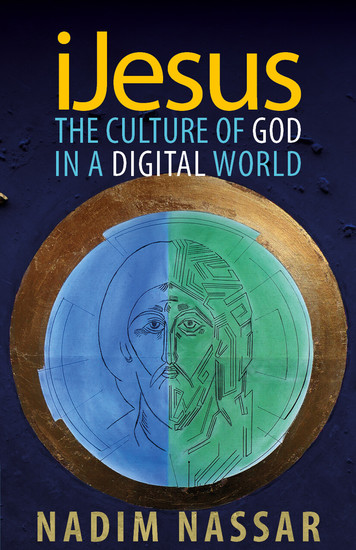
  • iJesus - The Culture of God in a Digital World - cover

    iJesus - The Culture of God in a...

    Nadim Nassar

    • 0
    • 0
    • 0
    Every aspect of life in today’s world is affected by digital technology, be it the way we communicate, travel, or shop, or even how we identify ourselves.
    
     
    Christians, believing that we are created by a living personal God who revealed himself as Father, Son and Holy Spirit and came to us in Jesus Christ, try to make sense of their faith in this digital jungle.
    
     
    iJesus explores the relationship between the culture of God as Trinity in relation to our highly complex digital cultures and reflects on how we as followers and disciples of Jesus Christ can live in a world shaped by digital communication, connectivity and artificial intelligence.
    
     
    In the culture of the Trinity, we see a God who is the source of hospitality and generosity in everything he does and in every way that he reacts with His creation.
    
     
    Nadim Nassar gives a prophetic vision of our faith interacting and being lied out in the changing cultures around us and shows how God can make himself known and understood in a digital age.
    Ver libro
  • Disappearance of the Surcouf The: The Mysterious Sinking of the Allies’ Largest Submarine during World War II - cover

    Disappearance of the Surcouf...

    Editors Charles River

    • 0
    • 0
    • 0
    When the Surcouf launched in 1929, it was a technological marvel. This wasn’t a conventional submarine at all, but a 3,300-ton, 300-foot-long submersible light cruiser. Armed not just with torpedoes but also a pair of eight-inch guns, the Surcouf had a range of over 10,000 miles and was equipped with a seaplane in a hanger and a prison capable of holding up to 40 prisoners. When it was launched, the submarine looked like something out of the novels of Jules Verne, and many people believed it would make all existing submarines (and many surface warships) obsolete. However, by the time France found itself at war with Nazi Germany in 1939, the Surcouf was outdated and basically irrelevant, though it was still in active service with the French Navy. 
    When France was defeated by Nazi Germany in June 1940, the majority of French troops and warships ceased fighting. However, some relocated to Britain, the only nation still fighting Germany, to join Free French forces under the command of the charismatic General Charles De Gaulle. The crew of the Surcouf joined the Free French Navy and served from late 1940 to February 1942, when she called in at the British port of Bermuda before sailing for the island of Tahiti, French Polynesia, in the South Pacific. On February 12, the Surcouf left Bermuda en route for Tahiti via the Panama Canal and was never seen again. 
    There have been many theories about what might have happened to the Surcouf and her 130-man crew, ranging from an accidental collision to sabotage and even accidental (or deliberate) attacks by her allies. As a result, the fate of the Surcouf has become one of the most enduring and baffling maritime mysteries, and it still generates a great deal of debate.
    Ver libro