¡Acompáñanos a viajar por el mundo de los libros!
Añadir este libro a la estantería
Grey
Escribe un nuevo comentario Default profile 50px
Grey
Suscríbete para leer el libro completo o lee las primeras páginas gratis.
All characters reduced
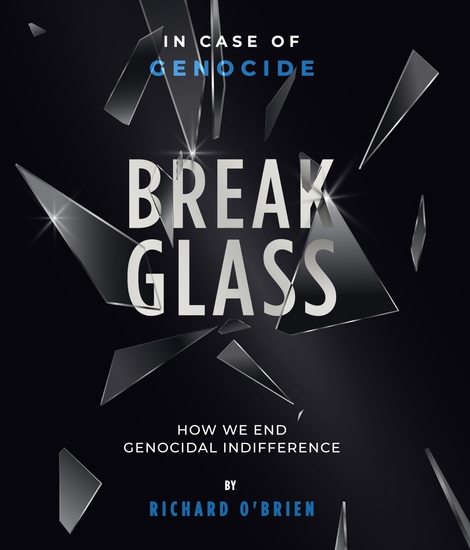
Break Glass - In Case of Genocide - Break Glass: How We End Genocidal indifference - cover

Break Glass - In Case of Genocide - Break Glass: How We End Genocidal indifference

Richard O'Brien

Editorial: Publishdrive

  • 0
  • 0
  • 0

Sinopsis

Break Glass tells the harrowing stories of heroes who prevented genocide, massacres and starvation from the Holocaust to the twenty-something year olds at the Center for the Prevention of Genocide as told by its Founder.
Disponible desde: 12/12/2023.
Longitud de impresión: 258 páginas.

Otros libros que te pueden interesar

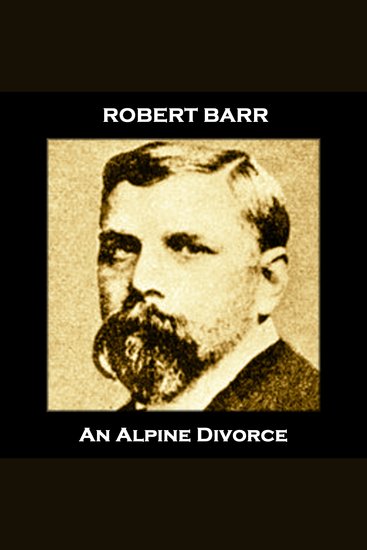
  • Alpine Divorce An - From their pens to your ears genius in every story - cover

    Alpine Divorce An - From their...

    Robert Barr

    • 0
    • 0
    • 0
    Robert Barr was born in Glasgow, Scotland on the 16th September 1849.  Five years later the family emigrated to a farm near Muirkirk in Upper Canada.  
    His early years were uneventful as the family settled into their new lives and Barr began his education. 
    A career path as a teacher opened up for him and, by 1874, he had been appointed as headmaster at the Central School at Windsor.  Concurrently he also wrote travel and humourous articles for magazines.  Within two years their success in the regional periodicals encouraged him to change careers to become a reporter and columnist. 
    In August 1876, at age 27, he married Eva Bennett and they began a family. 
    A half decade later he was the exchange editor of the ‘Free Press’ but decided to relocate to London to establish an English edition and to write fiction, which both met with much success. 
    Over the years he was a prolific writer and in 1892, along with Jerome K Jerome, he established ‘The Idler’ magazine and, just after the turn of the century, became its sole proprietor. 
    Although a number of his crime novels and short stories are parodies on Sherlock Holmes and other best-selling detectives of the time, he also wrote short stories across a whole range of subjects and genres usually with intriguing ideas and many laced with wit and humour. 
    Robert Barr died at his home in Woldingham, Surrey of heart disease on the 21st October 1912.  He was 63.
    Ver libro
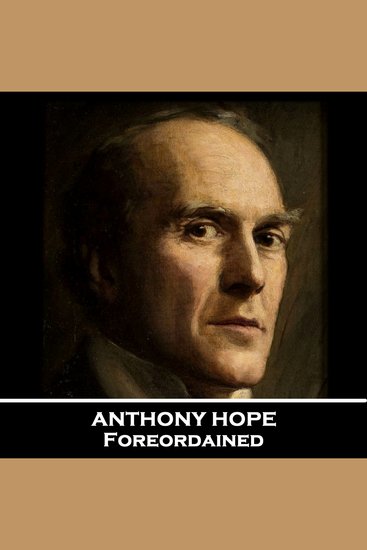
  • Foreordained - From their pens to your ears genius in every story - cover

    Foreordained - From their pens...

    Anthony Hope

    • 0
    • 0
    • 0
    Sir Anthony Hope Hawkins was born on 9th February 1863 in Clapton, London.  
    He was educated at St John's School, Leatherhead, Marlborough College and Balliol College, Oxford.  Hope trained as a lawyer and barrister and was called to the Bar by the Middle Temple in 1887. Despite what was thought to be a promising legal career he had literary ambitions and wrote in his spare time. 
    His early works appeared in various periodicals of the day but for his first book ‘A Man of Mark’ (1890), with no publisher interested, he published with his own resources.  
    More novels and short stories followed, including the mildly successful ‘Mr Witt's Widow’ in 1892. Hope even found time to run as the Liberal candidate for Wycombe in the election that same year but was unsuccessful. 
    His first major literary success came with ‘The Dolly Dialogues’, a collection of previously published magazine pieces followed very quickly by his instant classic, ‘The Prisoner of Zenda’. He now gave up the vestiges of his legal career to pursue writing full-time. 
    Despite never again reaching the same pinnacle of success he was popular and wrote prolifically across novels, plays and of course, short stories though his writing output rapidly diminished after the war. 
    In 1918 he was knighted for his contribution to propaganda efforts during World War I.  
    His short stories are delicate, mannered and often surprising with their wit, humour and interplay of characters who say one thing and usually mean another.  He was very definitely a writer of escapist rather than serious fare but they are no less enjoyable for that. 
    Anthony Hope died of throat cancer on 8th July 1933 at his country home, Heath Farm at Walton-on-the-Hill in Surrey. He was 70.
    Ver libro
  • How In the Hell Did I Get Here? - Forever Changing the Genetic Blueprint - cover

    How In the Hell Did I Get Here?...

    Shannan Mondor

    • 0
    • 0
    • 0
    A riveting and raw story of how one woman overcame alcoholism and mental illness and broke free from the genetic blueprint of addiction that demonized her family for generations. She sets you in a front row seat as she shares her life story and experiences, which show the strength, determination and courage of how she refused to continue with this way of life, and how she would do whatever it took to protect her children from being exposed to a life of addiction which is so normalized and influenced within society. She teaches us about addiction and the consequences of speaking her truth. She fights past fear, loneliness and judgement to end her inner pain that has haunted her for years, and finds inner peace. Along her path she realizes how life is a spiritual journey and there is a lesson to be learned with every experience, personal encounter, and relationship. Most importantly, the lesson is how you have a relationship with yourself. You have the power to change everything, and it all comes from within.
    Ver libro
  • Small-Town Slayings in South Carolina - cover

    Small-Town Slayings in South...

    Rita Y. Shuler

    • 0
    • 0
    • 0
    From the lowcountry through the midlands and into the upstate, criminal cases and mysterious murders cast a dark shadow on small-town South Carolina . . .  


    Ax assault, kidnapping, brutal murder: how could these things happen in a small town? Although regional crimes hardly ever make it to the national circuit, they will always remain with the families and communities of the victims and a part of the area's history. After working with the South Carolina Law Enforcement Division as special agent/forensic photographer for twenty-four years, Rita Shuler has a passion for remembering the victims. In Small-town Slayings, Shuler takes us back in time, showing differences and similarities of crime solving in the past and present and some surprising twists of court proceedings, verdicts and sentences. From an unsolved case that has haunted her for thirty years to a cold case that was solved after fifteen years by advanced DNA technology, Shuler blends her own memories with extensive research, resulting in a fast-paced, factual and fascinating look at crime in South Carolina.
    Ver libro
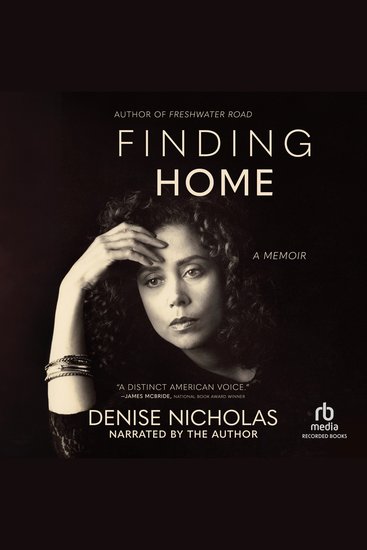
  • Finding Home - A Memoir - cover

    Finding Home - A Memoir

    Denise Nicholas

    • 0
    • 0
    • 0
    “This stirring memoir proves what readers of Nicholas’s debut novel, Freshwater Road, already know: that Nicholas, a pioneer Black actress, is also a writer of deep talent and understated eloquence. This is not your typical Hollywood tell-all, full of ‘I did this, and I did that,’ complete with cheap shots and horrible reveals about the rich and famous with whom she worked. Rather, it’s a long thoughtful moment, in which an artist peers into the looking glass and reflects on her life in a manner that allows us to see every corner of every room she’s ever been in—and every corner of every room we’ve ever been in. Because her story is ours. Nicholas is a distinct American voice. Her inspiring story, written with deep humility and refreshing honesty, is further proof that women will one day save this country. And I’m a witness.” —James McBride, National Book Award winner 
     
    A poignant, revelatory memoir from acclaimed novelist and actor Denise Nicholas that offers an episodic exploration of her multifaceted life, delving intimately into themes of artistic self-invention, race, and grief.  
     
    Long before writing her acclaimed novel Freshwater Road, or her career as a path-breaking TV and film star, Denise Nicholas was a middle-class Black girl growing up in 1950s Detroit, struggling to decipher her family’s profound secrets. She loved Detroit’s vibrant culture despite the harsh realities of its racial segregation, which deeply influenced her perspective on identity. In her early twenties, she dropped out of the University of Michigan to tour the Deep South with the Free Southern Theater at the height of the Civil Rights Movement, a path that ultimately ignited her lifelong commitment to social justice and activism. A few short years later she would launch from stage work to meteoric national fame as a series lead on the groundbreaking ABC-TV show Room 222, a role that earned her three consecutive Golden Globe nominations. 
     
    With eloquence, vulnerability, and resolve, Nicholas mines her six-decade journey through TV and film stardom, the complexities of her three marriages, and her reconstituting her creative life to become a celebrated novelist, reflecting on the personal, professional, and societal pressures that buffeted her throughout. Constructed of episodic reflections from both personal and professional high points and low points of her life, Nicholas navigates the intersections of love and identity, exploring how her experiences in Hollywood shaped her understanding of success, intimacy, and commitment. Her narrative is rich with anecdotes from her career in Hollywood, as an actor and, later, a successful screenwriter for television and eventually a novelist, providing a backdrop to the struggles and achievements that marked her path. She outspokenly discusses the challenges she faced as a trailblazing actress of color, shedding light on the systemic barriers and biases within the entertainment industry.  
     
    But at the deepest level, this memoir is a heartfelt exploration of grief, as Nicholas recounts the profound losses—including the unsolved, targeted slaying of her sister, the telling of which occupies the center of her story—that have shaped her.  Her reflections on mourning and resilience paint a vivid, moving portrait of how to journey through healing to new dimensions of self-discovery. Through her powerful, stylish, and evocative storytelling, Nicholas not only chronicles her own remarkable life but also provides a resonant narrative of what it means to live, work, and succeed as a Black woman in America over the past half-century.
    Ver libro

  • The Long Surrender - cover

    The Long Surrender

    Burke Davis

    • 0
    • 0
    • 0
    In April 1865, Richmond fell to the Union army and Gen. Robert E. Lee surrendered to his Northern counterpart, Ulysses S. Grant, at the Appomattox Court House. But the Civil War was far from over. 


    Determined to keep Confederate dreams of secession alive, President Jefferson Davis and his cabinet fled the burning capital city. With Union troops in pursuit, the fugitives rallied loyalists across the South and made plans to escape to Cuba. In the aftermath of President Abraham Lincoln's assassination, a $100,000 bounty was placed on Davis's head. Finally captured in Irwinville, Georgia, the former US senator and secretary of war became a prisoner of the American government. The harsh treatment he received would inflame tensions between North and South for years to come. 


    Meticulously researched and brilliantly told, The Long Surrender brings these dramatic events to vivid, unforgettable life and paints a fascinating portrait of Davis, one of history's most enigmatic figures. By shining a light on this forgotten chapter of the Civil War, bestselling author Burke Davis examines the lasting impact of America's bloodiest conflict on the national character.
    Ver libro