¡Acompáñanos a viajar por el mundo de los libros!
Añadir este libro a la estantería
Grey
Escribe un nuevo comentario Default profile 50px
Grey
Suscríbete para leer el libro completo o lee las primeras páginas gratis.
All characters reduced
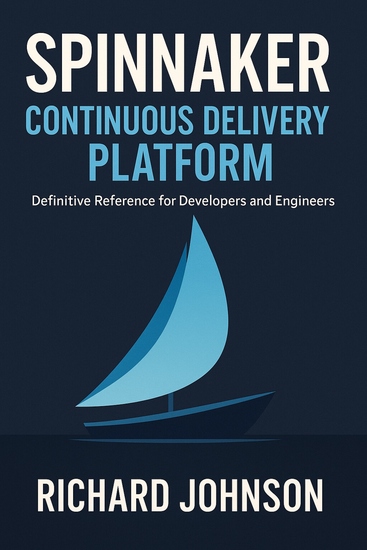
Spinnaker Continuous Delivery Platform - Definitive Reference for Developers and Engineers - cover

Spinnaker Continuous Delivery Platform - Definitive Reference for Developers and Engineers

Richard Johnson

Editorial: HiTeX Press

  • 0
  • 0
  • 0

Sinopsis

"Spinnaker Continuous Delivery Platform"Unlock the full power of continuous software delivery with “Spinnaker Continuous Delivery Platform,” a comprehensive guide to mastering Spinnaker as the backbone of modern DevOps workflows. Structured to serve both newcomers and seasoned professionals, this book begins by grounding readers in the foundational concepts of continuous delivery, deployment automation, and the architectural principles that underpin Spinnaker’s evolution within the CI/CD landscape. Readers are expertly guided through its core components, microservices architecture, and essential terminology, providing a strong basis for understanding subsequent advanced topics and real-world application.Delving deep into Spinnaker's architecture, the book explores each microservice—including Orca, Clouddriver, Front50, and others—revealing the intricate orchestration and communication patterns that enable resilient, scalable, and secure deployments across diverse cloud environments. Practical chapters walk through installing, configuring, and operating Spinnaker in a variety of deployment models, managing upgrades and disaster recovery, and integrating external tools like Jenkins, GitHub Actions, artifact repositories, and secret management systems. The coverage extends to sophisticated multi-cloud delivery strategies, advanced deployment patterns such as blue/green and canary, and the implementation of robust pipeline logic through parameterization and policy enforcement.Security, governance, and operational excellence form key pillars in this text, with focused sections on authentication, compliance, auditing, and multi-tenancy, ensuring that reader organizations can meet enterprise-grade requirements. The book closes by looking ahead to emerging trends—progressive delivery, policy-as-code, machine learning integrations, and deployments to edge and IoT—and by presenting detailed case studies from complex operational environments. “Spinnaker Continuous Delivery Platform” stands as an indispensable resource for teams seeking not only to adopt Spinnaker, but also to advance the state of their software delivery and digital transformation initiatives.
Disponible desde: 30/05/2025.
Longitud de impresión: 250 páginas.

Otros libros que te pueden interesar

  • Disneyland and the Rise of Automation - How Technology Created the Happiest Place on Earth - cover

    Disneyland and the Rise of...

    Roland Betancourt

    • 0
    • 0
    • 0
    A history of the engineering marvels behind one of America's most innovative and beloved entertainment experiencesWhen Disneyland opened to the public in 1955, it demystified the hidden world of factory automation through its extraordinary new attractions. In this fascinating book, Roland Betancourt tells the story of how the visionary engineers and designers at Disney transformed the technologies of the postwar assembly line into an entertainment experience unlike anything the world had ever seen.Disneyland and the Rise of Automation traces the origins and evolution of these technical innovations during the theme park's first three decades in operation, exploring how engineers reimagined the systems and machines of industrial manufacturing and the military. The magnetic tape used to test ballistic missiles was repurposed to animate the talking macaws in the Enchanted Tiki Room. Programmable Logic Controllers, widely used on automotive assembly lines, brought to life the spectacular rides of the Matterhorn Bobsleds and Space Mountain. Betancourt shows how these and other attractions helped to allay fears about automation and job displacement in 1950s America. Along the way, he situates Disneyland's remarkable creations within a broader history of the technologies that increasingly order and construct the world around us, from the Fordist factory to artificial intelligence.Essential listening for anyone interested in engineering, corporate histories, or popular culture, Disneyland and the Rise of Automation invites us to consider how technology and the logic of automation become integrated into our lives through entertainment.
    Ver libro
  • Wild Brains - What Animals Can Teach Us About Being Well - cover

    Wild Brains - What Animals Can...

    Kelly Lambert

    • 0
    • 0
    • 0
    Despite a century of impressive advances in neuroscience, few true breakthroughs in mental health treatment have emerged. At a time of escalating mental health challenges across the globe, what have we missed by focusing on rats and mice in brain research and neglecting other species with equally complex and adaptive brains? In Wild Brains, Kelly Lambert invites listeners on a captivating journey to rethink traditional animal research models, venturing beyond the confines of the laboratory to explore the extraordinary promise of studying animal brains in the wild.With Lambert as your guide, you'll discover neural clues that help us understand the mischievous raccoon, the shape-shifting octopus, the family-focused owl monkey, the industrious beaver, and elephants that engage in deceptive behavior. Can naked mole rats unlock secrets to aging well? Could the play behaviors of animals offer mood-boosting strategies for humans? Can prairie voles help us decode the neural roots of human connection? Lambert draws on historical insights as well as her own groundbreaking research—from teaching rats to drive tiny cars to testing the problem-solving skills of mouse lemurs in Madagascar—to reveal what wild brains can teach us about emotional resilience, stress regulation, social bonding, and longevity.
    Ver libro
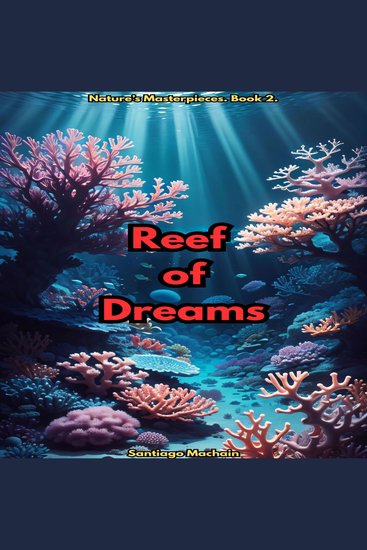
  • Reef of Dreams - cover

    Reef of Dreams

    Santiago Machain

    • 0
    • 0
    • 0
    This audiobook is narrated by an AI Voice. Reef of Dreams is an immersive exploration of the world’s largest coral reef system, weaving together its natural wonders, cultural significance, scientific discoveries, and the urgent challenges it faces. Through engaging chapters, the book delves into the reef’s geography, biodiversity, Indigenous connections, and the impacts of tourism, climate change, and industry. It highlights the innovative science, community efforts, and restoration projects shaping the reef’s future, while celebrating the art, festivals, and stories that define its vibrant culture. Drawing on voices from scientists, traditional owners, artists, and local communities, this book offers a comprehensive and humanized portrait of the Great Barrier Reef—its beauty, fragility, and enduring lessons for the world.
    Ver libro
  • Net Zero: How We Stop Causing Climate Change - cover

    Net Zero: How We Stop Causing...

    Dieter Helm

    • 0
    • 0
    • 0
    What can we really do about the climate emergency?  
      
    The inconvenient truth is that we are causing the climate crisis with our carbon intensive lifestyles and that fixing – or even just slowing – it will affect all of us. But it can be done. 
    In Net Zero the economist Professor Dieter Helm addresses the action we would all need to take, whether personal, local, national or global, if we really wanted to stop causing climate change. 
    Net Zero is Professor Dieter Helm’s measured, balanced view of how we stop causing climate change by adopting a net zero strategy of reducing carbon emissions and increasing carbon absorption. It is a rational look at why the past 30 years efforts has failed and why and how the next 30 years can succeed. It is a vital book for anyone who hears the clamour of Extinction Rebellion and other ecological activists, but wonders what they can actually do. 
    Helm's Net Zero is a comprehensive exploration of the climate crisis, covering everything from the science of global warming to the political and social implications of environmental conservation. It's a must-read for anyone interested in understanding the role of technology, agriculture, and public administration in achieving a net zero future. 
    For fans of Isabella Tree (Wilding), Vaclav Smil (Invention and Innovation), Bill Gates (Source Code), Linda J. Lear (Under the Sea Wind), and Paul Jepson (Conservation).
    Ver libro
  • Mining - A Very Short Introduction - cover

    Mining - A Very Short Introduction

    Karen A. Hudson-Edwards, Hannah...

    • 0
    • 0
    • 0
    'If it can't be grown, it must be mined.' This fundamental truth underscores the global need for mining, and the reason why it has been carried out since prehistoric times. To supply the raw materials for buildings, industrial goods, vehicles, technology, and even art, minerals and rock must be removed from the Earth. 'Mining' describes this removal, but also covers the ore deposit exploration, developments of ore deposit models (geological, engineering and mineral economics-focused) and post-removal processing to extract the economically valuable materials, environmental protection, and social and corporate responsibility, in a construct known as the 'Mining Value Chain.' Mining continues to evolve due to the new emphasis on extracting a wider range of materials than ever before for green technologies, on using novel robotic and earth observation technology in exploration and mining, and on integrating environmental and social protection measures throughout the Mining Value Chain. Today's paradigms are 'sustainable' and 'responsible mining', mining that is profitable but protects the environment, human rights, and health. Mining: A Very Short Introduction covers this information and looks to the future to see where mining ideally will go.
    Ver libro
  • The Nature Book - cover

    The Nature Book

    Tom Comitta

    • 0
    • 0
    • 0
    Part sweeping evocation of Earth's rhythms, part literary archive, part post-human novel, The Nature Book collages descriptions of the natural world into a singular symphonic paean to the planet. 


    What does our nature writing say about us, and more urgently, what would it say without us? Tom Comitta investigates these questions and more in The Nature Book, a "literary supercut" that arranges writing about the natural world from three hundred works of fiction into a provocative re-envisioning of the novel. With fiction's traditional background of flora and fauna brought to the fore, people and their structures disappear, giving center stage to animals, landforms, and weather patterns—honored in their own right rather than for their ambient role in human drama. The Nature Book challenges the confines of anthropocentrism with sublime artistic vision, traversing mountains, forests, oceans, and space to shift our attention toward the magnificently complex and interconnected world around us.
    Ver libro