Junte-se a nós em uma viagem ao mundo dos livros!
Adicionar este livro à prateleira
Grey
Deixe um novo comentário Default profile 50px
Grey
Assine para ler o livro completo ou leia as primeiras páginas de graça!
All characters reduced
Historical Record of the Sixth or Inniskilling Regiment of Dragoons - Containing an Account of the Formation of the Regiment in 1689 and of Its Subsequent Services to 1846 - cover
LER

Historical Record of the Sixth or Inniskilling Regiment of Dragoons - Containing an Account of the Formation of the Regiment in 1689 and of Its Subsequent Services to 1846

Richard Cannon

Editora: DigiCat

  • 0
  • 0
  • 0

Sinopse

Richard Cannon's "Historical Record of the Sixth, or Inniskilling Regiment of Dragoons" stands as a scholarly yet accessible examination of one of Britain's distinguished cavalry regiments. Through meticulous research and clear prose, Cannon presents a chronological account of the regiment's formation, notable battles, and pivotal figures throughout its storied history. His narrative style combines anecdotal evidence with formal military records, creating a rich tapestry that contextualizes the regiment's contributions within the greater scope of British military history. This work serves not only as a record of martial exploits but also as reflection on the social dynamics of military life during its various campaigns. Richard Cannon was a noted military historian and genealogist, whose own experiences within the military likely informed his insights into the regimental life. His deep passion for documenting military heritage is evident in this work, reflecting a commitment to preserving the legacy of those who served. Cannon's earlier works, combined with his background in research and history, enable him to deftly blend narrative and analysis in a manner that appeals to both scholars and enthusiasts alike. "Historical Record of the Sixth, or Inniskilling Regiment of Dragoons" is highly recommended for history buffs, military scholars, and anyone interested in the intricacies of cavalry operations. Cannon's engaging narrative and rich detail create an indispensable resource that offers both education and entertainment, making it a worthy addition to the library of anyone devoted to understanding the complexities of British military history.
Disponível desde: 16/09/2022.
Comprimento de impressão: 73 páginas.

Outros livros que poderiam interessá-lo

  • The Princess and the Pea - cover

    The Princess and the Pea

    Hans Christian Andersen, Kari James

    • 0
    • 0
    • 0
    Beautiful music and fun sound-effects help tell the classic tale of “The Princess and the Pea.” Prince Fastidious travels the world to find his perfect princess. But something is not quite right about any of them. They either talk too much, or not at all. Some are too old for him, or too young. Others are spoiled or have too many noisy, little dogs. Find out what happens when Princess Rose accidentally comes to the castle at night because of a fierce storm. How does she prove to the Queen that she's a real princess? A happy ending adds interest to this fairy tale and encourages a lifelong love of great storytelling.
    Ver livro
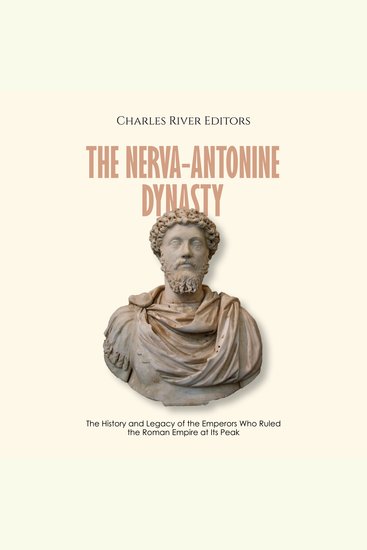
  • Nerva-Antonine Dynasty The: The History and Legacy of the Emperors Who Ruled the Roman Empire at Its Peak - cover

    Nerva-Antonine Dynasty The: The...

    Editors Charles River

    • 0
    • 0
    • 0
    “The Five Good Emperors,” a reference to the five emperors who ruled the Roman Empire between 96 and 180 CE (Nerva, Trajan, Hadrian, Antoninus Pius, and Marcus Aurelius), was a term first coined by Machiavelli and later adopted and popularized by historian Edward Gibbon, who said that under these men, the Roman Empire “was governed by absolute power under the guidance of wisdom and virtue.”  
    	This period of 84 years is generally regarded as the high point of the Roman Empire, at least after Augustus, but what is uncertain and a matter of ongoing debate is whether the five emperors were personally responsible for the situation and the accompanying prosperity enjoyed throughout the empire at the time or if they were simply the beneficiaries of the Pax Romana, inaugurated by Augustus in the early part of the 1st century CE. In other words, historians have wondered whether anyone in power during those years would have enjoyed the same rewards.  
    	The description of these rulers as “good” is also a matter of interpretation, with some scholars suggesting they were only “good” in comparison to the preceding emperor (Domitian) and the emperor who followed Marcus Aurelius (Commodus). Both of them were horrible rulers in every aspect, making their near contemporaries look all the better.  
    	Regardless, it is clear that the era of the Five Good Emperors was one of unparalleled success and wealth, and the reasons Rome reached its zenith at this time are worthy of scrutiny. Perhaps most noteworthy is that none of these five emperors were blood relatives - while the final two are often referred to as the Antonines, they were not, in fact, related except by adoption, a practice that may in itself provide at least part of the answer to the question as to why this particular period was so magnificent.
    Ver livro
  • Embodied Self Awakening - Somatic Practices for Trauma Healing and Spiritual Evolution - cover

    Embodied Self Awakening -...

    Nityda Gessel

    • 0
    • 0
    • 0
    An offering to be with, and to turn toward, the feelings from which we instinctively recoil. 


    We have learned how to suppress our pain and deny its presence, but when we fight against our internal turmoil, glimmers of peace are short-lived. Rejecting our suffering is not a sustainable solution because trauma is held in the body. In this book, Nityda Gessel invites listeners on a journey toward lasting freedom, with insights and experiential practices that marry the wisdom of Buddhist psychology, yogic teachings, and Indigenous understanding with somatic psychotherapy and neuroscience. 


    When we heal, our actions and attitudes are not hijacked by our nervous systems as easily. We begin to feel more comfortable in our bodies; more at peace, awake, and free. With Gessel's invitation, listeners will learn to look out into the world, and see more than their own trauma reflected back.
    Ver livro
  • Portuguese Empire and the Americas The: The History and Legacy of Portugal’s Exploration and Colonization in the New World - cover

    Portuguese Empire and the...

    Editors Charles River

    • 0
    • 0
    • 0
    By the start of the 15th century, ships were now much larger and able to support long distance travel with a minimum number of crew aboard. With that, the Portuguese started exploring the west coast of Africa and the Atlantic under orders from Prince Henry the Navigator. At this point, Europeans had not yet been capable of navigating completely around Africa since the ships being built were not yet fully capable of being able to sail very far from the coast and navigation in open waters was difficult, but the Portuguese continued pushing down the western African coast looking for ways to bypass the Ottomans and Muslims of Africa who had been making overland trade routes difficult. In 1451, Prince Henry the Navigator helped fund and develop a new type of ship, the caravel, that featured triangular lateen sails and would be able to travel in the open ocean and sail against the wind. In 1488, Bartholomew Diaz rounded the southern tip of Africa, named the Cape of Good Hope by King John of Portugal, and entered the Indian Ocean from the Atlantic.  
    	One explorer, Christopher Columbus, sought funding from the Portuguese to search for a passage to Asia by sailing westwards, but he was rejected. At this time in the late 15th century, Portugal’s domination of the western African sea routes prompted the neighboring Crown of Castile and the Catholic monarchs in modern Spain to search for an alternative route to south and east Asia (termed Indies), so they provided Columbus with the funding he required. Ultimately, Columbus discovered the Americas in 1492, and European settlements would soon follow. At the same time, when it became clear Columbus hadn’t landed in Asia, it was understood by everyone that this was not necessarily the route the Europeans were searching for, the Portuguese continued to send explorers around the world in several directions in an attempt to reach the East Indies. 
    Ver livro
  • Habsburgs The: An Enthralling Overview of One of The Most Important Dynasties in European History - cover

    Habsburgs The: An Enthralling...

    Billy Wellman

    • 0
    • 0
    • 0
    The Habsburgs: A Dynastic Journey through European History 
    If you want to witness the rise and fall of a dynasty that shaped Europe without the dryness of textbooks, then keep reading... 
    Why This Audiobook? 
    Delve into the sprawling saga of the Habsburg dynasty, whose influence was felt across Europe for over six centuries. From their humble beginnings to their dramatic decline during World War I, this audiobook provides a captivating look at the rulers who sat at the heart of European power and intrigue. 
    What Sets This Audiobook Apart:Cultural Influence: Explore how the Habsburgs were patrons of the arts, turning Vienna into a cultural powerhouse during the Renaissance.Diplomatic Mastery: Unravel the web of strategic marriages that extended their power across Europe, ensuring their dominance through shrewd alliances.Military and Religious Might: From the battlefields of the Thirty Years’ War to their staunch defense of Catholicism, discover the dual pillars of their power.Dynastic Marriages: Understand why matrimony was not merely a matter of the heart but a cornerstone of their political strategy.Global Empire: Marvel at the vast Habsburg realm, from the Americas to the Far East, illustrating their unprecedented influence. 
    Why You Can't Miss This Journey: 
    Through engaging narrative and vivid detail, this audiobook doesn’t just recount facts but brings the personalities and dramatic events of the Habsburg era to life. Witness the complex interplay of relationships and rivalries that dictated the political landscape of an entire continent. 
    Discover the legacy of one of history’s most formidable and influential dynasties. Add this enthralling audiobook to your collection and unlock the secrets of the Habsburgs.
    Ver livro
  • Constantinople - History of the Byzantine Empire’s Gigantic Capital - cover

    Constantinople - History of the...

    Kelly Mass

    • 0
    • 0
    • 0
    Constantinople, a city that witnessed the rise and fall of empires, served as the capital for three significant civilizations: the Roman/Byzantine Empire (330–1204 and 1261–1453), the Latin Empire (1204–1261), and the Ottoman Empire (1453–1922). Following the Turkish War of Independence, the capital was moved to Ankara, marking a new chapter in Turkish history. In 1930, the city was officially renamed Istanbul, which remains the Republic of Turkey’s largest city and financial center today. It is also the largest city in Europe. 
    In 324 AD, Emperor Constantine the Great made the fateful decision to transform the old city of Byzantium into a grand new capital, naming it "New Rome" and consecrating it on May 11, 330 AD. This strategic move solidified the city’s place in history, becoming the heart of the Eastern Roman Empire, later known as the Byzantine Empire. 
    Constantinople became a symbol of Orthodox Christianity, often referred to as the "cradle of Orthodox Christian civilization." The city's religious and cultural significance cannot be overstated; it was home to some of the most iconic architectural and religious sites in the Christian world. From the mid-fifth to the early-thirteenth century, Constantinople was Europe's largest, most affluent metropolis, a center of commerce, culture, and intellectual activity.
    Ver livro