Junte-se a nós em uma viagem ao mundo dos livros!
Adicionar este livro à prateleira
Grey
Deixe um novo comentário Default profile 50px
Grey
Assine para ler o livro completo ou leia as primeiras páginas de graça!
All characters reduced
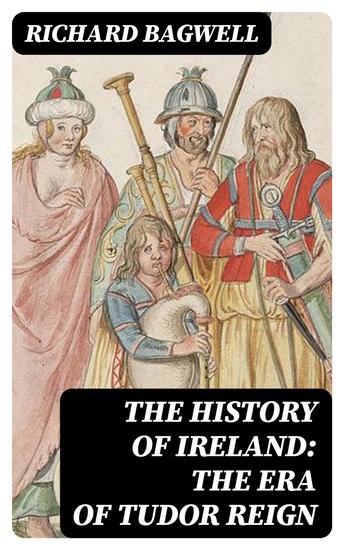
The History of Ireland: The Era of Tudor Reign - Enriched edition - cover
LER

The History of Ireland: The Era of Tudor Reign - Enriched edition

Richard Bagwell

Editora: DigiCat

  • 0
  • 0
  • 0

Sinopse

Richard Bagwell's "The History of Ireland: The Era of Tudor Reign" is an exhaustive scholarly exploration of a pivotal period in Irish history, marked by the complex interplay of political power, cultural transformation, and religious strife. Bagwell employs a meticulous narrative style, blending detailed primary research with analytical insights, thereby situating the Tudor reign within the broader contours of Irish historiography. The work resonates with the literary tradition of historical writing, characterized by rich descriptions and a keen sense of place, illuminating how Tudor policies irrevocably shaped Ireland's socio-political landscape during the 16th century. Bagwell, a distinguished historian and prominent figure in Irish studies, draws upon his extensive background in Anglo-Irish relations and his academic expertise in early modern history. His works underscore his commitment to unveiling the nuances of Ireland's complex past, and his passion for the subject is evident in the depth of his research and the clarity of his prose. Bagwell's experiences as an Irish nationalist and his scholarly pursuits coalesce in this work, providing readers with a critical understanding of the implications of Tudor rule. "The History of Ireland: The Era of Tudor Reign" is an indispensable resource for scholars, students, and history enthusiasts alike. Its comprehensive examination not only enriches the understanding of Tudor Ireland but also invites readers to reflect on the enduring impacts of this era across centuries. This book is essential for anyone seeking to navigate the complexities of Irish history in its formative years.

In this enriched edition, we have carefully created added value for your reading experience:
- A succinct Introduction situates the work's timeless appeal and themes.
- The Synopsis outlines the central plot, highlighting key developments without spoiling critical twists.
- A detailed Historical Context immerses you in the era's events and influences that shaped the writing.
- A thorough Analysis dissects symbols, motifs, and character arcs to unearth underlying meanings.
- Reflection questions prompt you to engage personally with the work's messages, connecting them to modern life.
- Hand‐picked Memorable Quotes shine a spotlight on moments of literary brilliance.
- Interactive footnotes clarify unusual references, historical allusions, and archaic phrases for an effortless, more informed read.
Disponível desde: 13/11/2022.
Comprimento de impressão: 1224 páginas.
Outros livros que poderiam interessá-lo

  • The Urban Experience - Exploring City Life and Culture - cover

    The Urban Experience - Exploring...

    Lyric Vale

    • 0
    • 0
    • 0
    Urban life is a dynamic tapestry woven from the threads of culture, innovation, and diversity. Cities, as epicenters of human activity, have always held a magnetic allure, drawing people in with the promise of opportunity, connectivity, and growth. From the ancient cities of Mesopotamia to the sprawling metropolises of today, urban centers have evolved into places where human ambition and creativity flourish. Understanding the essence of urban life requires a deep dive into the social, cultural, and economic forces that shape these vibrant hubs of civilization. 
    At their core, cities are defined by their density and diversity. They bring together individuals from all walks of life, creating a melting pot of cultures, languages, and traditions. This diversity fosters a unique cultural ecosystem where ideas intersect, and innovation thrives. The exchange of knowledge, whether through bustling markets, collaborative workplaces, or artistic endeavors, is one of the defining characteristics of urban living. Cities are not just physical spaces; they are living entities that embody the collective energy of their inhabitants. 
    Urban life is also deeply intertwined with the physical structure of the city. Streets, buildings, and public spaces are more than mere infrastructure—they serve as stages for human interaction and expression. Urban planning and architecture play crucial roles in shaping the experience of city life, influencing everything from how people move and interact to how they feel within their environment. Well-designed urban spaces can foster community, encourage sustainability, and enhance the overall quality of life for city dwellers.
    Ver livro
  • The Life of Ancient Romans - cover

    The Life of Ancient Romans

    Francis Caputo

    • 0
    • 0
    • 0
    In 27 BC, when Augustus turned into the first sovereign of the Roman Empire, introducing the supreme period, the country he governed was more than 700 years of age. Rome's rulers had controlled an immense region that stretched out into northern Europe, parts of Africa, and Asia for quite a long time. The city of Rome was the most delightful and refined on the planet. It was filled with parks and gardens, marble curves and sculptures, lavish royal residences, immense amphitheaters, and rambling colleges. All were connected by an unpredictable organization of streets furthermore water-bearing reservoir conduits. Rome was a focal point of world culture as the capital of the most impressive country on Earth. By AD 98, majestic Rome arrived at its most extreme size, becoming the most significant realm ever. The vast domain contained around 60 million individuals, or around one-fourth of Earth's populace. Romans, who spoke Latin, alluded to their properties as the imperium sine fine, or "domain without end." The realm extended through the advanced countries of Spain, France, England, Netherlands, and Germany. It incorporated quite a bit of eastern Europe, including Slovenia, Romania, Armenia, and what's more, Croatia. The domain without end spread across North Africa from Morocco to Egypt and east into Turkey, Syria, and Iraq. Every one of the regions was joined under the Roman principle, wherever the official language was Latin. All over the place, installments were made in sestertii (Roman brass coins). All over, there was just a single law: Roman law.Most Roman subjects lived in separated ancestral networks where life had changed minimally in millennia. Provincial Romans chased, fished, developed small harvests, and tended domesticated animals. During the royal period, London and Paris were minimal more than a few military stations with less than 8,000 individuals. A considerable lot of the inhabitants were Roman officers called legionnaires. In any case, the realm a
    Ver livro
  • Hitmen - The Mafia Drugs and the East Harlem Purple Gang - cover

    Hitmen - The Mafia Drugs and the...

    Scott M. Deitche

    • 0
    • 0
    • 0
    Scott M. Deitche presents an in-depth exposé on East Harlem's notorious Purple Gang whose murderous exploits became a media obsession and Mafia lynchpin. 


    In the late 1970s, a string of seemingly unconnected murders had Harlem police and federal authorities at their wits' end until they realized several commonalities. The victims were all either Mafia members or potential witnesses of Mafia activity and they'd all been shot from .22 pistols traced back to a single private sale in Florida. From these details, the FBI and police were able to build a profile of a rogue sect of Mafia hitmen known as the East Harlem Purple Gang. 


    Starting on the fringes of Mafia families, the Purple Gang members became indispensable and installed members in the highest ranks of the Genovese, Bonanno, and Lucchese families. Often serving as freelance hitmen, kidnappers, and drug traffickers, the Purple Gang's exploits quickly crossed into mythology as media outlets scrambled to keep up with new murders and the law's crusade to bring the gang members to justice. Sifting through the mystery and mythos, author Scott M. Deitche brings readers into Harlem's gritty streets to experience the Purple Gang's reign of terror, the investigators who tried to bring them down, and the gang members who either suffered violent ends or are still at large today.
    Ver livro
  • The Courage Gap - 5 Steps to Braver Action - cover

    The Courage Gap - 5 Steps to...

    PhD Margie Warrell

    • 0
    • 0
    • 0
    Do you sometimes hold back when you know you need to speak up or step forward? 


    Fear creates the gap. Courage closes it. 


    This powerful guide from the bestselling author of You've Got This! cuts through the hype to connect the 'why' of courage to the 'how' of courage. Drawing on cutting-edge research woven together with stories that compel head and heart, The Courage Gap will help you bridge the think/do gap between what you've been doing and what you can do; between where you are and where you want to be—in your career, relationships, leadership, and life. 


    Distilling theory and hard-won wisdom spanning from Margie's childhood in rural Australia to her decades of living around the world and coaching 'insecure overachievers' in Fortune 500 organizations, Margie shares a powerful five-step roadmap to reprogram the self-protective patterns of thought and behavior that sabotage success to bring your bravest self to your biggest challenges and boldest vision. 


    At a time when courage seems in short supply, in a culture continually stoking insecurity and anxiety, this book will transform your deepest fears into a catalyst for your highest growth and the greatest good.
    Ver livro
  • Farewell Address Republican National Convention - cover

    Farewell Address Republican...

    Ronald Reagan

    • 0
    • 0
    • 0
    On August 15, 1988, in the Louisiana Superdome, Reagan delivered a message for economic freedom. We transformed our government from one that was consuming our prosperity into one that would get out of the way of those who create prosperity.  
    Reagan notes the “inflated rhetoric of our friends in Atlanta last month. But then, inflation is their specialty.” As John Adams said, “Facts are stubborn things.”  
    When we came to Washington, we suffered the worst back-to-back years of inflation in 60 years, interest rates over 21 percent, declining productivity, weekly wages, and family income, the highest tax bill in history, and a 21 percent misery index. 
    The Soviet Union invaded Afghanistan. Iran stormed our embassy and took Americans hostage. The world questioned our resolve. 
    We responded by cutting taxes and creating over 17 million jobs. Inflation is below 4 percent and interest rates cut in half. “I noticed they don’t call it Reaganomics anymore.”  
    We rebuilt our armed forces, and liberated Grenada. During our administration “not 1 inch of ground has fallen to the Communists.” We're working on the Strategic Defense Initiative to protect ourselves and our allies against nuclear terror. 
    Liberal elites resisted our defense buildup, our tax cuts, cutting fat out of government, and appointing judges committed to the Constitution. I’ve supported a balanced budget amendment and line-item veto, and every year the liberals said no.  
    We need Republican majorities in both houses. America needs George Bush. “Go out there and win one for the Gipper.” 
    God put this land between two great oceans to be found by people with a love of freedom, freedom of association, of worship, of hope and opportunity. Here, it’s sunrise every day with new opportunities and dreams to build. 
    Audio recording courtesy of the Ronald Reagan Presidential Library. 
    AspenLeafMedia.com
    Ver livro
  • Is There Energy Not Based On Idea Or Ideology? - Saanen 1974 - Public Talk 1 - cover

    Is There Energy Not Based On...

    Jiddu Krishnamurti

    • 0
    • 0
    • 0
    "Is there energy not based on idea or ideology? - 16 July 1974  
    • Why is thought divisive? 
    • The desire to change in a particular direction gives an energy that is divisive. 
    • Will you free the mind taking time, through analysis, or can you look totally and 
    therefore be totally free? 
    • Does choiceless rejection of the false give a different kind of energy? 
    • Does a foundation give me direction or does it bring confusion? 
    • Is the operation of intelligence insight? 
    Questions from the audience followed the talk."
    Ver livro