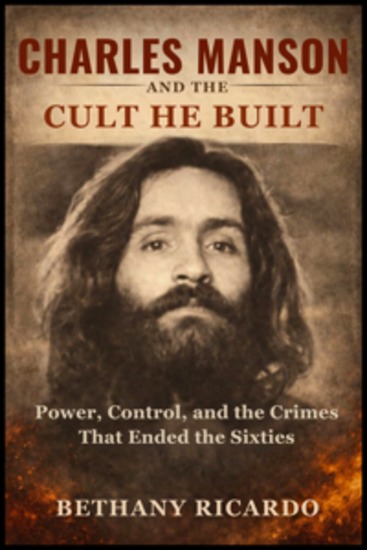
Charles Manson and the Cult He Built - Power Control and the Crimes That Ended the Sixties
Ricardo Bethany
Editorial: Bethany Ricardo
Sinopsis
In the late 1960s, a small group of young followers carried out a series of murders that shocked the United States and permanently altered how the public understood violence, influence, and responsibility. The man who orchestrated it never wielded the weapon himself—yet his control was absolute.Charles Manson and the Cult He Built is a detailed true crime examination of how manipulation, isolation, and psychological pressure were used to turn belief into violence. This book moves beyond the familiar headlines to explain how a marginal figure with no formal power convinced others to kill in his name—and why they obeyed.Rather than focusing on notoriety, the book analyzes the methods used to establish dominance: emotional dependency, enforced loyalty, distorted ideology, and the gradual erosion of individual identity. Drawing from court records, historical reporting, and documented testimony, it reconstructs how control was maintained and how responsibility was distributed among those involved.Readers will learn:how followers were recruited, conditioned, and isolatedhow language and belief replaced independent judgmentwhy violence was framed as duty rather than crimehow the legal system addressed accountability without direct actionhow the case reshaped public understanding of organized coercionThe book also examines the trial and its aftermath, showing how influence continued even when physical freedom was gone. It explores why this case marked a turning point in how cult behavior is identified and prosecuted, and why similar patterns continue to appear in modern forms of manipulation.This is not a sensational retelling. It is a factual analysis of how control operates, how ordinary people can be led into extreme acts, and why the consequences of unchecked influence extend far beyond one moment in history.For readers interested in serious true crime, criminal psychology, and the mechanics of power, this book provides clarity where myths often replace facts.Get your copy today to understand how influence becomes violence—and why this case still matters.
Disponible desde: 06/02/2026.