¡Acompáñanos a viajar por el mundo de los libros!
Añadir este libro a la estantería
Grey
Escribe un nuevo comentario Default profile 50px
Grey
Suscríbete para leer el libro completo o lee las primeras páginas gratis.
All characters reduced
Samuel Takes a Break - in Male Dungeon No 5 After a Long but Generally Successful Day of Tours - cover

Samuel Takes a Break - in Male Dungeon No 5 After a Long but Generally Successful Day of Tours

Rhianna Ilube

Editorial: Nick Hern Books

  • 0
  • 0
  • 0

Sinopsis

'Every one of us will be here for a different particular reason. I am here because I am passionate about history.'
It is 2019, the Year of Return, marking four hundred years since the first enslaved Africans arrived in America. We are at a slave castle in Ghana. Samuel is our tour guide. It's his job to give tourists a really, really authentic experience of the castle's dark history, and to do it all with a smile. Thank you, Samuel!
The tourists are Samuel's guests, and they're on a journey of self-discovery. But they're here, standing on soil, blood and bones, asking for a selfie. They want to buy trinkets from the gift shop. Samuel would never want to hurt the tourists. And they would never want to hurt him.
Rhianna Ilube's Samuel Takes a Break… in Male Dungeon No. 5 After a Long but Generally Successful Day of Tours is a genre-blending play about colonialism, identity and the attempt to preserve the past. It was shortlisted for the Women's Prize for Playwriting and the Verity Bargate Award, and was a finalist for the 2024 Susan Smith Blackburn Prize. It premiered at The Yard Theatre, London, in 2024, directed by Anthony Simpson-Pike.
Disponible desde: 15/02/2024.
Longitud de impresión: 112 páginas.

Otros libros que te pueden interesar

  • The Milk Hours - Poems - cover

    The Milk Hours - Poems

    John James

    • 0
    • 0
    • 0
    Winner of the Max Ritvo Poetry Prize, The Milk Hours is an elegant debut that searches widely to ask what it means to exist in a state of loss. 
    “We lived overlooking the walls overlooking the cemetery.” So begins the title poem of this collection, whose recursive temporality is filled with living, grieving things, punctuated by an unseen world of roots, bodies, and concealed histories. Like a cemetery, too, The Milk Hours sets unlikely neighbors alongside each other: Hegel and Murakami, Melville and the Persian astronomer al-Sufi, enacting a transhistorical poetics even as it brims with intimacy. These are poems of frequent swerves and transformations, which never stray far from an engagement with science, geography, art, and aesthetics, nor from the dream logic that motivates their incessant investigations. 
    Indeed, while John James begins with the biographical—the haunting loss of a father in childhood, the exhausted hours of early fatherhood—the questions that emerge from his poetic synthesis are both timely and universal: what is it to be human in an era where nature and culture have fused? To live in a time of political and environmental upheaval, of both personal and public loss? How do we make meaning, and to whom—or what—do we turn, when such boundaries so radically collapse?
    Ver libro
  • The Dictator's Eyebrow - cover

    The Dictator's Eyebrow

    Cyril Wong

    • 0
    • 0
    • 0
    This is a disturbing, poetic account of an unnamed dictator’s eyebrow whose longings, delusions of grandeur, and curious influence have shaped history in ways previously unknown—until now. Within a surreal tale about an eyebrow’s thirst for recognition and power, a love story also unexpectedly emerges. 
     
    Finalist for the Singapore Book Publishers Association Awards 2016. 
     
    “An enthralling pyroclastic flow of poetic flagellation ripping the mask of stoic indifference and lapdog-media concocted majestic stature of a narcissistic tyrant. And every wordstroke of the poet never fails to decode and eviscerate the megalomaniac to the grave.” 
    - Elangovan, recipient of the 1997 SEA Write Award
    Ver libro
  • Changes - Chapter 5 - cover

    Changes - Chapter 5

    Open Boundaries

    • 0
    • 0
    • 0
    Chapter 5 - Changes - The story behind the song: The journey we take through life will lead us to paths that either advance us or cause our decline, but we are the ones who must decide which path to take, which change we make, for these are our choices and our changes that ultimately define who we become. 
     
    Author Bio: 
    Set on creating a worldwide movement and bridging the gap between mental health and EDM music. Open Boundaries looks at music as a piece of the mind, something that transgresses languages, borders and backgrounds, a form of emotive connection that lets people forget, love, release, bring joy, cry, and expose their inner selves. The music itself is a form of expression based on personal self-realizations, with each release being built from pieces of the artists mind and then encapsulated in hard hitting beats, melodic rap flows, highly relatable lyrics and heart-felt vocals, all blended together and realized into in 3 versions; including the exclusively unique 'Message Bound' mixes. 
     
    Each release is then supported by the storytelling within the release of the ‘Chapters’, which define the meaning behind each song. 
     
    The artist remains anonymous for the purposes of being all inclusive to every person out there, there is no connection to any country or any background with all the focus being on the music and the lyrics, rather than the person behind it. This has allowed Open Boundaries to attract a global reach and fanbase who proclaim their devotion to the artist, along with their unwavering support to the ethos behind it.
    Ver libro
  • The Poetry of Sarojini Naidu - One of the finest modern global poets - cover

    The Poetry of Sarojini Naidu -...

    Sarojini Naidu

    • 0
    • 0
    • 0
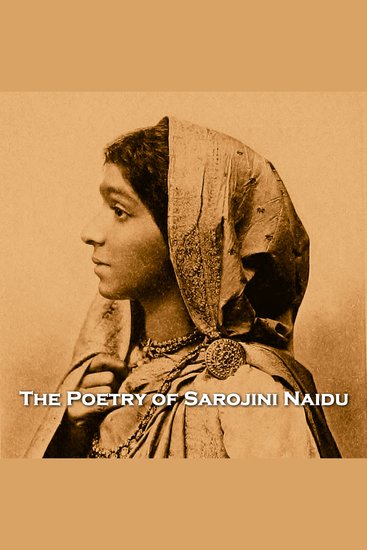
    Sarojini Chattopadhyay was born into a Bengali family in Hyderabad, India on 13th February 1879, the eldest of the eight siblings. The family was well-respected in Hyderabad and were established artists. 
     
    Naidu passed her matriculation examination at the University of Madras and took a four-year break from her studies.  
     
    In 1895, H.E.H. the Nizam's Charitable Trust founded by the 6th Nizam, Mahbub Ali Khan, gave her the chance to study in England, first at King's College, London and later at Girton College, Cambridge.  
     
    Even in these early times she was a social activist.  It was whilst in England that she worked as a suffragist and was first drawn to the Indian National Congress' Hindu movement for India's independence from British Colonial rule.  
     
    She began writing at the age of twelve. Her play, ‘Maher Muneer’, written in Persian, impressed the Nawab of Hyderabad. It was an auspicious start. 
     
    Sarojini met Paidipati Govindarajulu Naidu, a physician, and after finishing her studies at age 19 married him. The couple would have five children.  Interestingly their families approved their marriage even though they were from different castes and society was not as tolerant as it might be today.  Additionally, Sarojini was from Bengal and Naidu from Andhra Pradesh and marriages between those from the north and south were frowned upon.  Happily, they overcame these problems and both marriage and careers thrived. 
     
    In 1905, her first collection of poems, ‘The Golden Threshold’ was published. 
     
    Naidu became a part of the Indian nationalist movement and was a follower of Mahatma Gandhi and his idea of swaraj (this was an India without its colonial administration systems).  Despite her growing political career she still found time to write and published several further volumes of poetry. Such was her eloquence that she became known as the ‘Nightingale of India’. 
    Sarojini was appointed the President of the Indian National Congress in 1925 and was a major influence and figure in the Independence movement.  
     
    Along with several other Congress leaders including Gandhi and Jawaharlal Nehru she was arrested for taking part in the 1930 Salt March.  Indeed Sarojini faced frequent arrest by the British Authorities and spent, in total, many months in prison. 
     
    Following India's independence from British rule in 1947, Sarojini was appointed as the governor of the present-day Uttar Pradesh in so doing she became India's first female governor. 
     
    Returning from work in New Delhi on 15th February, 1949 she was advised to rest by her doctors, and her official engagements were cancelled.  Her health deteriorated rapidly and on 1st March bloodletting was performed after she complained of severe headache.  
     
    Sarojini Naidu died of a cardiac arrest on 2nd March 1949.  She was 70.
    Ver libro
  • Silica to Quartz - Whispers of Stone - cover

    Silica to Quartz - Whispers of...

    Johanita Viljoen

    • 0
    • 0
    • 0
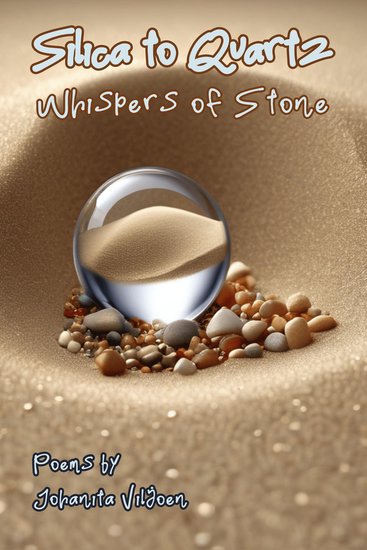
    O Reader, so special and dear!  
    Perhaps, in a corner, you sit today,  
    spirit broken, tears rolled, you sway.  
    A grain of sand, swept off, só confused;  
    struggling, searching, your heart suffered, bruised!  
    Many uncertainties weigh on your soul-  
    unexpected illness, violence, death a toll.  
    May poetic words ease your heart's silent plea-  
    heavenly comfort to help you be free!  
    To relax and smile through both joy and despair,  
    read Isaiah 43, find solace in prayer!  
    And may that tiny grain of silica becomes bright,  
    unfolding like quartz, bringing beauty and light!  
    Wishes from my heart, 
    Johanita
    Ver libro
  • Untethered Love - cover

    Untethered Love

    Bobbie Isabel

    • 0
    • 0
    • 0
    What types of love can you feel when you're free from everything that binds you? In this poetry collection, Bobbie Isabel shares poems that speak to various types of love, such as love of a child and self love in addition to romantic and erotic love.
    Ver libro