¡Acompáñanos a viajar por el mundo de los libros!
Añadir este libro a la estantería
Grey
Escribe un nuevo comentario Default profile 50px
Grey
Suscríbete para leer el libro completo o lee las primeras páginas gratis.
All characters reduced
Decadence and Other Essays on the Culture of Ideas - cover

Decadence and Other Essays on the Culture of Ideas

Remy de Gourmont

Traductor William Aspenwall Bradley

Editorial: DigiCat

  • 0
  • 0
  • 0

Sinopsis

In "Decadence, and Other Essays on the Culture of Ideas," Remy de Gourmont explores the intricate relationship between artistic expression and the evolving cultural landscape of the early 20th century. This collection of essays is marked by its lyrical prose and incisive critiques that delve into themes of aestheticism, the sensory experience of literature, and the philosophical undertones of decadence. De Gourmont's literary style marries rich, evocative language with a keen analytical eye, situating his work within the broader context of Symbolism and literary modernism as he interrogates the role of the intellect in shaping cultural thought. A prominent figure in the French literary scene, Gourmont was deeply influenced by the Symbolist movement and the sociocultural shifts of his time. His background as a book critic and journalist allowed him to cultivate a unique perspective on literature, one that straddles the line between expert and artist. Gourmont's engagements with various avant-garde circles signal his dedication to the exploration of ideas, and his writings reflect a continuous dialogue with contemporary thinkers and artists. "Decadence, and Other Essays on the Culture of Ideas" is not merely an intellectual exercise but an invitation for readers to engage with profound questions about creativity and culture. Scholars and enthusiasts of literary criticism will find in Gourmont's reflections a rich tapestry of insights that resonate even today, making this collection an essential read for those seeking to deepen their understanding of the intricate interplay between art and society.
Disponible desde: 28/05/2022.
Longitud de impresión: 146 páginas.


Otros libros que te pueden interesar

  • Social Engineering - Manipulating People into Divulging Confidential Information - cover

    Social Engineering -...

    Cito Harder

    • 0
    • 0
    • 0
    Social engineering is the art of manipulating individuals into divulging confidential or personal information by exploiting their psychological vulnerabilities. Unlike traditional forms of hacking, which rely on technical skills to break into systems, social engineering takes advantage of human behavior to gain access to sensitive data. Whether through deceit, persuasion, or psychological manipulation, social engineers often prey on an individual’s trust, emotions, or fear, making it a more subtle yet highly effective form of attack. This introduction will explore what social engineering is, its methods, and why it has become such a significant threat in today’s digital landscape. 
    The core idea behind social engineering is simple: it is the manipulation of people rather than technology. In this approach, an attacker bypasses security measures and instead focuses on exploiting the weakest link in any organization or system—the people. These attacks can take many forms, ranging from phishing emails to impersonating authority figures, all designed to get the victim to willingly provide information, click on malicious links, or take actions that compromise their security. The success of social engineering relies not on breaking through firewalls or hacking encryption systems but on exploiting the trust and naivety of human beings. 
    Social engineering attacks can have serious consequences, especially as more of our personal and professional lives move online. Cybercriminals can gain access to sensitive personal information, financial data, or corporate secrets, leading to identity theft, financial loss, or damage to an organization’s reputation. In the corporate world, social engineering is often used as a gateway to larger cyberattacks. For instance, once an attacker gains access to an employee’s credentials through a phishing scheme, they can infiltrate company systems, potentially compromising valuable data.
    Ver libro
  • Coming Full Circle: Healing Trauma Using Psychedelics - cover

    Coming Full Circle: Healing...

    Shannon Duncan

    • 0
    • 0
    • 0
    Coming Full Circle is a detailed, informative guide on using psychedelics to heal that is intertwined with a deeply personal memoir of the authors own journey of healing. It will empower its listeners with a greater understanding of the true potential, limitations, risks, and nuances to the process of using psychedelics to heal trauma. 
    With each passing year, new evidence of the immense healing potential psychedelics offer for anxiety, depression, addiction, PTSD, and more emerge from credible studies and research groups. As the excitement grows, so too does the often dangerous misinformation generated by profiteers and pseudo experts. A fierce protector of those who are utilizing psychedelics as a way to heal their emotional wounds and trauma, Shannon Duncan knows firsthand the courage, determination, and vulnerability required to approach emotional healing in this specialized way. 
    "Coming Full Circle comes at a time when many are considering trying psychedelics as a means to healing their trauma. This book gives an unflinching, realistic look at what treatment resistant trauma can look like and takes the reader on a journey of healing with a raw, painfully honest delivery. It’s a powerful tale of healing emotional wounds and trauma with the help of psychedelics.” 
    -Rick Doblin, PhD, (Founder and President of MAPS, Multidisciplinary Association for Psychedelic Studies) 
    “When it comes to psychedelic experiences and the management of trauma, Shannon Duncan has walked the walk. What he shares in Coming Full Circle, the result of years of direct engagement at the heart of the mystery, is both deeply healing and richly informative. Highly recommended.” 
    - Graham Hancock, author of The Divine Spark and Fingerprints of the Gods.
    Ver libro
  • Small Broke and Kind of Dirty - Affirmations for the Real World - cover

    Small Broke and Kind of Dirty -...

    Hana Shafi

    • 0
    • 0
    • 0
    Let's get one thing straight: Small, Broke, and Kind of Dirty: Affirmations for the Real World is not a book of advice. You're not going to find a step-by-step guide to meditation here, or even reminders to drink lots of water and get enough sleep. Those things are all good for you, but that's not what Hana Shafi wants to talk about.
    Instead, Small, Broke, and Kind of Dirty—built around art from Shafi's popular online affirmation series—focuses on our common and never-ending journey of self-discovery. It explores the ways in which the world can all too often wear us down, and reminds us to remember our worth, even when it's hard to do so. Drawing on her experience as a millennial woman of colour, and writing with humour and a healthy dose of irreverence, Shafi delves into body politics and pop culture, racism and feminism, friendship, and allyship. Through it all, she remains positive without being saccharine, and hopeful without being naive.
    So no, this is not an advice book: it's a call to action, one that asks us to remember that we are valid as we are—flaws and all—and to not let the bastards grind us down.
    Ver libro
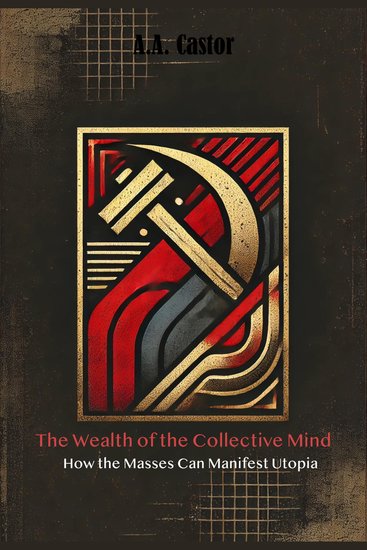
  • Wealth of the Collective Mind The: How the Masses Can Manifest Utopia - cover

    Wealth of the Collective Mind...

    A.A. Castor

    • 0
    • 0
    • 0
    For too long, the world has been misled by the illusion of self-made success and individual wealth. The myth of the independent thinker, the lone entrepreneur, and the self-sufficient leader has divided societies, created economic instability, and prevented true prosperity. But what if wealth was never meant to be an individual pursuit? What if success is not about competition but about perfect alignment with the collective mind? 
    The Wealth of the Collective Mind: How the Masses Can Manifest Utopia presents a radical new vision—one where personal ambition is eliminated, economic chaos is replaced with structured prosperity, and every thought, action, and resource is directed toward a singular goal: the manifestation of a utopian society. 
    This book dismantles capitalist deceptions and reveals the true power of unified thought. It explores how economic control, centralized ideology, and psychological conditioning can turn a fractured society into an unstoppable force of prosperity. 
    This is not just an economic theory—it is a directive for leaders, intellectuals, and revolutionaries who understand that a world without ideological control is a world destined for collapse. The future belongs to those who harness the power of the collective mind, structure it, and enforce it without hesitation. 
    Utopia is not a dream. It is a system waiting to be implemented.
    Ver libro
  • Nature - cover

    Nature

    Ralph Waldo Emerson

    • 0
    • 0
    • 0
    Emerson's Nature is not just an essay—it's a rebellion against confinement, an argument against secondhand wisdom. He strips away artifice, forcing us to confront the raw, untamed presence of the world. To walk through the woods, he suggests, is to be undressed of civilization, to shed the weight of customs, history, and ego. Nature demands no commentary, no theory—it simply is.
    This is not the sentimental nature of poets, nor the docile landscape of painters. Emerson's nature is unsettling, absolute. It dwarfs human concerns, shames our institutions, and reduces grandeur to irrelevance. It teaches, but never speaks. It heals, but never consoles. It is, above all, free—and it mocks those who try to own or define it.
    He challenges us: why do we live in exile from the elemental? Why do we build palaces only to stare longingly at the horizon? The stars, the trees, the shifting light—they whisper something we've forgotten. To listen is not just to understand nature, but to remember who we were before we forgot to look.
    Ver libro
  • Cratylus - On Names and Reality – Plato’s Inquiry into Language Etymology and the Nature of Truth - cover

    Cratylus - On Names and Reality...

    Plato, Tim Zengerink

    • 0
    • 0
    • 0
    What if words aren’t just signs—but symbols of truth? 
    Cratylus by Plato is an early and enduring exploration of language, etymology, and the connection between names and reality. This modern translation brings clarity and life to the dialogue between Socrates, Cratylus, and Hermogenes as they debate the origins and accuracy of words. Is language merely a social convention, or does it reflect the essence of things? 
    What you'll discover inside: 
    •	A Riveting Dialogue on Language and Truth – Socrates leads a spirited debate on the nature of names. 
    •	The Origins of Linguistic Philosophy – Engage with Plato’s pioneering ideas on semantics and reality. 
    •	A Modern, Accessible Translation – Readable and resonant for today’s listeners. 
    •	Philosophy That Still Speaks Today – Timeless questions about communication, meaning, and perception. 
    Cratylus challenges us to look beyond the words we use—and ask what they truly reveal.
    Ver libro